







![NO Weekender Or Cult Of Games XLBS This Weekend [Updated]](https://images.beastsofwar.com/2026/03/No_Weekender_and_XLBS_this_Weekend-225-127.jpg)


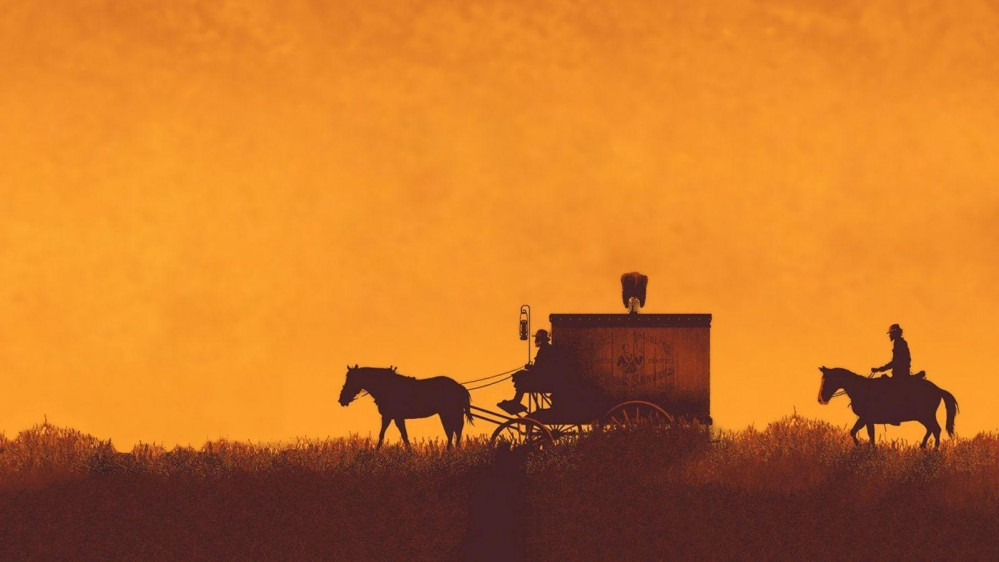
Last Hope Frontier


Recommendations: 229
About the Project
'Last Hope Frontier' (Working Title) is a small scale skirmish cowboy posse game in creation by Thomas Jack Brown. Set in the town of Last Hope, factions of the town's residents and outlying outlaws vie for control of the town. The game uses a standard size deck of 54 playing cards as its mechanic for measuring distances and conducting shooting and combat.
Related Genre: Western
This Project is Active
Shooting mechanics
The shot action.
Active player nominates one of their models to take a shot action.
Active player nominates the enemy model who they are shooting at.
Active player checks the shot value of their own model.
Non-active player checks the defence value of their model which has been nominated by the active player.
Active player selects a card to add to the shot value
Non-active player selected a card to add to the defence value.
Active player and Non-active player reveal their chosen cards simultaneously.
Active player and Non-active player add value of cards to their respective shot and defence values.
Active player and Non-active player check for favoured suit face cards that add to shot/defence values. Jack cards of favoured suits add 1 to shot/defence on top of face value of 11, King card of a favoured suit adds 1 to shot/defence on top of face value of 13, and Ace card of favoured suit add 2 to shot/defence on top of face value of 14.
Non-active player checks nominated model for any defence bonuses from padded clothing items.
If the Non-Active player’s value of card + clothing + defence value is higher than the active players card value + shot value, the non-active player’s defending model wins. Do not move onto the damage step.
If the Active player and Non-active player’s totals equal out to a draw, check for use of non-face card favoured suits
If a favoured suit has been used by one player, add 1 to the respective shot or defence value. 1 to the shot value means the shot has been successful. move onto damage step. 1 to the defence value means defence is higher. Do not move onto the damage step.
If favoured suit is used by both players, score draw is resolved, no difference means no damage and do not move onto damage step.
If the Active player’s value of card + shot is higher than the non-active players card + defence value, the active player’s shooting model wins. Move onto checking cards for damage step.
Flow chart of Damage step – damage vs toughness
The damage action
A difference of 1 to 5 in scores equals 1 damage done from card draw.
A difference of 6 to 10 in scores equals 2 damage done from card draw.
A difference of 11+ in scores equals 3 damage done from card draw.
Active player and Non-active player check for favoured suit face cards that add to damage/toughness values.
Queen cards of favoured suits add 1 to damage/toughness on top of their face value of 12 used in a shot/defence test, King card of a favoured suit adds 1 to the damage/toughness test, as well as the shot/defence on top of face value of 13, and Ace card of favoured suit add 2 to the damage/toughness test on top of the shot/defence bonus and face value of 14.
Active player checks their nominated model for any bonuses from weaponry used to conduct shooting action.
Derringers give no bonuses to damage.
Pistols/revolvers give + 1 to damage.
Shotguns give + 2 to damage.
Carbines/Rifles give +3 to damage.
Active player calculates total damage from
- Difference in scores from shot/defence test
- Damage bonuses from favoured suit card (if used)
- Damage bonuses from weaponry used (if any)
Non-active player calculates toughness from
- Toughness score indicated on model’s roster
- Toughness bonuses from favoured suit card (if used)
Subtract the non-active player’s toughness total score from the Active player’s damage score.
The remainder is total amount of wounds taken by non-active players nominated model.
Flowchart of play –
example 1
The shot.
Player X wants to use leader model in sheriff gang to shoot player Y’s outlawmen ganger model.
Player X leader model has shot value of 3, Player Y’s gang model has a defence of 1. Player Y’s ganger model is not wearing any padded clothing to increase their defence.
Player X uses a J of Spades, which adds a value of 11 to the shot value of 3 to make 14. Because the Sheriff player used the favoured Jack of Spades, it adds another 1 to the shot test, which makes it a 15.
Player Y uses a 7 of diamonds. Outlawmen prefer diamonds, but because this isn’t a score draw using non-face cards, it doesn’t break a tie, so the value of 7 gets added to the defence of 1, which is 8.
A difference between 15 shot and 8 defence is 7.
0 difference is shot vs defence = 0 damage and do not move onto damage step.
1 – 5 difference in shot vs defence = 1 damage
6 – 10 difference in shot vs defence = 2 damage
11+ difference in shot vs defence = 3 damage.
The damage
The outlawmen ganger model has a toughness of 1. 2 damage from the shot vs defence test, minus 1 toughness from the ganger is one wound.
Player X’s leader is using a pistol which gives +1 damage.
1 wound from the shot test + the pistol damage of +1 equals 2 wounds.
Example 2 –
The shot –
Player X wants to use deputy model in sheriff gang to shoot player Y’s outlawmen deputy model.
Player X deputy model has a shot value of 2. Player Y’s outlawmen deputy model has a defence of 2. Player Y’s deputy model is wearing light padded armour to increase their defence by 1 to 3.
Player X uses a 6 of Spades. Numerical cards do not add extra bonuses like face cards, but the Sheriff gang player used a favoured suit in case of a tie.
Player Y uses a 5 of Clubs. Outlawmen prefer diamonds as a favoured suit. Numerical cards do not add extra bonuses like face cards.
Player X’s total is 2 + 6 = 8.
Player Y’s total is 3 + 5 = 8.
Player X used a favoured suit of Spades. A favoured suit use breaks ties, which means Player X scores 9 vs Player Y’s score of 8.
A difference between 9 and 8 is 1.
0 difference is shot vs defence = 0 damage and do not move onto damage step.
1 – 5 difference in shot vs defence = 1 damage
6 – 10 difference in shot vs defence = 2 damage
11+ difference in shot vs defence = 3 damage.
The damage
The outlawmen deputy model used by Player Y has a toughness of 2. 1 damage from the shot vs defence test, but the deputy model has 2 toughness so no damage is done at this stage.
Player X’s deputy is using a pistol which gives +1 damage.
1 wound from the shot test + the pistol damage of +1 equals 2 wounds, but Player Y’s deputy outlawmen is toughness 2, so the extra pistol damage is not enough to do damage to the deputy.
The damage stage was still moved on to because the shot was a success, but it was a weak shot not affecting the toughness of the deputy. Could be described as ‘winging’ the model.
Example 3
The shot
Player X wants to use leader model in Townsfolk gang to shoot player Y’s bootlegger ganger model. Townsfolk prefer Hearts cards; bootleggers prefer club cards.
Player X leader model has a shot value of 3, Player Y’s gang model has a defence of 1. Player Y’s ganger model is not wearing any padded clothing to increase their defence above 1.
Player X uses the Ace of Hearts which adds a value of 14 to the shot value of 3 which equals 17. Player X used the favoured suit, and an Ace favoured suit card adds 2 to the shot, which takes the 17 up to 19 in total.
Player Y uses the J of Clubs. Clubs is a favoured suit. The Jack of Clubs adds 11 to the defence of 1 which is a score of 12. Using the Jack of Clubs as a favoured suit card adds another 1 to the defence score which is a total of 13.
The score of 19 to 13 is a difference of 6.
0 difference is shot vs defence = 0 damage and do not move onto damage step.
1 – 5 difference in shot vs defence = 1 damage
6 – 10 difference in shot vs defence = 2 damage
11+ difference in shot vs defence = 3 damage.
The Damage
The bootlegger ganger has a toughness of 1. 2 damage from the shot vs defence test, minus 1 toughness from the ganger is 1 wound.
Player X’s leader is using a shotgun, which is +2 damage.
Player X also used the Ace of Hearts, which contributes another 2 damage from using a favoured suit.
1 damage from shot vs defence test, 2 damage from shotgun, 2 damage from Ace of Hearts, minus 1 toughness = 4 damage
Leader/Deputy/Gang Member stat lines (1st edition)
Stat line
Base movement – 1 card for all models.
Shooting skill
Combat skill
Strength
Toughness
Defence
Wounds
Leader stat line
Shooting 3
Combat 3
Strength 2
Toughness 2
Defence 2
Wounds 8
Deputy stat line
Shoot 2
Combat 2
Strength 2
Toughness 2
Defence 2
Wounds 7
Gang member stat line
Shot 2
Combat 2
Strength 2
Toughness 1
Defence 1
Wounds 6
Weapon Profiles and Purchasable Items
Weapon profiles and purchasable items –
Different weapon profiles add +1/+2/+3 damage against shot/combat targets toughness. Purchasable at gang creation
Padded clothing profiles add +1/+2/+3 defence against the shot/combat of attacking model. Purchasable at gang creation.
Derringer – range 0 – adds 0 damage – can be used in base to base combat as a shot vs defence test if a melee weapon isn’t on models profiles
Pistol – range 0 to 1 – adds + 1 damage
Revolver – range 0 to 1 – adds +1 damage
Shotgun – range 1 – 2 – adds +2 damage, needs reloading after every three shots
Carbine rifle – range 2 – 3 – adds +3 damage, needs reloading after every shot
Scope rifle – range 3 – 4 – adds +3 damage, needs reloading after every shot
Switchblade – base to base, adds 0 damage
Hunting knife – base to base, (can be thrown in 1 distance, but item is lost) adds 1 damage
Hatchet – base to base, adds 2 damage
Machete – base to base, adds 3 damage
Light Leather clothing – adds 1 to defence
Medium Leather clothing – adds 2 to defence
Fine Leather clothing – adds three to defence
Other purchasable/campaign findable items –
Whiskey – free action to use during movement phase, heals one wound
Hooch – free action to use during movement phase, heals two wounds
Dynamite – strength vs defence action to use, no modifiers from face cards allowed, successful attack is +2 damage to all models (friend and foe) within a 1 card length circle from chosen target.
Rabbits foot – held by leader, can spend 1 per rabbits foot to increase value of high card draw card for first turn initiative.
Horse – only usable by leader or deputy – movement becomes 2 cards length but shooting from horse is -1 in difficulty
Town map – held by leader/deputy – allows for an interrupt in the setup phase. Spend the map and two models can set up on a players turn
Routing and Post-game admin
Post-game admin.
If a model has been taken out of action by taking more points of damage than their wound tokens, a model suffers a permanent -1 to their wound total to represent an ongoing injury. This can happen a second time and gains another -1 to wound total. If a model is taken out a third time, three strikes and you’re out, the model is dead and removed from the gang. Equipment attached to the dead gang member are also removed. Buried with their corpse.
A model that took out an opposing model has the opportunity to become better in their stat line. Taking out an opposing model gives that model a ‘card flip’ at the end of the game. A model that dealt the killing blow to another model earns two card flips.
Shuffle your deck and flip the top card.
Joker,2,3,4,5 allows for a Shot or Combat upgrade of 1 point
6,7,8,9,10 allows for a Strength or Toughness upgrade of 1 point
J,K,Q,A allow for a Defence or Wounds upgrade of 1 point.
If a character has multiple points accrued and a player doesn’t like the flip choice, they can burn another point to reflip.
Crew money/goods are earned based upon missions in game.
Goods earnt in the mission can be sold to the town marketplace for 50% of full market value.
Movement
Played on a 2 x 2 board.
Movement of models on foot is up to and including the entire length of a playing card, measured from same point on model of base. If at anytime a player wishes to move a model over terrain such as a fence/wall/obstacle, movement is reduced to width of a playing card, measured from same point of the base of the model. If the movement can’t be completed using the width of the playing card, (i.e., the model can’t be wholly placed on the board when moving over the terrain) the movement over the terrain can’t be completed. The model can move onto terrain in a move action, if the base of the model can be securely placed onto the terrain piece of choice.
Vertical/climbing movement limit is length of playing card.
If a model can’t get to desired higher location in a move of a length of a playing card, a model cannot reach the intended destination.
if a model wishes to move more than length of playing card in a vertical fall or jumping from great height, one unsoakable damage is taken for each additional length of playing card, I.e., an additional distance beyond the first length of a playing card, between the length of 0 and 1 additional card lengths = 1 unsoakable damage, between 1 and 2 card lengths = 2 unsoakable damage, etc., No such thing as difficult terrain. Distances can be measured at any time.