







![NO Weekender Or Cult Of Games XLBS This Weekend [Updated]](https://images.beastsofwar.com/2026/03/No_Weekender_and_XLBS_this_Weekend-225-127.jpg)




Weekender XLBS: How Soon Is Too Soon?
September 23, 2018 by brennon


For some website features, you will need a FREE account and for some others, you will need to join the Cult of Games.
Or if you have already joined the Cult of Games Log in now
What difference will having a FREE account make?
Setting up a Free account with OnTableTop unlocks a load of additional features and content (see below). You can then get involved with our Tabletop Gaming community, we are very helpful and keen to hear what you have to say. So Join Us Now!
Free Account Includes
- Creating your own project blogs.
- Rating and reviewing games using our innovative system.
- Commenting and ability to upvote.
- Posting in the forums.
- Unlocking of Achivments and collectin hobby xp
- Ability to add places like clubs and stores to our gaming database.
- Follow games, recommend games, use wishlist and mark what games you own.
- You will be able to add friends to your account.
What's the Cult of Games?
Once you have made a free account you can support the community by joing the Cult of Games. Joining the Cult allows you to use even more parts of the site and access to extra content. Check out some of the extra features below.
Cult of Games Membership Includes
- Reduced ads, for a better browsing experience (feature can be turned on or off in your profile).
- Access to The Cult of Games XLBS Sunday Show.
- Extra hobby videos about painting, terrain building etc.
- Exclusive interviews with the best game designers etc.
- Behind the scenes studio VLogs.
- Access to our live stream archives.
- Early access to our event tickets.
- Access to the CoG Greenroom.
- Access to the CoG Chamber of Commerce.
- Access the CoG Bazarr Trading Forum.
- Create and Edit Records for Games, Companies and Professionals.
Supported by (Turn Off)

Supported by (Turn Off)
Supported by (Turn Off)


Theme tune for XLBS Radio on Video – Video killed the radio star ?
lol
Won’t get to watch till tomorrow, but I thought I’d go ahead and chime in.
When I first started gaming in the late 70’s/early 80’s WWII board games and 20mm minis games were already a thing and it didn’t seem to bother anyone and only a mere 30+ years had past. Fast forward to the late 90s/early 2000’s and while there were games covering Viet Nam there seemed to be more people against playing a game based on that conflict even though it had also been 30+ years. I think a lot of it could be/have been the type of news coverage of the conflicts. For right or wrong, the coverage of WWII was positive and designed to inspire nationalism. In comparison, coverage of wars from Viet Nam on was more gritty and in your face, showing the horrors of war. It think that has a lot to do with it. Also, there is a lot of controversy surrounding most all of the conflicts from Nam to now which really didn’t seem to exist before those.
That said, I have no problem wargaming modern conflicts. Now if it is a touchy one, and I’m gonna run it at a convention or something, I might disguise it by making up an “Imagi-Nation” to give a bit of separation for folks that may have been affected by the actual conflict.
@warzan perhaps the next time I run a moderns game I’ll place it in the country of Warzanistan.
Happy Sunday!
HappySunday!!
Oh dear! Despite what several pages on the interweb and Warren says, Humpty Dumpty being a cannon is I’m afraid ‘xl-BS’. It was one of a series of deliberate spoof histories of nursery rhymes began by an Oxford professor in the 1950s and is a case study now for ‘fake news’. If you’re that gullible…
I’m a Nigerian prince and, following my recent visit from my homeland to see Salisbury Cathedral’s 123m spire, have decided to share my wealth of $3.6 billion usd with the first person to PM me their bank details including any online PINS and passwords. As I’ve published this on the internet it must be true… 😉
66-78-89
766539777
pin 6723
send me the money baby!
Wow, thanks very much for the mention and featuring my comment! I should mention the beginning of that comment was posted by @onlyonepinman – I was responding to a point he’d brought up in last week’s episode.
It’s not quite 2:00 in the morning here … so I can’t watch the whole episode or repond in full quite yet (I promise I will in the morning) … But for now …
“How soon is too soon?”
Short answer: It is never too soon, at least not from a “moral” standpoint.
Long answer: It’s a sliding scale, and it depends on how “serious” you take your gaming. If you and your crew are in the mood for a light-hearted game, beer and pretzels, chuckin’ dice and swiping minis off the table … than maybe 6,000 years is too soon, as in all of recorded history. Maybe your crew (at least on that night) isn’t really into historical wargaming at all (again, at least on that night).
But if you’re ready to sit down and really analyze something, if this is going to be the kind of game that doesn’t care about points so much as what and who was really there … if this is the going to be the kind of game that is less about winning and more about finding answers … if this is the kind of game that commemorates an event or a unit or a specific date … than honestly I don’t think “today” is too soon.
Strategy & Tactics magazine recently ran an issue in their Modern War series, dealing specifically with the War on ISIS. Some very fascinating stuff in there and yes, a wargame is on offer. This is definitely a wargame I would be interested in playing and writing about, but honestly not sure if I’d present it on this site.
In our Force on Force series we did Fallujah 2004, Chechnya 1995 and 2004, Serbia / Bosnia 1992, Afghanistan 2002 …
But even when I was getting ready to run the Tet Offensive 50th Anniversary commemorative series early this year, I seriously had people warn me that it might be too soon. Fifty years? Fortunately the response to that one was massive and overwhelmingly positive. We also did a 50th Anniversary for the Six Day War in 2017 an there were no issues there, either.
My “dream army” (if I ever get a month to myself to build it) would be the new Team Yankee US Marine Corps force, but painted in desert for the 1991 Desert Storm Gulf War.
I was in the US Marine Corps during this war (yes, sadly I am that old), but wouldn’t consider building, fielding, and playing such a force disrepsectful.
Quite the goddamned opposite.
Then again, I full realize I often game in a slightly “different vein” than many folks. I don’t use most commercially available systems, I never use points when I can help it, our games and designs aim much more along “simulation” lines than competitive play.
When me or my crew is more in a “play for pure fun” kind of mood, honestly we don’t usually do historical at all. That’s when Darkstar comes out and we have fun with sci-fi. 😀
And last bit before bed …
Regarding Battle of the Boyne, and “you can’t detach the cultural aspect of it.”
I would argue that’s exactly what you have to do. When you look at wargaming an engagement like Battle of the Boyne and reflect its cultural significance, you’re actually distorting the event by imprinting today’s perceptions back onto the event in a way that did not apply when the event was taking place.
Like John Gardner write: “History never looks like history when you are living through it.”
This is why I’m always especially interested when people in the UK run American Civil War games. Especially here in the South, it’s often tough to detach the emotionalism from the math and science and fact-based data of the event, which is the only way to ever understand it on any kind of meaningful scale. But in most UK ACW wargames, it’s really just blue and gray with the battle handled with the cool, calm detachment required.
yes I agree ofcourse you can detach it, i suppose what we meant but didn’t explain so well was. Here in northern Ireland there are a couple of hundred band parades between March and August with a focal point taking place on the 12 of July where parades take place all over the country.
All of it directly about the Battle of the Boyne.
So it was a case of that 400 year old battle still resonating significantly and publicly within the culture.
🙂
Yes, I’m familiar with the Battle of the Boyne and how it’s observed in Ireland to this day.
All I’m saying (and it sounds like we agree on this) is that if you want to wargame the battle seriously, or really study the battle in any meaningful way, you have to take the 399 subsequent years out of the equation and look at the battle objectively.
Of course, when the event takes place “in your neighborhood” it can be easier said than done.
yep agreed mate 🙂
very much so infact! excellent point!
Good Morning everyone! Raining like cats and dogs this morning in Germany! Forecast is 100% chance of rain for the rest of the day. Feels like i’m sitting right there with you guys in Coleraine!!! Looking forward to this morning’s show! Sitting down with my 1st and 2d breakfast and have some FOW Germam Heavy mortar teams to paint today! Let the show begin! Cheers!!!
Happy Sunday @silverfox8!
@brennon‘s commentary from 1:30:30 to 1:31:15 – these 45 second, are solid gold.
THIS is the point I’ve been trying to get across, from as far back as that Ukraine series to this day.
If you’re in the mood for a “beer and pretzels” type game, yes… there is definitely such a thing as too soon.
If you’re approaching it from a historical, analytical, respectful, or educational angle, there is no such thing as too soon.
The difference is intent, as Ben said so well.
This is why I feel there’s a difference between some wargames and most video games. Video games have a much higher chance of being taken casually with a laugh … and so I sort of agree with the idea of NOT publishing Six Days in Fallujah, while I have personally played Fallujah in Force-on-Force and other systems, and didn’t find it offensive at all.
Happy Sunday 🙂 and yay for the popfilters, the sound is sooo much better to listen to 🙂
getting there step by step mate. keep the feedback flowing 🙂
I think the problem with refighting the Battle Of The Boyne is that it is so one sided its very hard to balance it so the player playing James II has some chance.
But on to the topic . “is it too soon ?”. I believe its very personal. Like Sam I have never played the Germans in a WW2 game. Now I have no problems with people who wish to do so as I think most gamers understand the history of what the German army in its many parts played in WW2 and that in the end they are playing a game. I do have concerns that some people take it too far and you see them at shows wearing their SS divisional on tour t-shirts etc. I do think there is something seriously wrong with these people
To follow on from that I grew up reading books by Featherstone,Grant and Bath all of whom fought in WW2 and wanted to find some way of recreating their experiences on the the tabletop so from an early age I think it became clear that if people who fought in these conflicts gamed them then it must be OK for me. I know ex soldiers who fought in the Falklands and the first gulf war who are happy enough to game them and some who aren’t. As I said at the start its all very personal
Would it need re-balancing to that extent? My understanding is that James’ inexperience forced him to direct far more forces than were necessary west to oppose the second crossing upstream at Roughgrange. Had cooler heads prevailed, the presence of more infantry and emplaced artillery could have turned the main crossing into an even greater bloodbath for the Dutch and Danish units in the vanguard.
And regarding the theme, a decade or so ago when Flames of War came out/became available in Germany, it was a huge discussion and issue if it’d be okay to play second world war, and for I’d say 90% of Germans interested playing aGerman force was a no-go, this changed a lot but for not gamers it is still a huge shock to see people playing WW2 let alone German forces.
Then where is the discussion of historic accuracy and is it necessary to put on symbols.
I started a DAK force at the time and have a Bold action Waffen SS army as well. But it is still something I feel the need to explain.
So I’d say it is indeed a huge part of your local situation, it is easier to be objective if your further away and it also depends on the views your community has on a conflict, in my eyes examples would be WW2 in Germany, maybe Vietnam war in the US, defenitely in Vietnam, WW2 in China with Japanese and defo anything relating to the independence struggle and the troubles in ireland.
So I think if something is ok to use as a gaming setting is depending on your local perspective and how and if the local culture is dealing with a conflict. So a setting may literally be ok to use but in the next door village it may cause a shock.
Even in 2004 or was it 2005 when the War on terror Boardgame was released, mainly as social comment work of art, and they got kicked out of the Spiel in essen, causing a huge discussion, ending up inviting them the following year, would be a good example.
Would definitely agree with your comments. I’ve been playing FOW here with my German friends in Wiesbaden for about four years now. I play Germans and when we play in each others homes they have no issues with the symbols etc… Several of them do also play german forces but have had to explain that to other friends that are not gamers. When we had a store to play in we would not bring anything with those symbols just to make sure we did not offend anyone.
really interesting insight, thanks for that!
Ben is correct in my opinion. Hurricane’s saved Britain (well you know they played a major part, the Sea helped a bit too) and you could build more Hurricane’s than Spitfire’s for the same cost.
@warzan time to burst the bubble at least on the archer case. Also a slight misunderstanding. The Waffen SS and SS-Totenkopfverbände got a bit mixed up here. I think John thought you were referring to the 3rd SS Panzer Division Totenkopf, which was a part of the Waffen SS, rather than the SS-TV which were the SS-Totenkopfverbände who guarded the camps. Totenkopf has nothing to do with the National Socialists it’s an old Prussian Badge just like the Iron Cross, the Nazi’s subverted and made a part of their Iconography rather than inventing new symbols.
The Archers and their Arrows was due to the dropping of metal spikes from aircraft that the soldiers interpreted as arrows. Also a lot of these cases are “Well I didn’t see it but John swore he saw it”.
The Respect given to a subject by Historical Wargamers will almost always be more than is given by a movie audience, video game player or novel reader. People who spend an hour or two watching a movie aren’t really likely to go out and read a biography or watch a few documentaries while they research the exact uniform scheme used in the theater.
I have to humbly disagree with you guys on the “No one wants to play the bad guy”. I am issuing required reading for all Historically Inclined Wargamers: The Flashman Novels. Playing as/rooting for the bad guy can be a lot of fun. (Quick bio Flashman is a Victorian British Officer who is a Coward that does Cowardly things that always end up in his favour. Quick example, Flashman has run off with a Russian Nobleman’s daughter and is being chased by Cossacks and Wolves, knowing he can’t outrun them with the girl he throws the {naked} woman from a moving sledge into the snow and makes his getaway). Flashman Rules.
I quite enjoy playing the bad guys especially in asymmetric games. Playing the Taliban is quite liberating since you have zero regard for your casualties and can do things like charging your minis to certain death making “Insurgent” noises. A good game like “Force on Force” will allow (not intend) you to play the game this way. Flames of War Vietnam does a similar thing with the Vietcong respawning which makes a suicidal charge a legitimate strategy.
Napoleon was an atrocious person, he slaughtered surrendered prisoners, deliberately and spitefully shelled a village rather than a fort (Acre), abandoned his army in Egypt and killed Millions of people to name a few. Yet even as I type this I’m painting up some French Napoleonic Miniatures.
To me it’s about removing just enough history to have fun. Nothing I do on the table will change anything just like no matter how much you scream at the TV during a horror film the teenagers always go into the creepy house.
thanks for the clarifications!
Important to note though some of the original members of the 3d SS DIV were drawn from some of the early camp guards.
By the same token they were also not necessarily evil men.
Not all the camp guards were fanatical psychos.
Gets into an awkward area there @silverfox8. Dachau was originally an expansion of the German prison system not all that dissimilar in concept or design to the open prisons or migrant detention centres we see today – a cheap, rapid capacity expansion programme for an existing system buckling under the weight of the influx of prisoners (the change being that thought was now a crime). Granted, its inception had been to house the rapid influx of political prisoners (soon to be forced labourers) but can you discern the newly employed guards in 1933 from pre-1933 Wiemar era prison guards? Not really. Same institution. The first 200 prisoners in Dachau had originally been held in Stadelheim and Landsberg prisons with the majority imprisoned long before the 1933 election victory. Later on when prisoners are dying from starvation and being worked to death, when prisoners are being tortured and killed by Nazi officials, no matter how much of a consummate professional you can try to be in such awful conditions, trying as hard as you can to be the good, upstanding prison officer you think you are, you are non the less drifting across the grey expanse of morality from being a simple worker in a difficult position just trying to do your job, to submitting yourself to increasing levels of complicity in Nazi crimes. You don’t have to be the one pulling the trigger in order to be complicit in a crime, and when you’re working in an institution whose premise dictated the handling of these undesirables it becomes impossible to compartmentalise your own actions from those of the collective.
Would definitely agree, but expect some of the early guards that jumped at the chance to go to a military unit were those trying to remove themselves from camp guard duty which could not have been a positive place as you highlight above. My biggest concern is we should not lump all of any category of person into a generality. Specificity matters.
Visited Dachau back in 1999, it was a real eye opener and helped to frame this dark part of history. It was definitely one of those places that you could ‘feel’ the gravity of history.
@elessar2590 –
“Totenkopf has nothing to do with the National Socialists it’s an old Prussian Badge just like the Iron Cross, the Nazi’s subverted and made a part of their Iconography rather than inventing new symbols.”
I can’t find any right now, but several people have made video lists along the lines of: “Top Twelve Thing Ruined by the Nazis.” Some are wry humor, others … not so much.
Zeppelins
The music of Wagner
The writings of Nietzsche
Der Königgrätzer Marsch
The writings of von Clausewitz
Fanta soda
The Volkswagen
Hugo Boss
Porsche
The Autobahn
Frederick the Great
The Swastika
Yeah I can’t remember exactly but the Totenkopf were either the 3rd or 5th Hussars under Frederick the Great and pretty sure Blucher was their commander during the Napoleonic Wars. Crown Prince Michael was the commander in chief in WW1
@silverfox8, @elessar2590 – the military history / reputation of the Waffen SS is a tricky subject. I’ve written a little on this (at least partially – focusing on 2nd SS Das Reich at Kursk) and …
i feel it’s pretty clear that the war crimes rate is exponentially higher among these units than among typical German Wehrmacht formations.
So yes, the Waffen SS were soldiers that have to be set apart from the Allgemeine or TK SS … but … they’re well-steeped in no small amount of butchery, too.
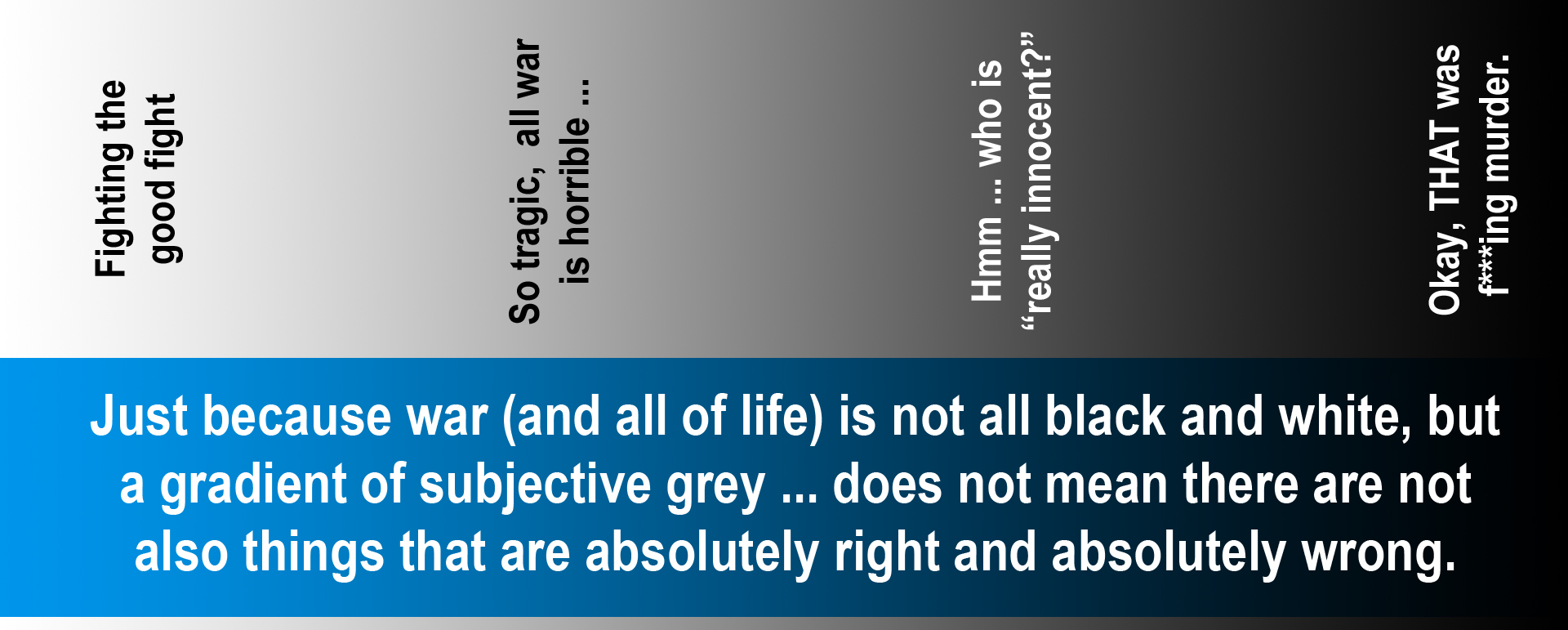
I guess it’s a “scale of gray” with different levels, with no one coming out completely clean. From worst to “best” (and admittedly super-generalized) –
Political arm SS
Japanese Army
Military Waffen SS
Soviet NKVD
German Wehrmacht / Red Army
Japanese Navy
US and UK armies
Then there are the resistance / partisan fighters, many of whom committed barbaric acts on large scale. And as everyone raises a hand about “protecting innocent civilians” we must also remember that many of the worst Nazi-era atrocities were in fact committed or actively aided by local civilian populations in recently-occupied territories, notably Belarus, Ukraine, and the Baltic States.
Happy Sunday
Chap o/
For the BoB the Hurricane was far easier to repair being made if would and fabric the ground crew could just glue new pieces of fabric on top of bullet holes etc. The spitfire being made of metal took a lot longer as whole panels would need replaced when repairing the damage
Crazy that now we can use speed tape for battle damage repair for bullet holes, which is just essentially a thick foil sticky tape when it is tertiary structure 🙂
Hurricanes for the win!
Hi all
I was part of the British Army Germany for over 14 years. I work as a civilian in Hohne Garrison for the 7th Armoured Brigade. We played table games in our club (Hohne War Games Club). That was a great time. We have played many different games. But we’ve never played modern Warfare because you cannot play this type of game when your friends have to go to Iraq. Afghanistan or some other fucking place in the world. In this context, it just does not feel right to play modern wars and I think it’s not correct either. Real life is not a game.
Anyway, have a nice day of gaming.
With the best regards.
Thomas
your point of view and context is interesting and completely valid. May i ask which games you played? The reason i ask is that anything in the historical genre has been real life for someone and it would be interesting to see if their opinion mirrors your own. Perspective and context is important in all things and is often the part that is sanitised in debates.
Hi
I like to play historical games. You can immerse yourself in the past and experience old battles. By the way, you learn something about the history. But one should be aware that you play the stories of real people.
For me it’s just a difference whether these real people are in front of you or whether they are already passed away. That’s just my “too soon” limit.
Games I played: Bolt Action, Warhammer, Warhammer 40000, Warhammer Gothic, Lord of the Rings, Kugelhagel, Steinhagel, Firepower, Blackpowder… .
Totally respect your opinion and position, I just don’t necessarily share it. I would respectfully add that people who died in a war 500 years ago are just as real as those who died last week.
Needless to say, I don’t feel that way about sci fi or fantasy wargames. Those people really are imaginary. But it almost makes the wargames … kind of pointless in my view.
That said, I totally respect any gamer (especially another veteran) who doesn’t want to play a wargame set “too soon.” I would just add that for those of us that do choose to play such games, we’re not doing it “for fun” in the traditional or casual sense.
I would submit that for some of us, it’s our highest form of respect.
(wow, how many times can I put the word “respect” in one post). 🙂
That with respect is a good point. When we play historical game, we show our respect for people. I think that’s a good way to do it.
„We will remember them“
🙂
Morning all! Lovely bright sunny morning down here which is lush after the week of winds n rain. Hope yer all having a great weekend. Coffee is loaded, to the studio Batman – it’s XLBS time!!
bout ye
I think it can depend on the subject matter not just how long ago it was..
Who can forget the “Salutegate” affair when many complained about the Re-enactors invited to the show that were wearing SS uniforms and selling Hitler Mugs. And they rebutted that you could by flags and transfers for tanks from other vendors so didn’t see what the problem was.
As a rule “in living memory” seems to be a good benchmark to take, and all you need to do is be a little careful on how people (not just wargamers) might view the subject.
I’ve played Vietnam games with Vietnam vets who didn’t have a problem, and them there was one that wouldn’t play in this period. So there’s no hard and fast rule, it’s just people (and people are unique, and so must be your responses).
Sometimes you can run a game using historical minis, but add a “Hollywood” element separate the “game” from the history (remember the “Rob a Bank with a Tank” participation game that used to do the rounds years ago, with a plot right out of Hogans Heros?). I think it’s only at a wargames show you could cause offense, usually at a club setting you know the people around you and what would cause an offence. At a show you don’t know who’s attending so you have to be a little more careful.
Well @warzan when are you going to discuss an easy topic?
To me it’s about context, knowledge, empathy, people’s personal journey, where they are in that journey, where you are in the world and where you have been.
Me – born Londoner, lived in the English countryside for a bit, spent most of my life in New Zealand and feel a proud Kiwi, so I’m living with some the effects of what a colonised land goes through when it tries to reconcile those two sides. Both parents were alive during WWII.
I have two step-siblings that are half Aussie and half German, who both live in Germany and were raised in various parts of the world but mainly NZ.
One uncle married a Muslim from Malaysia, so he converted and they have 3 offspring, and they have started to spread across the globe, as have my cousins from the other side of the family.
I lost my only full brother (he was 22, I was 24) over 30 years ago, before he past he was an anti-royalist and had gotten into Maori culture a bit – half of the people at his funeral were Maori and I was stunned at that.
So I have my eyes open to various view points of what has been going on in the world, what is going on, and where all that might lead – hopefully a good place.
I see the hurt and anguish caused at personal, group and national levels.
I see cycles repeating over and over again.
Hopefully we can learn to break those cycles.
I had dropped off from historical gaming for my developing personal morals. Thanks to @warzan‘s input today I might have to question 40k. 😉
If I was coming to the Bootcamp next weekend, I’d like to think I’d paint a British Commonwealth force as part of 28th Maori Battalion, perhaps in someway to honour the sacrifices they made half a world away, especially when perhaps they weren’t being treated very well back in their homeland – I don’t know my NZ history well enough at the moment to say for sure, or have enough Maori friends.
Happy Sunday, will save this for later today when my brain is more awake as XLBS requires more concentration now 😀
first half of show requires little grey matter mate 🙂 should be very familiar.
@warzan I have four hungry kids and a Sunday roast to butcher so you and the team are keeping me company right now.
lol
There are a number of fighting fantasy books that go well together. Caverns of the snow witch ends with the hero heading to stonebridge to see his dwarf friend so Forest of Doom makes a good follow up. Trial of champions is followed by Armies of Death and of course there is stevve jacksons sorcery series.
looking forward to visiting the sorcery series with them
From an outsider’s perspective, as some have already written, it is easier to judge a wargame as being objectionable as there is not the context of a story or reason why from what they can see….
They don’t see that @oriskany, for example – hope you don’t mind – has done a heap of research and understands the setting, reasons why the conflict is being fought or is a veteran himself.
I think films, radio, even computer games might have an easier time of things as they can, and I stress can, provide more of a historical context and personal story of the characters within the media.
I have heard that George Lucas used the Ewoks as an representation of the Viet Cong (? I may have picked it up wrong). Would that make the Empire portray a certain side of the US?
Some interesting pints here, @hobbyhub –
First off, I certainly don’t kind at all – your mention was respectful and complimentary. 😀
I certainly hope Lucas wasn’t drawing the Ewoks as a VC / NLF analog … if he was, he needs to read a few more books on the subject. Unless I missed the scene were Ewoks were murdering tens of thousands of other Ewoks who were collaborating with the Empire. 🙁
On the subject of Star Wars, I will admit I REALLY DID NOT like the Jedha scene in Rogue One where the “heroic” insurgents gunned down the “evil imperialist” military in the narrow, confined, urban desert city streets. Was I the only one getting a Blackhawk Down or Fallujah vibe off of that?
interesting how perspective comes into play as I hadnt made the connection in the jedha scene.
I do now though!
Really interesting discussion this morning, and it strikes right to the heart of my recent change in attitude toward historical (especially WWII games). About a year ago I stopped skipping the historical content on BoW. I watched some of @oriskany ‘s desert war content, and just mentioned it in passing in a conversation with my mum shortly after. I then discovered that my grandfather (her Dad) was in El Alamein.
That was a flip point for me. I suddenly felt a sense of responsibility as a wargamer (albeit predominantly sci fi) to explore the terrifying reality of real world war. For me the time aspect isn’t so much time elapsed since the conflict but time elapsed in my own life (i.e. me growing up).
I have no direct experience of war but I found the concept terrifying from an early age. The reality of human violence first affected me in a history lesson where we had to watch a documentary about the assassination of JFK. It gave me nightmares. For years I wouldn’t put lights on until the curtains were closed. I was convinced a sniper was going to shoot me through the window. Then history lessons led to school field trips to war museums. They completely terrified me. The sound of an air raid siren still scares me. And I was nowhere near the war. So I avoided history for the longest time.
Wargaming has helped me to grow up. Partly it’s a gradual desensitisation towards violence (read any 40k novel and you get used to graphic descriptions of human bodies coming apart) and also learning that there are real world influences on abstract games. Learning that weapon names in Sci Fi are the same as real world counterparts for example. Over time I started to realise that despite the Sci Fi veneer, I was simulating war. That led to a compulsion to understand it better. Out of respect.
So I will be glued to the Bolt Action boot camp. Unthinkable 2 years ago. I would also be interested to find out more about where my granddad served and build an army based on his regiment. I now want to make it MORE real for me. No more running away. My attitude has completely flipped.
Thank you for the open and sensitive debate this morning – I’m going to ponder it all day.
fascinating comment mate.
if we as a community can help you with your research just let us know!
Thanks @warzan. I have literally just pinged my mum to see what she knows!
excellent!
Definitely please feel free to share any details you feel comfortable.
My Aunt died recently and we found her father’s (My Great-Grandfather) captured Japanese NCO Katana in her house. Very cool, I managed to find the Serial Markings and trace it back to the factory where it was made.
Family history is a brilliant way to “Break into” Historicals plus it will make you closer to your family (past and present) which is always a good thing, plus it can be a good thing to know medically. A lot of guys who served in the Pacific bought home some horrendous diseases that could be passed to their unborn kids in the shape of compromised immune systems.
My mum says he was in the King’s Own Yorkshire Light Infantry. My Uncle said he was a Desert Rat. I’m not sure those two facts stack up together but it certainly gives a starting point for some reading!
You need to see which battalion he was in as regiments did get split up and served all over the place at the same time
I think I can help with this, @darkdanegan, if you’d like me to and if you’d be interested.
Some of my fondest moments as Historical Editor so far have been when people approached me, wither at Boot Camps or in PMs, saying things like:
“We were moving house and found an old box of Grandpa’s things in the attic. He never talked about his experiences in such-and-such conflict, but I was wondering if you could tell me a little about this or that, based on what we found. Here’s a shoulder flash, here’s a certain medal, here’s a document. We’d be interested in learning about this …”
For initial starters:
Desert Rat denotes 7th Armoured Division (now 7th Armoured Brigade). Which regiments and brigades comprised 7th Armoured Division during WW2 changed regularly, and of course the Kings Own Yorkshire Light Infantry is comprised of several battalions which served in many different places.
I would also note that 7th Armoured also served in Italy, France, Belgium, and Holland. So it’s very possible that your relative was a “Desert Rat” (i.e., a member of 7th Armoured Division) but in fact didn’t serve actually in the North African desert – although some battalions of KOYLI did train in the Suez Canal Zone and fought in the Tunisian phases of the campaign. Again, we’d have to get some clues as to the exact battalion. They seem much more heavily involved in Italy.
Awesome – thanks @oriskany I have found some more info and sent you a PM!
No worries at all, @darkdanegan.
Again, this is one of the best things about being Historical Editor.
I have found some initial research that lines up with what you presented in your PM, and sent some preliminary results back to you as well as links for further research.
We can get stuck back into this if you want when I return from Ireland for the Boot Camp. 😀
Absolute legend – thank you so much!
No worries at all, sir. 🙂
Happy Sunday all.
very interesting show thank you 🙂
Ive been trying to read Firetop Mountain with my 7 year old. Look forward to see what you have done with it @warzan
I will keep you posted
Interesting topic, but it’s interesting how @dracs was raving about Secret Hitler… Yet can’t deal with playing ww2 games because of things like the SS etc yet Hitler was the guy at the head of all this.
In my opinion it’s about the type of conflict and the aspects of the conflict that you play. I think also the fact that war movies also help, but with WW2 they were making war films during the conflict so you had that good vs bad it was propaganda. But it also glorified war to some extent which has carried on into Wargames.
I would be interested to see what people think about gaming Falklands War. The Naval Wargamer Society did a game based on the protection of British ships and boats and did it as a public display game on HMS Belfast a few years ago it was well received, yet if you know the conflict you know lots of soldiers died horrifically on board boats.
he also said he enjoyed dads army. it’s about the level of abstraction 🙂
I think the trouble with Hitler is that he has become a caricature of what he was and it is the caricature that is identified with in many social references. The megalomaniac raving at events like the Nuremburg rallies; a ridiculous over the top array of swastikas, arm waving, spittle flying ranting is what is remembered first. The rise to power with a brutal subversion of a nations political system, the indoctrination of a generation to regard themselves as superior and the evil and violence done in his name appears to slip into the background, leaving the caricature of Hitler as fair game for use as a comic villain.
that is definately the case for many here in the UK.
Hitler has definately been recast as a comic villain in many ways
Trust me, I spotted the contradiction. It left me thinking what the reason was for some time afterwards.
In the end, it really did boil down to abstraction for me. The Hitler of Secret Hitler is presented as that cartoon villain, almost a Scooby Doo villain. You spend the whole game trying to unmask them and their card even presents them as a Reptilian (it was old man Poots all along!).
However, hidden among that is actually a surprisingly good satirical look at the balance between left and right wing politics and the struggle between political public persona and actual personal motivation. The politics of pre-World War Germany is actually one of the only parts of the war I have studied and find fascinating.
Now, I’m not saying Secret Hitler is an accurate, historical game. It’s about as accurate a depiction of Hitler as Danger 5! And when I first heard of it and someone told me that one of you is Hitler, I was super uncomfortable with it. But I saw it played and it was removed enough that I could relax and it has since become the most fun social deduction game I have ever played.
Happy Sunday everyone
This really has put back my Sunday morning fry up but was worth the watch. Having served in a number of modern theatres I have no problems with them being played out. I am able to make the disconnection although my time was mainly spent in mobs with not much time out on the ground. The realities of my experiences and others are not lost on me though and the troubles many still have from their time serving there including some of my own family members.
I believe that context is a key component for both last weeks topic and this weeks topics, that games without context are just that, games. I think when it moves to education the context needs to be re-applied and also, depending on the age of those being educated, the consequences of the events being played should be brought in.
Education should be fun and games generally can be fun and educational, I am totally on board with this but without context are we now making it fun for those we educate to play games without a moral compass or a sense of the realities of consequence?
This coming weekend will see the Western Desert Boot Camp and will be a great historical gaming event. It would be great to hear the thoughts of the OTT Historical editor of the consequences had the fight gone the other way, how that would have impacted on the other fronts and overall campaign.
Have a great week everyone.
Something that hasn’t been touched on here is that many current/active service personnel play wargames recreationally, possibly as a way of practicing the tactical skills they have been trained in and spending years developing in a ‘test’ environment as it were. In my experience going up against these people at tourneys is always challenging as they tend to be able to outhing the lay people amongst us quite decisively.
The video game that was mentioned is also interesting. Having not seen it I can’t speak for what the game was about but I do recall that research was being done with returned service personnel years ago in laboratory environments using computer simulations of the environments in which they had seen active duty on VR setups to provide exposure therapy, and let them diffuse the potency of the confronting memories they had had ingrained in what was now a safe environment (Apologies can’t find a lint to the story now, it was the better part of a decade ago..>), The game design may have been aimed at getting something similar into the hands of returned service personnel in a cost effective and more readily available manner? Given it was Marines who had had a hand in the progression of the game idea I can’t help but wonder if there was potentially some elemento of this involved from the outset?
I think if historical wargaming was framed as a tool for education or exploring the history of a period or the circumstances within which individuals found themselves rather than as mere entertainment then the context of the discussion might take on a different tone. Seeking to gain an understanding of the historical circumstance, and some degree of empathy with the combatants involved, in a mature and respectful manner strikes me as much less provocative than running through a ‘period game’ reskin on a console game, but that is just my personal position.
Further googling reveals the VR setup was called the “BRAVEMIND VR Exposure Therapy system”.
Urgh! Don’t know whether it’s just me but I thought Dunkirk was bloody awful, it didn’t seem to portray the epic scale and urgency of the whole thing, this might have been intentional but I think as an important point in history it deserved better. As for the Tom Hardy scenes, that came across as pure fantasy, I can’t explain why without spoilers.
@warzan regarding fuel additives you might be interested to know that you only have to avoid supermarket fuel as the premium fuel brands already have additives in their fuel. Which is ideal for modern fuel injected engines.
Absolutely concur on Dunkirk. Terrible movie.
@flatbatteryTotally agree with you on Dunkirk I wasn’t impressed, preferred the John Mills one.
Happy Sunday!.
A heavy, but interesting topic this week, and something I had to deal with this year. Our club arranged a participation game for the hundreth anniversary of the Finnish civil war. While I’ve never had any problem playing our wars against the Soviet Union on the table top (even on the Soviet side), somehow for me, a game of the civil war made me feel uneasy.
Although I have practically no personal or family connection to the events 100 years ago, apart from being Finnish, my feeling was that the topic is too sore in general and something that should be “left to the books of history”. A lot of this must be also related to what was called “lack of heroism” in the show. It’s easy for me and other Finns to see the wars against Soviet Union as a heroic defence of our nation, while the civil war was unnecessary bloodbath where no one gained anything.
But my views eventually changed. The civil war anniversary has been discussed a lot and well in the media, I’ve visited bunch of exhibitions, read and watch several documentaries. After seeing how well people in general view this as a part of history, taking it more objectively and no longer taking sides, I feel after hundred we’ve done our cultural catharsis (TIL, thanks Sam ?) and a game on the topic, if done in good taste, is fine.
@guillotine – interesting perspective. Reminds me when I travelled through Norway, Sweden and Finland in 2003, visiting army museums as I went. In less than a week I was learning about the Norwegian resistance to the Nazis in Narvik and learning about the support Finland received from the Germans (note the change in terminology) against the Soviets.
I’m not writing this and judging the Finns, but it was fascinating to see how people’s perspectives and circumstances can have such a huge impact.
The headphones desperately need some cat ears attached. I’m also wondering with those arms when the table is going sprout legs and take over the world.
Good guy and bad guy changes when viewed from different perspectives. For example when looking at world war 2 the US is seen as the good guy and Nazi Germany as the bad guy. But the US did their stuff as well. For instance they put the Japanese US citizens into camps that are in ways very similar to the Nazi concentration camps. The US wouldn’t mass execute the prisoners, but the concept is very similar. Would the war have ended differently this view might not have existed or at least be different. I’m just trying to say that it is about perspective and no group should be labelled as good guy or bad guy.
On the subject of Northern Ireland. I don’t live there nor have I experienced any of the conflict that happened there. But if brexit creates a hard border between the republic of Ireland and Northern Ireland again, how much fear is there that it would re-ignite the conflict? Having looked a bit into the past of Northern Ireland has made me think that this could be a possibility. I understand that this could be a bit sensitive to discuss, but it is a thought that has crossed my mind when I looked into the stupidness that is named brexit.
“The people to who it happened are no longer around.” That is the point of genocide.
The hard Brexit may push things to a head, there are already more activities by dissidents but they’re a fraction of who was involved. I expect if things go pear shaped it would take years to get bad again. As the original conflict did. So hopefully anything like that will be snuffed out before it gets the chance to snowball.
Broadly speaking, time IS the way to gauge when it is or is not too soon because it is time that leads to the cultural disconnect. That’s not to say that there is a hard and fast rule as to how much time is needed ot that the same amount of time is needed for each person.
There are some subjects we don’t ever want in our games because they are abhorrent to us. While it is entirely possible – and even preferable – to respect your enemies as people even when they are defeated, there are aspects to war where this doesn’t happen. So although we would probably point straight at Nazi Concentration camps as an example there are many, many examples similar things such as the treatment of defeated cities during the sieges of history where all hell would break loose. The inhabitants were usually brutalised, raped, enslaved or just murdered. We don’t include that in our game because it implicitly treats an enemy as less than human. I think that’s one reason why you won’t really see games featuring King Herod slaughtering children. You might see a game featuring King Herod doing other things but not that specific event in much the same way as we see WWII games featuring axis forces without seeing some of the atrocities they committed.
It’s also fair to say that everyone’s lines are different when it comes to what is acceptable and that’s definitely true of veterans. But part of the social contract between ourselves, especially with friends, is respecting those lines in a very two way fashion. If you’re in a group who play something you find offensive, consider whether it’s fair to ask them all to change just for you. You may have a totally valid reason or you may be being overly sensitive. There’s a bit of introspection required on our own part when we find ourselves in this situation and always remember that offence is taken, not given; even when we don’t like what someone is playing or suggesting we play with them, they’re likely not doing it to offend you deliberately. Conversely if you game in a group and someone in your group really isn’t into a particular setting for any reason then you should respect that friend and simply play something else; a friendship is worth far more than a game. Maybe it’s a veteran and they fought there or maybe theylost a relative in that fought there. Alternative examples maybe you have a black friend from the Southern States and they don’t want to play American Civil War or as @warzan said Irish people on both sides of the border may not want to play anything related to the Troubles. There’s all sorts of reasons people may not want to play a certain setting that maybe unique to them; I think we should all try to understand why people feel so strongly about something and then we can all, as groups of friends, work out what we can all play and enjoy – and that last bit is the most important thing to remember. We do this to have fun.
I freely admit that I am simplifying the social contract quite a bit. For example there are people who are overly sensitive and actually make maintaining a friendship very difficult. But the majority of people are reasonable – even in today’s mad world of offence and outrage – and based on that we have to try and respect each others boundaries.
Can I just say I’ll be very interested in seeing Warren’s show focused on role-playing with the family, I have two children of my own, and I’m intrigued by the possibility of emulating his success.
If you do decide to bring a version into the office for a live stream and plan to furnish viewers with free shots, who do I neeed to send my home address to?
‘Is it too soon’
@warzan So I don’t know if @oriskany ‘s friend on the site is me as I can’t remember if it was him that I had this conversation with at the FOW V4 boot camp or via messages but definitely don’t have an issue with folks knowing that this is definitely my view of ‘is it too soon’.
I guess for me though (as it may be with other veterans) it’s not so much as too soon, but it is too close to my personal experience of losing friends and neighbors of mine during the Iraq and Afghanistan conflict while both at home and while deployed. Emotionally I just don’t feel that I have the ability to have fun gaming something that represents this.
I definitely don’t have an issue with others gaming it and if I walked into a game store or club and a game was going on i’d probably have no issue grabbing a drink and sitting down to follow along with them, but for me personally I just can’t bring myself to play the game.
For the same reason I don’t really enjoy first person shooter games on line as I have actually watched live feed from a drone that showed Iraqi insurgents setting up a roadside bomb that were then attacked by U.S. Soldiers and killed. Having seen that in real life does tend to change your perspective on gaming things like that.
So i’m sure there are folks that can play games even during an active conflict and if they don’t have a personal connection with it I can see why they would want to play it.
But as @oriskany said for me I do tend to just move on to other articles on the site that interest me!
Thank for being so open and honest in sharing your experiences.
On the topic of playing the SS. I have played them in FOW and even played the 3d Totenkopf Division. I picked them because they are in the FOW Grey Wolf book and had some cool special rules that I thought would be interesting to play.
I also have a set of their dice that I previously had bought to use with my 40K Death Korps of Krieg Army because the death’s head symbol seemed perfect for the Death Korps!
I know that while stationed here in Germany though I cannot play with those dice in public because that would definitely be offensive to many Germans, so they stay at home. Although my German friends that come to my house don’t have an issue with me using them as they understand it was part of history. To be frank though I do tend to shy away from them and use my Iron Cross dice instead and not just because they tend to roll a lot of sixes! 😉
I understand other folks view on the SS and there were definitely some horrific atrocities committed by many SS troops but often time many people forget that many of the SS rank and file were just guys that wanted to be part of the elite military and did not have the same views as the fanatics.
One last point as an American Soldier myself there are plenty of accounts of U.S. Soldiers also committing horrific war crimes, its just that those never got publicized as the winners always write the history books.
Not sure on the “a lot of the SS were just rank and file”, remember that you HAD to be a party member while within the ranks of the SS.
A very good movie to see how things were handled in Germany in regard to the SS and war crimes under German Law (it was a taboo subject post war, with the defence for not taking action being the very words you just stated) is “Labyrinth of Lies” (a drama/doc based the true facts of the trial of Fritz Bauer).
Just the very fact I’m typing here, perhaps proves it CAN be too soon in some respects I guess. But wargaming delves into history, and history can be very personal (which is one of the reasons why I state when running a game at conventions you need to be careful how anyone (not just wargamers) could possibly take offence (it could be a staff member at the convention hall for example).
There’s plenty of WW2 games where you could field just normal heer units on the table, so I suppose it would be best if unsure to use them for a convention game rather than using units that could possibly cause an offense. Personally it doesn’t bother me seeing these units on the table (it IS history after all), but I’m very careful on “how” I respond to that history (the Totenkopf was actually used by Prussian Hussar units in the Napoleonic wars for example, HOWEVER that’s not what most people think off when they see the symbol (and that’s the important part).
I would suspect that there were many ‘rank and file’ party members that were not real believers in the Nazi philosophy, just joined because many others around them were doing it. Doesn’t make what that party eventually did justified but should remind us that generalizations about a certain group is a mistake in any historical situation.
As does the generalization that most of them were just rank and file. Without investigation can anyone make that statement without generalization? There’s never going to be a definitive answer, but we need to remember that sometimes authors in our history books tend to look for that convenient truth rather than admitting to the mess it actually was….
Guess we’ll just have to agree to disagree as I don’t see that statement as a generalization as I do base it on extensive investigation into this subject by myself over a 28 year career in the Army and based on a history degree and two masters degrees focused on military history.
Great conversation though and definitely appreciate the opportunity to dialog this with someone like you that gives it a critical view.
This is the key reason I love this hobby and really base my participation in it off the social interaction like this.
Hope we get to meet in person someday and get a game or two in.
Well there’s lots of historical “facts” that are ripe for review to establish their validity. Was talking to Oriskany about how sometimes an author can research things but subconsciously come into the field with a pet theory bubbling about in the back of their subconscious and how sometimes this leads to omissions in information. I’ve always thought the best research is done by simply grabbing as many books on the subject as to can and try to form your own conclusions. However I do slightly worry sometimes of a “knee jerk” reaction as established facts come into question as we seem to lurch to other extremes (the truth if there is such a thing is usually in the middle somewhere). And our findings have as much right to be wrong as anybody else 😀
But on “the SS” (as others have pointed out) came in many branches (some more political than others). But on the Waffen SS was purely the “fighting elite” of the german army, I’m still not convinced. We’ve also got to put our mindset back to the middle of the last century, and many popularly held “polite” viewpoints are abhorrent by todays standards (even Mosley was running for office prior to WW2 in quiet old Blightly with many celebrity supporters). . I’m of the opinion there was certainly a large political element involved with the day to day life of these men and to say they were unaware of party policy and just patriots leaves me unconvinced. But then again Rommel was a party member and he didn’t listen to a word Hitler said half the time.
There may have been people that joined the party just as a way of progressing in politics, business or the military – we may never really know.
Wow. Great show.
Fighting Fantasy RPG: @warzan. Total feckin genius. I expect to see a project series for each of the Fighting Fantasy books in print (well the fantasy ones anyway). Get on it!
Supernatural war experiences: As someone with a healthcare background I can’t help but think that we still know so little about the function of the human mind and how it copes with extreme stress, that it seems highly likely that war, being probably the most extreme stress environment imaginable, gives rise to what are probably dysfunction of both sensory perception and rational thought.
Having fun with war: This is always going to be a decision for the individual. Personally I don’t dwell on the moral dimensions involved with representing the killing and brutal injuring human beings as represented by plastic models, pixels or card counters. I am perfectly able to separate the experience of testing my mental faculties against a human or AI opponent, within the confines of a game system, and my deeply held opinions on human morality and human society in a broader sense. I also accept it is possible that people who have personally had contact with the trauma of military conflict e.g. death of family or friends, injury of themselves, family or friends or even serving as military personnel, may find our ‘hobby’ unfathomable and unappealing.
@warzan ‘s question of ‘are we right to sanitise history’
my word. this is such a doozy of question and I have been involved in many discussions around this at reenactments.
There is a trend in my experience of people visiting reenactments and seeing genuine items of history and becoming offended, kicking off and trying to be righteous about it all. It is extremely infuriating and event organisers usually bend to the will of these people and sanitise the event.
A classic of this is the ‘no SS units’ ban that a lot of events.
(my reenacting background, British Infantry WW2 and Napoleonic era)
Nothing is clear-cut and the idea of modern history making ‘us’ out to be the good guys and the ‘them’ be the bad guys i think is so very true, it helps us fight, stops the mental and moral questions/problems arising.
(dumbing down to save time) SS are not all evil. They are fanatically devoted. its a big difference. Waffen-SS can be looked at as fighting elite, much like a paratroop or commando style unit. need some really hard job doing, send in the people who will do without question and ‘don’t mind dying’ in the process.
often at events i have observed a ban on these units or people taking offence to them because of the ‘common association’ with atrocities. I have never to my knowledge (or perhaps lack of) observed somebody reenact a unit in a timeline with the objective of ‘being the bad guys from this atrocity’. members of the public who discuss the more controversial parts of the war and how the Germans were ‘evil evil people’ are often extremely surprised to hear me say ‘did you know that the British and commonwealth allies used concentration camps? scorched earth policies? executed prisoners and did a good bit of raping and pillaging throughout history? relatively recent history aswell, our perfume isn’t rose scented’.
Most intelligent people take that statement as a thought provoking one and wish to discover more about why and how we have moved on from those times. However there are a few in the minority who generally are sensationalists, like a fuss and mostly do it for personal gain of the ‘look how righteous and perfect i am for objecting to something’ (generally something they dont know enough about) kind and sadly because of this mentality the vicious cycle of ignorance is born.
don’t object to something you don’t understand, nothing is black and white, look at the grey and try to enlighten yourself. Then object based on fact, debate, discuss, argue and respect each other. But for God’s sake do not ever sanitise a topic so it cannot be learnt from.
sanitation breeds ignorance and ignorance breeds hatred and hatred eventually leads to crimes against humanity. Do not sanitise history, we cannot learn from mistakes if we forget them and at that point we are doomed to repeat them.
*this post is not intended to be offensive, but due to UK law you are entitled to report it for being offensive and have me up in front of the magistrate. Before you do that however, please reflect on what your reaction to my post says about you rather than what it says about me. debate it with me and explain to me how I am wrong, I am all for education and welcome you to air your point of view.
very interesting post mate, great points raised! 🙂
Great post! Absolutely spot on!!!!!
@warzan: Loving the new format but can I say that I would be sad if you dropped the segment of the show where you discuss and showcase some great contributions into the previous weeks topic by community members. Please bring it back.
we certainly can, it’s difficult to do that thoughourly and get a new topic in the mix though… but we shall work on it 🙂
Happy sunday all!
In the spirit of my opinions below, if you have constructive conversational input, please open a discussion with me, if something I have said offends you, especially if it offends you on behalf of someone else, please ignore this.
It seems a lot of XLBS is about offence at the moment. Which is very in keeping with todays social climate but my goodness it drives me nuts! There are too many people taking offence to everything or taking offence on behalf of others.
I have no problem playing any conflict in any era, I haven’t served in the military sure. If there was a veteran who was upset by me playing something that directly relates to them, it’s their responsibility to not engage with it, I won’t shove it in their face. Same applies to people taking offence who haven’t had any connection to the events the game is “portraying”. If something offends you then simply don’t engage with it. How difficult is that?
Fielding any Nazi force doesn’t make you a Nazi. Nor does it mean you support their ethos. I would prefer to have a Nazi force and be happy for it to be SS. If my opponent doesn’t like it, play with someone else. And honestly, why are you playing a historical game if you find the opponents forces offensive in the first place? That seems crazy to me.
Playing is learning in the most engaging way.
Also, on the topic of feeling bad for wearing an SS uniform as a reenactor, this seems like something that society is putting on you, it doesn’t sound internal to me. There you are, educating people but you feel bad for it? it feels like it should be accept it all or none of it is OK.
I suppose you could say I am offended by offence.
The problem today as I see it is that everything needs to be distilled into right and wrong.
Often everything is more complicated and nuanced than that.
The purpose of these conversations is not to try and solve the worlds ills but rather acknowledge them and explore the questions and perspectives around them.
I may be taking a few proactive measures here as it’s pretty clear where things could be headed in terms of black and white thinking, and my hope is we can continue to support a culture of respectful discussion where the purpose is not to peg what’s right or wrong but rather try to get a deeper understanding of what makes us different and yet the same.
🙂
@redyeti i chuckled at your point about offence. I agree with you, too many people are taking offence and in my opinion somebody who takes offence on behalf of someone else is the worst kind of social warrior. how dare they take the stance that somebody cannot be offended on their own. They are perfectly capable of being offended without ‘your’ help. perhaps they just don’t give a shit and have bigger things to worry about, like missing the bus or tripping over their shoelace. lol
Equally we have to be careful of the ‘when good people stand back’ adage.
Not everyone raises issues for ‘the wrong reasons’ and bundling everyone into groups risks losing key points to be considered 🙂
I’ve been in a club where one of the older members DID take offence at SS units on the table (I’ll not go into his personal family history, but it did upset him). I suppose a lot of us were careful that he wasn’t put into a position where things could upset him, and fellow club members would (for example) steer a conversation away from topic such as this (we just looked out for him as a friend).
I think Salutegate is a good example, because it wasn’t “should” any offence be taken, more the fact it was taken by “somebody” who did complain (or rather a few did if memory serves right). I personally don’t know why they did (or what half the fuss was about), but would it been the end of the day if the situation could have been avoided in the first place (thankfully it didn’t make the press at the time)?
I think taking offence at things is very subjective, and its formed by our own personal experiences. There’s lots of things attached to the hobby (its called wargaming after all) where just about anybody could take offence at just about anything to do with the hobby if you put your mind to it. But where do you draw the line (that the crux of the question). And that’s the problem here, it’s very subjective and there will never be any clear answer.
The best I can think off is to think of things not in an abstract. But that we’re dealing with people and the answer will differ for each of us. Another question is should people be as easily offended as they do (complaining/taking offence right away rather than explaining why they feel that something is making them uncomfortable). But these can be deeply personal issues that they might not want to discuss. I suppose my interactions with the chap at the club perhaps highlighted some issues I wouldn’t normally consider (and I’m probably the most “un SJW” in the club…although perhaps that’s just middle age).
At our club, we’ve always used the “in living memory” when deciding on running a club game to run at a show. There’s LOADS of history we can delve into, educate people on that history, and have fun with (rather than running the risk). And if you really want to run a WW2 game, what’s wrong with fielding Heer units (after all these were the backbone and most numerous of the German Army)?
As a proud SJW – I’d wear the t-shirt if they made one that I knew about – I’m 55, is that middle age these days ? – your well considered position has made me sit back and have a think. Well done.
A little word on the Spitfire. I am lucky that as part of my job I travel to RAF Coningsby quite regularly and for anyone who doesn’t know RAF Coningsby, as well as being where QRA SOUTH is stationed, among other things, it also the home of the BBMF. I was very lucky to be shown around the BBMF by the Wing Commander in charge of the team I am responsible for delivering to. I didn’t just get the BBMF tour I was IN the hanger, sitting in the aircraft and generally having a blast while the Wing Commander, also a BBMF pilot, told me all about the planes including a little anecdote about the Spitfires. They had a visit from some former Luftwaffe pilots who fought in the BoB on the other side. At the outset of the way, BF109 was king of the skies and the Spitfire represented a massive step up from the Hurricane and outperformed the 109 in the key areas needed for the type of combat it would be involved in. Put short, 109s struggled to cope with spitfires and as more and more came into service the Luftwaffe struggled more and more against an aircraft that was ahead of the game. When one of the Luftwaffe pilots sat in the Spitfire cockpit he immediately said “Now I understand”. The strength of the Spitfire wasn’t just in the design of the airframe, although that was certainly a part of it. One of the biggest advantages that the Spitfire had was the cockpit; it’s designed and laid out with the pilot in mind. Combined with the airframe you have an aircraft that wants to be flown and really helps the pilot to do so. All things considered the Bf109 was pretty much outclassed by the Spitfire however much like the Hurricane, it was getting towards the end of its life when the war broke out (aircraft life spans were much shorter that today’s modern fighters). It was eventually superceded by the FW190 as the primary single seat fighter which was an altogether different beast. fortunately the FW190 was not introduced into service in time for the Battle of Britain. However in terms of comparisons, the Spitfire is a vastly superior aircraft than the Hurricane but that’s what you would expect of any comparison between any piece of equipment and it’s successor.
I want in on that campaign @warzan
On the too soon, I’ve never been able to get into modern warfare games. First it was because I have friends who were deployed at the time and it didn’t feel right, rolling dice and removing models when my friends were living it. I hardened down further since my son enlisted.
I’ve got no issue with other people playing modern warfare games, I just can’t get into them.
As I read that I realised something.
You very rarely remove a Professional Soldier as Dead in a game of Force on Force. The vast majority of “Casualties” are wounds compared to insurgents who die by the bucket load.
Both a reflection of reality and a way to soften the impact it might have perhaps?
Blimey @warzan you must be reading my mind!
That is the very question I was thinking of when you asked about discussion topics.I remember when I came out of RAF in early eighties felt uncomfortable playing Vietnam games, so made up a fictional Far Eastern Country to set games so I wouldn’t upset vets.
interesting how the implication of this is
‘its exactly the same just different’
and how people are able to accept that premise.
Good point, @bobcockayne – “made up a fictional Far Eastern Country to set games so I wouldn’t upset vets.”
I rememeber when “America’s Army” came out in 2003, I think. At the time the most realistic military video game created, so much so that it was used for US Army NCO training. They made up “Zekestan” – even though the campaign map made it pretty clear they were talking about Afghanistan. 😐
Really loving this new format for XLBS and the deep discussions
One historic period that would make for some good board games that does not seem to have been touched all that much except during the actual period is the Cold War. BATTLEGROUND BERLIN CIA vs. KGB in the Cold War is still to this day an excellent book on the topic and the topic is about the spies. Be it in fiction or non-fiction it is a period where no one would be really be freaked out about it but I believe everyone would be fascinated about the intrigue. There could be even real world events that could be modeled but you as actors in the game may come to a different outcome.
The Battle of the Boyne is important because it is now adopted as a War Cry. Interesting William of Orange carried with him the Papal Standard. A much more bloody battle was at Aughrim a year later, or perhaps the final battle The Second Siege of Limerick, which afterwards ended the catholic participation in democracy and the imposition of the penal laws.
Could I game Parras v IRA perhaps, But I could have difficulty with the Irish civil war.
Big kudos to @johnlyons on two points – mentioning that we can’t break modern wargames down to “good guys” and “bad guys” and bringing up the Soviet Invasion of Manchuria.
Good Guys and Bad Guys – I think I know what you guys meant here. While (for example) people in Germany might play WW2 games, I doubt anyone in Afghanistan is playing Force-on-Force or Spectre at the moment. Maybe it’s just a question of representation in the market / global community. Practically NO ONE on these “other sides” plays wargames that we know of, so it’s easier to see these real-life factions as “the other fellow.” No one’s saying “I have a grandfather in ISIS, so I feel a personal connection to him when I play my ISIS-themed Skirmish Sangin force in our Syrian Civil War campaign.”
It just bears noting that these forces see us as the “bad guys.” While I would never stand up for ISIS, I would point out that other “bad guy” insurgencies in recent history do deserve at least some degree of consideration as “opposing forces” who are willing to fight and die for what the believe. Big time examples of this might include the NLF / Viet Cong, Chechen rebels, certain factions of resistance against the IDF in places like the West Bank or the Gaza Strip, etc.
Yes, they often use tactics that are decried as “terrorism,” but is this always truly a war crime, or a symptom of asymmetric warfare?
We can never forget that forces like the Jewish paramilitary groups like Haganah and Palmach were straight-out terrorists in the 1920s-40s, and are now revered as founding fathers of the “heroic” IDF. Even the Americans who used “war crime” tactics in the 1770s are today revered as the “Sons of Liberty.”
I guess maybe a big part of it is whether these asymmetrical warfare tactics target “enemy troops of occupation” (however you want to define that) or deliberately target civilians.
Even this gets tricky on two points.
One, “enemy forces of occupation” might be construed to include British Army during the Troubles or US / USMC / UK forces in Iraq 2003-2011, so I want to step waaaaaay back from issuing a blanket pass for “asymmetrical tactics” against such opponents.
Two … civilians are not always “innocent.” We need to really be careful when we automatically issue that blanket pass as well.
Good points on all of the above.
I’ll clarify that the civilians I was refering to were absolutely innocent but I agree that civilians in general does not equal innocent 🙂
point well made @oriskany
Thanks and understood, @warzan –
The issue to some extent becomes: what does an innocent civilian “look like” compared to a 12-year old kid with a cell phone … that calls the roadside IED set to blow the limbs off another squad of US Marines? And as a serviceman on the ground, finger on the trigger, be it Fallujah or Belfast, how do you make that split-second call?
Now I fully admit I am biased on this point.
To bring it back to gaming, Force-on-Force actually has some really incisive, poignant rules and game mechanics regarding the effects of civilians on the modern battlefield and how they interact with both Regular and Irregular forces. 😀
Yes you are absolutely right the definition is a huge gray area (even in the conflict over here)
However there was some very clear cut murders of civilians (members of a 70’s rock band, mothers, young guys picked up at random on the streets of Belfast, van loads of men on their way to work.)
For most the only differentiating feature was the gate of the church they walked through on a Sunday.
But the above was for many years seen within the factions as ‘legitimate’ and it’s that aspect that makes the modeling of the conflict difficult IMHO
To remove it doesn’t tell the whole story, to leave it in… well I don’t even know where to begin on that.
@warzan – While I don’t pretend to know as much about conflicts in Ireland as you guys, I understand where you’re coming from and agree with what you say.
I’ve been trying to come up with an elegant way of presenting this “duality” of (a) “it’s not always so clear” balanced against (b) “yes, sometimes it is shockingly clear.” Both can be true.
no problem @oriskany mate
don’t get me wrong I’m not hung up on the right or wrong aspect I’m more perplexed on the does it need to be part of the game model for authenticity (and learning etc)
is stripping out the most unsavory aspects just pandering to commodotising etc 🙂
To include or not to include that is the question! 😉
@warzan Force on Force (My go to for Modern Wargaming) probably handles civilians the best. For reference in Force on Force Civilians are based on a single large base rather than individually so they’re a mob.
There’s different types of Civilians (Panicked, enemy aligned and enemy aligned with insurgents among them). Panicked Civilians just run around acting like terrain, insurgent aligned are controlled by the insurgent player and can’t hurt the enemy but can mess with their moral.
Most of the time the civilians just run away from whoever is shooting and neither side wants to risk killing an innocent person (you lose a lot of VP’s in some scenarios) so they act as more of a mobile piece of terrain rather than a neutral unit that you tolerate.
At the same time you can get rid of them. You can try to peacefully disband the “Mob” by passing a skill check or you can try to scare them away with gunfire which has the potential to go wrong but is more effective and quicker.
All that is basically to set up this next bit.
You don’t have to make the decision.
You don’t need to choose whether YOU’RE moral or immoral because you’re not an IRA Leader/British Officer.
This is where re-creation, of a specific event, can be a huge help (even if you change the actual name/place for obvious reasons). Was that IRA Cell particularly brutal or were they more careful when it came to civilians? Did this engagement result in a lot of civilians casualties? If it did do they know who caused them because that could effect your play style. The period could also effect the play-style. Where their period of the Troubles that were more bloody than others?
Without these types of decisions you lose a lot of flavour in your games. It gets to the point where you might as well not be wargaming in Northern Ireland since it’s been so sanitised it’s lost all resemblance. You need to remove just enough to make the game appealing but not too much that you make it generic.
Developing a Character for your Force is key in scenario’s like this. Take yourself out of the game and hop into someone else’s shoes. How would a raw British Lt handle a group of Civilians throwing rocks at his men? It depends on the character you’ve made for him.
If the bad guy is holding a civilian hostage Richard Sharpe is going to have to stand down whereas Harry Flashman will take the shot.
Not a vet per-se but on 9/11 was working security in a large western govt building and had to deal with the weeks of subsequent ‘red mist?’ calls due to folks hightend, let’s say ‘awarness’. It really brought home the concept of ‘to soon’. On 9/11 we were already telling the jokes to blow off steam that the media would be spouting latter, yet when first seeing them go out to the wider public they didn’t seem to be in such good taste. I suppose context has bit to do with everything. I have since happily played middle eastern opfor in vid games such as ARMA along side actual vets but I see for some it’s play/explore vs play/win.
Manchuria 1945
I agree about just about 100% with what John says here regarding the Soviet invasion of Manchuria and its role in forcing the final capitulation of Imperial Japan. YES – the Soviet invasion of Manchuria and defeat of the Kwantung Army is one of the most overlooked campaigns to World War II, and DEFINITELY played a huge a role in finally prompting the Japanese surrender.
I would just add a little more narrative …
** (and trigger warning, I’ve pissed some people off with this material before … so apologies in advance).
It’s a complex timeline of events.
February 1945 – the US / FDR was practically begging the Soviets to get into the war against Japan. Some say it was a big part of what made FDR so acquiescent toward Soviet demands in Eastern Europe at the time, vis-a-vis the disposition of post-war Poland and other issues. This is because it wasn’t certain at the time whether the Bomb would work, and Operations like Coronet, Olympic, and Downfall were very much on the drawing board for a full-scale convention ground invasion of the Japanese home islands (specifically Kyushu in October 45 and the Tokyo plain in March 46).
AT THE TIME – The Americans really wanted some Soviet boots on the ground to help absorb what was sure to be an apocalyptic butcher’s bill.
July 1945 – the Bomb is successfully tested. At the Potsdam conference, Truman withdraws requests for Soviet assistance against Japan. But Stalin already knows about the Bomb, and mobilization is already well underway for Manchuria. It’s too late to keep the Soviets out.
The US also issues a new surrender declaration to the Japanese, HOPING TO ENCOURAGE A SURRENDER and give the Japanese something of a WAY OUT. The exact verbiage of the demand is amended from:
“We demand the unconditional surrender of Japan …”
to …
“We demand the unconditional surrender of Japanese Armed Forces.”
In other words – Japan gets to keep their Emperor, actually a key sticking point in what was keeping the Japanese military and nation so fanatical in its continuation of a hopeless war.
Unfortunately, the verdict is now unmistakably in. Confirmed documents from Japanese archives now show that this American attempt at a very small olive branch actually had the exact opposite of its intended effect. The Japanese Foreign Ministry sees this change and concludes that the Americans are willing to cut a deal. This makes the Japanese MORE fanatical in their defense (see, we can still “win” this), not less fanatical.
The reason I bring all of this up is because the Japanese Foreign Ministry has channels open to the Soviet Union about them brokering a possible deal with the US. If there was going to be any kind of negotiated peace between the US and Japan, the one Japanese hope was that the Soviets would serve as intermediaries.
August 6 – First A-Bomb on Hiroshima. Japan refuses to surrender.
August 9 – Soviets invade Manchuria in the early morning hours. The exact same day, a second A-Bomb is dropped on Nagasaki.
So while the Japanese STILL refused to immediately surrender after a second A-bomb, it was the Soviet invasion of Manchuria that MAY have contributed much more to the final decision. HOWEVER, it wasn’t because of the scale of the Soviet military victory (which was admittedly enormous), it was because the diplomatic back channel for a negotiated peace with the US was now well and truly shut forever.
With the Soviets now actively in the war against Japan, Japan knew they inescapably faced either more A-bombs, or a full-scale US invasion, or both.
EVEN THEN they refused to immediately surrender. Even after the Emperor recorded his announcement to play over Japanese radio, a clique of Japanese army officers actually assaulted the Imperial Palace and attempted to steal the recording. They murdered quite a few people that night, but couldn’t find the taped recording.
So it’s a complex issue, one that’s often misunderstood. It gets into some VERY problematic revisionist history about whether the A-bombing of Japan was justified, what the Olympic / Coronet / Downfall invasions of Japan would have looked like (I have documents on those plans, by the way, including widespread use of chemical warfare against Japanese civilians, I’m ashamed to admit), whether we would have actually seen Soviet forces in Japan, whether we would have seen a Cold War “North Japan” and “South Japan” like we did with Germany, Korea, and Vietnam, etc.
A big can of worms, to be sure.
absolutely fascinating stuff @oriskany
I’ve always been a bit twitch about doing modern warfare stuff, especially gaming stuff like Afghanistan or Iraq, however I play a lot of historical stuff, and have also reenacted up to the Vietnam war, so relatively recent. I’ve friends who have served in contemporary conflicts and enjoy seeing the modern stuff and like the models, so I’d imagine the biggest thing is down to personal preference.
I’ve recently gotten into Spectre however, and recently put on a display game. For writing the scenario, I decided to go for a fictional setting, and fictional narrative, to keep it far more neutral and non-contentious. We’ve been talking about another for next year, and I suspect will go for another fictionalized setting, though that’s a ways off yet.
https://www.beastsofwar.com/project/1257710/
Good debate again, thanks.
On today’s topic, the debate it seems is actually not about history or timescale but about the moral perspectives. Therefore, there can’t be a definite answer, each to their own. Many above have spoken eloquently about how they make that judgement for themselves, or with sensitivity and compassion within their communities. What is and what is not acceptable is judged on your own moral compass.
The most important thing to come out of this is the safe and sure knowledge that we are a better community for the respect offered to others with different perspectives and opinions in such a potentially difficult area. Well done to us all and I for one am very proud to be in such an enlightend corner of the interwebs.
According to Samuel P. Huntington, a genocide is a war between civilizations where one side is overwhelming.
I’m one of the people who has previously expressed some discomfort regarding the subject matter of historical wargames.
If anyone has previously interpreted my reservations as some squeamishness, or sense of outrage about subject matter which can broadly be defined as offensive because it explores darker elements of humanity which should somehow be off-limits has entirely missed the point. Which is par for the course – many who rail against or complain of a supposed modern predisposition towards outrage or offence make a habit of missing the point, in some cases, I feel, deliberately.
Slight side-point- what would someone’s status or otherwise as a veteran have to do with the legitimacy of their objection to, for instance, wargaming the annexation of crimea? Like most modern conflicts, the majority of casualties were civilian, and like all modern conflicts, the geopolitical ramifications affect all of us, in this case, for instance, bringing us all closer to potential global nuclear annihilation. Why would anyone accept that only people who were willing participants in a war are in a position to comment on it, or to express legitimate discomfort with gaming it?
A bit of a diversion – If you were to ask me to name a person who I would say had earned the status of “hero” from the period of the first or second world war, I would name Fenner Brockway (not that I’m saying he’s the only one, or that more martial types are not deserving of the title, just that he would be my choice) – a man who went to prison as a conscientious objector in the First World War, helped recruit volunteers to the International Brigade during the Spanish Civil War, and broadly speaking supported British involvement in the Second World War, despite his principles, as he believed there was no other option in the face of the rise of Fascism, but continued to serve as the Chairman of the board of conscientious objectors, and support every persons right to object.
Where would we be as a civilisation if the only people entitled to be outraged by mass slaughter were people who participated in it?
Returning to the point – wargames are objectively no more problematic than war films. Or any other form of entertainment which deals with such difficult subject matter. With other forms of entertainment, for instance war films, there are fortunately many examples which deal sensitively, intelligently and critically with brutal and uncomfortable material, and few which just cynically exploit it for entertainment purposes.
The latter, for me, is not particularly paletable, but I won’t judge you too harshly if your guilty pleasure is a bit of gratuitous military violence for its own sake, and setting aside the complexities which might potentially cut accross your enjoyment. I do it on a smaller scale with fiction and true crime stories about serial killers, which isn’t particularly edifying, but at the same time isn’t really hurting anyone. Just recognise it for what it is, and dont seek to justify it further.
The former however makes up some of my favourite cinema – example – Full Metal Jacket – by the way nobody is calling for that film to be banned on the basis that it is offensive, which demonstrates that context is key, it is the intention of the art, and of the artist, and their interpretation of the subject matter, what they choose to say about it, which gives offense, not the subject in and of itself. This is something which the other side of the debate around outrage, offence, political correctness and basic human decency commonly refuse to acknowledge, indicating that they either genuinely wouldn’t be able to tell the difference, for instance, between Schindlers List, and Torture Porn set in a death camp, which would be worrying to say the least, or that they are making a disingenuous argument.
Personally, I most strongly object to entertainment which effectivle acts as propaghanda, parroting jingoistic one-sided narratives which dress up historical or current conflicts to reinforce the prevailing political narrative. Unfortunately, there’s way too much of this. A classic example, although not by far the worst, and not onjectionable enough to completely undermine my enjoyment, is black hawk down. It’s rife with historical inaccuracy & positions the US forces as heroes, and the Somalis as villains without engaging in sufficient critical exploration. In my view it utilises deliberate racism to reinforce that narrative. It fails to ask necessary questions, thereby it fails in its duty to do justice to a real life tragedy.
Incidentally it’s a solid piece of entertainment, Ive watched it several times and found it entertaining in a brain-switched-off kind of way, and arguably, I suspect it deals relatively sensitively with its depiction of the emotional and psychological impact of war, specifically from the point of view of the western combatants, which to me, is not of key importance, and somewhat besides the point.
Specifically regarding historical wargaming then, I have no objection in principal, regardless of how long ago the subject matter took place, as long as it’s done right, with a degree of intelligence, and some capacity for criticism. Even when its not, when I say that i have some objection, I dont mean that its unacceptable, that it sjould be banned, that I feel passionately about it – just that I find elements of it problematic, and think that people would be best served if they recognised that.
Unfortunately I do suspect that much of historical wargaming would fall into this category for me. For instance, how many people currently gaming the Arab – Israeli wars, which I understand are becoming popular at the moment, have any awareness of, or desire to engage critically with the troubled history of the middle East, and the lasting legacy of human misery which is playing out there as we speak, and which shows no sign of doing anything other than worsening in the near future? Or how many are just deriving slightly exploitative enjoyment from it, and/or playing out a simple one-sided, deeply problematic narrative in which good triumphs over evil?
If you’re doing the latter, crack on, each to his own, and really this bit is very important – I really don’t think youre doing anything wrong, or anything you shouldnt be allowed to do – youre just having fun in your own way, which you’ve a right to do, and in the scheme of things, you’re not doing anyone any harm – but it’s not for me, and you’ll struggle to convince me that what you’re doing has merits I should be defending as a part of the hobby which we share.
Hope that doesn’t trigger anybody. ?
a very well reasoned argument thanks for that!
do you think the interactive aspect of games perhaps takes it a little further than movies (where you are just along for the ride)
you are making the choices etc…
And I suppose when we talk about vets we should be perhaps widening the definition
(survivors of the 9/11 attacks may fall into that category as would those living in areas of conflict elsewhere)
their experience of the situations might be shared, but they will absolutely not be the same (I don’t believe I could peg one as better or worse than the other – but rather just acknowledge that they are not the same)
I don’t believe many Vets would feel they have a monopoly on commenting on a war or q game about a war, but they will almost certainly have a perspective that the rest of us are unlikely to have. And I think it’s that added perspective which commands a little extra attention to what they may have to say. But equally I think that does go to others who have a direct experience 🙂
Yeah, I guess with games, there is an element not present in films for instance which places you at the centre of the action. Probably more palpable in video games, where you feel very close to the consequences of your actions.
I think that sometimes though, the problematic element isn’t so much the presence of troubling material, but the absence of it.
For instance, if you were wargaming the Battle of Mogadishu, or playing a video game set in it, I’d be willing to bet that there wouldn’t be any miniatures on the table, or sprites in the game representing women and children, but the reality is that many were killed.
It’s that skewing history to make it more palatable, or more conducive to a story with protagonists and antagonists which can leave a sour taste in my mouth, because if you were really wargaming the battle of Mogadishu and you had to roll a dice to fire on a 13 year old with an AK, or into a crowd of civilians, it might hit home a bit more, and serve a purpose beyond entertainment.
But it’d be a lot less fun…
Exactly a point I’m exploring elsewhere in these comments 🙂
By the way, I’m really enjoying these grown up topics on BoW and I always feel like you do them justice, even if I don’t necessarily agree with you entirely.
Especially today, where there was still a healthy dose of relaxation, hobby talk, and fun.
Keep up the good work!
I really wanted to write a longer comment. But when I was nearly finished it I noticed I had went on a tirade that had nothing to do with the subjects!
I am just super proud of all of you, and how you have handled this “interesting” subject 🙂
@warzan. Arion Games revamped, reprinted and expanded the ‘Advanced Fighting Fantasy’ gamebooks a few years back. It’s discontinued but they still have some of it available for purchase on their website, and i expect the rest could be hunted down via stockists and ebay. There are some downloadable character sheets and fan made material too. The webpage is here: http://www.arion-games.com/aff.html .
excellent thanks for this!
AFF is not discontinued…rather just out of stock! I do have some arriving today though, and we actually have a Kickstarter running at the moment for the next book: https://www.kickstarter.com/projects/2036759092/demons-of-doom
@warzan There is a book you may be interested in:
On 12th June 1812, Napoleon’s massive grande armee forded the River Niemen and so crossed the Rubicon – its invasion of Russia had begun. In the face of superior numbers and tactics, the imperial Russian army began its retreat. But a handful of Russian officers – veterans of Borodino – are charged with trying to slow the enemy’s inexorable march on Moscow. Indeed, one of their number has already set the wheels of resistance in motion, having summoned the help of a band of mercenaries from the outermost fringes of Christian Europe.Comparing them to the once-feared Russian secret police – the Oprichniki – the name sticks. As rumours of plague travelling west from the Black Sea reach the Russians, the Oprichniki – but twelve in number – arrive. Preferring to work alone, and at night, the twelve prove brutally, shockingly effective against the French. But one amongst the Russians, Aleksei Ivanovich Danilov, is unnerved by the Oprichniki’s ruthlessness…as he comes to understand the true, horrific nature of these strangers, he wonders at the nightmare they’ve unleashed in their midst…Full of authentic historical detail and heart-stopping supernatural moments, and boasting a page-turning narrative, “Twelve” is storytelling at its most original and exciting.
https://www.goodreads.com/book/show/3678443-twelve
sounds awesome 🙂
Just to quickly reply to other small question I’ve been asked about:
Hurricane vs. Spitfire.
Both @brennon and @warzan / @johnlyons are “right.”
The Hawker Hurricane had a much larger role in winning the Battle of Britain than the Supermarine Spitfire. It’s a simple question of numbers. Hurricanes outnumbered Spitfires in 10, 11, and 12 group by up to 3:1, in 13 Group up north it might be even more.
However, the Spitfire was just coming out, while the Hurricane was near the end of its service life.
Plane for plane, there is just no question. The Spitfire is a whole new generation, and superior in almost every objective, measurable way (the ONE exception, is that they were equal in firepower in THIS ERA, with the same eight Browning .303s).
The GENERAL tactic (as we reviewed in Dunkirk Week) was for the Spitfires to engage German fighters (Messerschmitt Bf 109-Es, mostly), while Hurricanes engaged just about everything else. To include Ju-87 dive bombers, He-111 bombers, Do-17 bombers, early Ju-88 bombers, etc … although the Ju-88 was fast enough in a shallow dive to simply outrun the Hurricane, so sometimes the Spitfire had to handle those as well.
This is often offered up as a counterpoint that the Spitfire was more important than its number suggest, since it fought the fighters that allowed the Hurricanes to attack the bombers.
I don’t feel this stands up to close scrutiny, however, given the very short operational range German Bf-109s had over England from their bases in northern France and Holland.
Even if taken into consideration, and you bump up the Spitfire’s “percentage of contribution” to the Battle of Britain, it’s pretty obvious the Hurricane still comes out on top. You can argue degrees, however.
ALL THAT SAID, however, it’s equally clear that the Hurricane had enjoyed its run and was on ts way out. The Bf-109 was just in its prime, and the Spitfire was just starting out. So you have to almost look at it like a “Gantt Chart”, where IN THAT SPECIFIC MOMENT in history, the Hurricane was on its way out but still able to keep up and make a momentous contribution, while the Bf-109 and Spitfire were almost perfectly equal (each had specific flight, maneuverability, and armament characteristics that slightly edged out the other).
However, OVERALL the Spitfire remains the superior plane. Almost immediately after the Battle of Britian the Hurricane is basically done as a fighter, retooled as a ground attack plane where it does VERY well as the Hurricane Mark IID, I believe, armed with twin 40mm autocannon (just let that image sink in a moment). But again, it is soon replaced by new ground attack planes like the Mosquito.
And while the Bf-109 keeps up with the Spitfire for a while, again, the overall service life of the design is already “half a generation old.” As new models of the Spitfire come out (include big upgrades to the 20mm Hispano autocannon), the Bf-109 eventually quickly starts to fall behind.
But then of course, later in the war the Germans roll out the brand-new Focke-Wulf 190, or “Butcher Bird” – and the Spitfire is in the fight of its life once again … The “Dora” variant of the Fw-190 is probably one of the finest propeller-driven fighter aircraft ever made.
What I haven’t seen much mentioned in BoB discussion is the Bf-110.
From what little I know (and it is a little) the Bf-110 flew as bomber escort due to it’s longer range compared to the Bf-109.
Would those with more historical knowledge care to enlighten me?
You’re right, @hobbyhub – The Bf-110 has been left off the discussion so far. My friends @noyjatat or @commodorerob might want to visit this later, but for now I’ll take a swing at it … 😀
So these were big, twin-engined fighters originally conceived as “zerstörer” (destroyer) squadrons. The idea was that a bigger plane like this would have several advantages:
1) Longer range.
2) More wing surface area / more engine power = higher service ceiling.
3) With the engines mounted out on the wings, this allows the nose area directly in front of the pilots to be PACKED with guns and autocannon.
4) With more airframe, two engines, and general bulk, it would be more resilient to damage.
Well, all these things were true. But of course all of these same features also made the Bf-110 handle more like a light bomber than a fighter. Big air frame, extra weight, two engines, thousands of pounds of extra guns, cannon, and ammo, extra aircrew, large wings, etc … in a dogfight it proved to be a flying turkey.
We must remember that this is very early in the history of “real” airpower used in a meaningful way in large-scale operational warfare, so people were still working out what air forces were actually capable and not capable of … and what the different roles of aircraft would be.
These Bf-110s were sent to escort German bomber groups deeper into the UK during the early stages of the Battle of Britain, and suffered HORRIBLY. They were just too slow and ponderous to deal with agile single-seat fighters. Never mind the Spitfires, even Hurricanes were having these things for lunch.
It should be noted that the longer range of the Bf 110 was a probably one reason Göring thought his Luftwaffe could win the Battle of Britain, as his Bf 110 *ahem* “fighters” could escort bombers much deeper, much longer into the UK.
When the Bf 110 failed utterly as a daylight fighter and the Luftwaffe had to switch completely to the Bf-109, this is where we see the Luftwaffe really come up against the terribly short endurance of the 109 (20-30 minutes of combat) over the actual British Isles.
It got so bad that Bf 110s were briefly being escorted by 109s … so you have fighters having to escort … other fighters. It literally makes no sense.
So the 110s were pulled out of operations, the Luftwaffe had to rely solely on the 109 for fighter operations, and the writing was on the wall.
The Bf 110 would have something of a renaissance later in the war, though, as a radar-guided night fighter. Upgraded into the Bf 210 and 410, the larger air frame was well-suited for mounting the very large radar receivers and direction finders of the day. A ground station / transmitter would send up radar through approaching formations of British night bombers. The Bf 110 night fighters (and adopted Ju88s and other types) would sortie up, and the radar tracker in this large nose area would follow that ground-based signal into the attack. Lit up by search lights, the big fleets of British night bombers would be vulnerable to Bf 110, 210, and 410’s huge array of x4 20mm autocannon.
A lot of night fighters followed this configuration, from the British Beaufighter, to the Ju-88 to the Mosquito and others. Night fighters could be basically “light bombers” because what you needed that extra space for very bulky radar systems, plus huge numbers of guns, plus you were just chasing down enemy four-engine bombers, so manoeuvrability was not an issue.
But against daylight single-seat fighters in actual dogfights, the Bf-110 was a disaster, and never really recovered from the Battle of Britain. Along with the Ju-87 Stuka, this type was one of the big losers of the BoB.
@oriskany cannot really add anything to what you have said ?
I do my best, but as they say:
All of us are smarter than any of us.
😀
I have had some VERY interesting (albeit NERDY) discussion with regards to Star Wars that actually centered around the Bf110 and other similar large fighters/small bombers/can’t-really decide-what-it-wants-to-be aircraft fielded by the Germans. In their defence, WWII represented such a massive change in aerial combat I guess nobody could really predict what would be required and I think there was definitely a sort of “scatter gun” approach to aircraft design in that they designed aircraft to fulfil almost every conceivable role – some worked and were retained and upgraded, some didn’t work and were phased out. The Bf110 is kind of one of those.
However the discussion was about some of the Star Wars fighters which are based very strongly on WWII fighters – not in design but certainly in their role. If you watch the prequel trilogy there’s a large aircaft, the ARC-180, which looks like a chubby X-Wing. However it has a crew of two or three and includes rear facing turrets. I was trying to explain to someone how those turrets would actually make the ARC-180 a less effective fighter than it’s successor – the X-wing – because of the way fighters are forced to manouever in combat, based on the roles fulfilled by aircraft in WWII.
Turrets work much better on large, stable aircraft used for bombing (Lancasters, B17s etc) where the aircraft would fly predominantly straight and level, absorb some fire but allow the gunners to target effectively. A fighter on the other hand is less armoured and can’t afford to absorb the damage and so must try to manouver to avoid being hit – something that designers put an inordinate amount of effort into when designing fighter aircraft. However as soon as you add a rear facing gunner, the poor chap using it isn’t going to be of much use when the plane is twisting and turning all over the place. At the same time the larger airframes and additional weight often made them less manouverable. So they weren’t very good at manouevering out of the way but they couldn’t sit still for very long and risk taking incoming fire. So they were very quickly rendered obsolete, ended up being reduced in their roles to nigh fighters and eventually phased out altogether. WWII definitely showed that, at that time, aircraft needed to be specialised in their roles which is why as the war progresses we really see less “medium” aircraft and see a divergence to the extremes – large, durable bombers and fast, nimble fighters. There were exceptions to this – the Mosquito and Lightning for example, both of which were very effective and successful – but by and large the trend was towards the smaller aircraft.
The person I was talking to didn’t agree that Star Wars was in fact based on WWII aerial combat and that, excepting sci-fi “jiggery pokery”, the ARC-180 fighter/bomber would essentially suffer from all of the weaknesses that the Me110 suffered from when encountering smaller, more manoueverable fighters and would therefore be a less effective ship. It’s even shown to be a predecessor of the X-Wing and you do have to ask why anyone would replace an aircraft with an ingferior one. Now this might all sound like a load of nerdy rubbish but I think it’s actually very interesting to look at some of the Star Wars concepts through a historical lens and see where inspiration came from. We see small, one man fighters like X-Wings doing the bulk of the work (much like spitfires), we see ships like the Millenium Falcon flying straight and level to allow the turrets to be used (like a Lancaster Bomber). We even see Torpedo armed fighters taking out larger targets (a bit like the Swordfish and the Bismark). WWII aircraft design philosophies and tactics map almost directly into Star Wars; the Death Star Attack is one gigantic nod to the Battle of Britain and Dambusters films, if anyone doesn’t know, and this film has pretty much defined Star Wars space combat. The prequels even went so far as to show capital ships broadsiding each other!
If you’re into your planes (and I admit I have a massive soft spot for military aircraft even though I don’t actually build scale models) then WWII is a phenomenal period in history for you to play in. And if you want a change of scenery, with an understanding of WWII, you won’t struggle to grasp Star Wars.
I also want to say thanks so much @warzan, @dignity, and especially @brennon for the repeated mentions and call-backs to earlier work I’ve published as Historical Editor.
Sometimes it feels like these works are put together, published, and then vanish forever in the inexorable “scroll down” of the internet. 😐
The Ukraine and Tet Offensive series are two of which I’m actually most proud. There are plenty of people on the site / community who write about / talk about World War II, and actually I would bow out of the subject entirely if it weren’t so damned popular. 😀 But what can I say, gotta give the people what they want.
Still haven’t seen the movie Dunkirk yet (despite my talks at Dunkirk Week, again that was about the historical event, not a movie review). I’ve heard good and very bad things about the movie, good = cinematography, very bad = history. So many movies fit that description.
Speaking of historical accuracy, when it comes to “History Buffs” on YouTube. Ehh …
I mean, he’s better than most, I’ll give him that (if we’re talking about the same guy). I can’t give a complete “verdict” on him since I haven’t seen a LOT of the movies he’s reviewed.
But I feel his review on Zulu was a little too lenient.
On the other hand, I like his generally bad review on We Were Soldiers (ugh), and appreciate the generally high marks he gave to Gettysburg (The “American Waterloo”). 😀
Well the WW2 articles you have done at least go into the more little known aspects (rather than just focusing on the later Western Front). Hope one day to see you do the Italian aspect of the outbreak of the war and the fighting in Greece and Southern France (now that you’ve collected all these early war tanks) 🙂
..and possibly some of the fighting after Dunkirk. There was a recent documentary on the battle of Abbeyville (and the 51st Highlanders) which lies mainly forgotten in most of the British psych. It was certainly an eye opener and how hard fought by both the British and French troops as they began to run out of supplies (the last day, men were literally issued with half a dozen rounds and told to do their best) before the surrender.
@oriskany his Zulu review was very inaccurate. To be fair most modern interpretations of the Colonial Wars are grossly inaccurate, mostly due to the Western Invaders Bad/Natives good narrative that gets promoted. Zulu Dawn fell into this trap portraying the British as Genocidal Invaders (going so far as to use the term “final solution”) and the Zulu as brave warriors defending their homeland from a foreign invader. Neglecting to mention the last 150 years of Zulu Imperialistic expansion.
Where this idea that the Zulu and British respected each other comes from I have no idea.
The Zulu would stab/cut/tear apart the corpses of dead British Soldiers after a battle because they believed it released the spirit and the British hated them for it.
Another thing that drives me nuts is that the British are constantly portrayed as only winning because of their superior technology. Yes a Breech Loading Rifle is a big advantage but we know that the vast majority of dead Zulu’s were killed with the Bayonet. The Zulu were conscripts with a few training sessions from some older Warriors. The British were professional soldiers with years of calculated and professional training by experts in the field based on centuries of Military theory.
Gettysburg is probably the best Historical movie in my opinion, even better than Waterloo. Anyone with a spare 4 hours should absolutely watch it.
Thanks very much, @phaidknott. Yeah, I guess I haven’t done Western Front in quite a while (Battle of the Bulge for the 70th Anniversary back in late 2014 – and the Worldwide D-Day Challenge was more of a participation campaign piece than a breakdown of the actual battle in 2015).
Since then I guess I’ve been doing a lot of Desert War material. The first series was when not much had been said on BoW on the topic. Since then I’ve written / presented a lot to support other events (FoW Boot Camp, BA Boot Camp, etc).
@elessar2590 – regarding History Buffs and Zulu … yeah, that’s what I thought. Sounds like we’re once again in pretty solid agreement. I mean it’s a great movie, but if the point of your show is to judge it on purely historical merits, you can still like the movie and honestly point out its factual flaws. Patton is one of the biggest examples of this – it was such an awesome movie, and had so huge of an impact, winning something like SEVEN Academy Awards, that its portrayal of events have now become the accepted historical standard, which is actually more than a little dangerous.
Bad movies get a pass because no one watches them or takes them seriously. GOOD historical movies really have to held to a higher standard.
I concur on Gettysburg as well, especially if you can get the extended cut. This is because the extended cut goes much more into Ewell’s II Corps / Army of Northern Virginia, what was happening on Lee’s left flank (or rather, what WASN’T happening on the left flank), which is really one of the big reasons Gettysburg turns out the way it does, especially on late Day 1 and all of Day 2. This, despite historically memorable action taking place on Lee’s right (Devil’s Den, Peach Orchard, Wheatfield, Little Round Top, etc). On the left is where the battle was really lost, not because of anything that happened, but everything that DIDN’T happen.
Certainly agree with that it was the left flank that lost the battle. However had the Confederates managed to take the high ground on the right on day one things would have been a whole lot different. Lee really didn’t want to fight the battle at Gettysburg, there were so many issues he had JEB Stewart didn’t get the information Lee needed. But to me the biggest reason Gettysburg was a union victory was because Stonewall Jackson was dead and Lee and Jackson were a brilliant team.
Happy Sunday.
Well that was an interesting show an a lot to take in in one lump.
Happy Sunday… I have so much to say on a few things discussed, but after my last time commenting, I think I’ll keep it to myself. Have a great week everyone.
Hi @shamanatdawn, I really want you to have your say, so please if you feel like it PM me your thoughts.
Not everyone is going to want to post publically on shows, so I’m going to make a bigger effort to say to folk to feel free to PM me their thoughts on any topics we delve into.
This is all about us gaining perspective together, so every thought counts, I do not want to see an echo chamber of one set of ideas or values develop.
So please reach out (goes for anyone else too!) as I’m very happy to read your thoughts! 🙂
Great show as per normal. @warzan, I couldn’t help but think I wrote the script for this weeks XLBS, you only missed my Hogan’s Heroes and Space Marines = Nazis points, other than that is was a clean sweep.
When it comes to goodies and badies, the reality is that no-one is the villain in their own story. History has shown time and again that we will justify incredible acts of evil so long as it’s us doing it. Modern media has made it a lot harder for wartime acts of death and destruction to occur without demoralizing the home population.
I had been saving it in reserve but I was hoping to put to the BoW/OTT team but rather than the Battle of the Boyne (which is far better known) if they would feel un/comfortable if they fought the Battle of Coleraine during the same War of Two Kings. Would fighting in the streets of Coleraine be too close to home (pun intended)? Given that Coleraine is about 8,000 years old, you could set battles from every era in it really, but Warren’s example of the Coleraine bombing was great.
Very much looking forward to the Bootcamp footage next week. Hopefully the Bolt Action people will move on to a 1943-4 period next. The Axis in decline period is undoubtedly when the war is hardest fought, and the ruthless bitterness of warfare between competing ideologies really shows itself.
When I first viewed the image of the video I though the topic was to be focused around a time for youngster to be introduced to the hobby and what subject matter is acceptable and when. Maybe another topic later down the road. Keeping with the younger set, @warzan I am very interested in your current works and would love to hear more about this project of yours. And might the vampire movie hinted at about an older vampire with some others in the house be called “What We Do In The Shadows”?
It’s a sliding scale, and it depends on how “serious” you take your gaming. If you and your crew are in the mood for a light-hearted game, beer and pretzels, chuckin’ dice and swiping minis off the table … than maybe 6,000 years is too soon, as in all of recorded history. Maybe your crew (at least on that night) isn’t really into historical wargaming at all (again, at least on that night).
But if you’re ready to sit down and really analyze something, if this is going to be the kind of game that doesn’t care about points so much as what and who was really there … if this is the going to be the kind of game that is less about winning and more about finding answers … if this is the kind of game that commemorates an event or a unit or a specific date … than honestly I don’t think “today” is too soon.
Just asking, did you mean to reply to my comment re-posted above? 🙂
One aspect of the Hurricane and the “mozzies” wooden construction, meant they were quicker and easier to repair when damaged. Meant they were back in the air earlier than a damaged spitfire, contributing to them doing most of the heavy lifting during the Battle of Britain. Concur the spitfire a better plane, “tactically” but strategically the Huricanre doesn’t get enough love.
The other aspect of the Hurricane/spitfire debate is top speed. Inter war doctrine prioritised manoeuvrability, hence the number of biplanes still in service at the outset of WW2. It soon became apparent top speed was more important hence the monoplane revolution. The spitfires superior top speed made it the logical plane to prioritise in terms of upgrades (big differences between early and late “marks”). However for bulk of work in BoB and western dessert Hurricanes were vital.
Great points, @bluehealer. 🙂 Also, @onlyonepinman makes some great observations on these fighters in the previous page (I should have mentioned that in an earlier post).
It’s a bit like Achilles and the Greeks. Who won the siege of Troy? The Greeks. Who do we remember? Achilles. We always remember the poster boy and that’s what the Spitfire was. It was a step forward in terms of technology and ability, it had an edge over the Bf109 and looked pretty. It’s a very good poster boy and therefore makes effective propaganda to try and keep civilian morale up.
Also I think if you asked WWII pilots which one they preferred they will tell you the one they used to fly because they will have quite a lot of attachment to that aircraft. But the current BBMF pilots on average prefer the Spitfire. The Spitfire also survived after the war as stunt and racing aircraft.
Didn’t watch the show yesterday, as I’m working from home and I like to have something to listen in the background whilst I’m working. So I decided to keep XLBS for today.
@warzan I won’t need shots to watch Fighting Fantasy as other half keeps telling me I act like a 5 year old at times…..
Another great show, thanks Guys.
@warzan I think its brilliant what you are doing with the Family RPG. As a father of a 6yr Girl and 4yr old lad I’d love to give it a bash with my guys.
We have tried Hero Kids which they really enjoyed and would recommend as a good introduction for youngsters.
http://herokidsrpg.blogspot.com/p/hero-kids-overview.html
Funnily enough I’ve not played many RPG’s myself so am finding it a good introduction for myself as well.
How soon is too soon, it all depends on the conflict. I served in the Gulf War and have no issue with people gaming that war. Yet if someone wanted to game the troubles in Northern Ireland, then I think that may be a bit insensitive.
Likewise the conflict in Bosnia could be considered an insensitive war to game. It all depends on the conflict and what happened in that conflict. If atrocities have been committed then it may be one not to game.
I’m happy to play modern warfare games but I k’d set them in a fictional war. I personally wouldn’t play a current conflict, mainly because I still have friends who are serving soldiers who have or are serving in those conflicts.
I wouldn’t be offended by people wanting to game modern conflicts, yet I can understand why some folk find it a bit sensitive. It all depends on the conflict and how you present it.
Conflicts like the Northern Ireland and Bosnia have complex issues surrounding them. There is still sensitivity about them from all factions that I think gaming them would distasteful at this present time.
In 2016 I decided to recreate the Easter Rising as a skirmish game in an attempt to get my Irish wife interested in my hobby.Being English I took on the role of the British army with some work colleges while my wife and her brother were of course the Irish revolutionaries. What I didn’t expect was for my wife to turn up with flags and read the declaration of independence to the uncomfortable English folk who had turned up to participate. It was the first time We had played British forces in a game and felt like the baddies. I found this interesting because we dont feel bad playing colonial games such as the Zulu war but perhaps we should.I balanced my wife’s patriotism by explaining more about the forces involved. Some of the British forces were from my home town of Nottingham and were on their way to fight the Germans before being sent to Dublin. None of them had seen action before. One of the officers even worked in the same building I now work in and had and Irish wife. He had sent her home to Dublin after Nottingham was bombed by a Zeppelin thinking she and the kids would be safer there. On reaching Dublin he met his family and an hour later was shot dead by a sniper without ever firing a shot. This background information helped the British players feel an emotional connection to our side which the Irish players shared.We no longer felt like the villains of the piece just soldiers signing up for one conflict but being pushed into another. I think education id the key to games like this and gaming I have found it perfect for this. My wife got beat that day and hasn’t played a wargame since…oh well.
I don’t see any reason to feel like the baddies playing a Zulu war game. The Zulus were also an expansionist empire (they weren’t the Zulus, they were the Zulu Empire). The only reason to feel bad is because Britain was a more advanced fighting force with (for the most part) superior technology, tactics, training and military doctrine. But when was war ever fair? No general in their right mind goes looking for a fair fight.
@warzan Ghostly Roman Army; https://www.express.co.uk/news/weird/1021718/m6-cheshire-motorway-j16-j19-haunted-ghosts-paranormal-cheshire-bermuda-triangle
https://youtu.be/_AnQdvIYanQ
I think in a way this goes back to last weeks topic of What is Art? Because many people would enjoy films based on recent war, enjoy books on the same subject, computer games and lots of different forms of art based on these subjects. I totally understand why people wouldn’t want to engage in these topics in all these forms but I also understand why people would. Why are some form of art of media acceptable to touch on war while gaming might be seen to be flippant when I personally don’t think it is.
I’m certain a lot of valid points will already have been made by those more historically minded of our community regarding when, or if, its “too soon” to war game recent conflicts.
A point that I would like to raise is looking back at Korea, WW2, WW1, Spanish civil war, and so forth backwards, every time there was a war/conflict, each side was uniformed, and was told by the commanders, “they are your enemy, they are dressed in XXX uniform”. The point is all parties in the war/conflict that were combatants were uniformed and able to be identified as “friendly” or “enemy” combatants.
Come forward to conflicts such as Vietnam, Somalia, Rwanda, East Timor, the Gulf wars, Afghanistan, etc the other “bush wars” that have flared up in recent times where the OPFOR is some type of insurgents, I’ll even include the “troubles” of Northern Ireland here. You had one side who were often easily identified as Nation/Forces from XXX, but the OPFOR/enemy, were/are often not easily identifiable as enemy combatants, as they did not wear an easily recognizable uniform that marked them as “enemy/friendly” combatants. Then armed forces had to use ROF’s (rules for opening fire), which mean that you have/had to identify someone as either 1) an enemy combatant, or 2) someone who posed an immediate threat before you can engage them.
Having spoken to a couple of guys the served in Afghanistan (1 who was wounded in an IED strike), a common point that was spoken about, was during a patrol, you never knew if/when you would either be shot at , or encounter an IED. that was to nerve wracking part, but “you’d just get on with your job there”. That there was an OPFOR,or POI (person of interest), or a suspect site to investigate, but not an identifiable uniformed enemy combatant, so to speak, to seek out and engage with.
I think that some players/gamers, may prefer era games where there are clearly identifiable sides to the conflict, not an insurgents vs Govt forces style. I think part of this is the media of previous conflicts saying “this is a Friendly soldier, he speaks XX, and dresses like XX, This is an Enemy soldier, he speaks YY and dresses like YY”. So we have been indoctrinated from an early age to think friendly/enemy forces wear XX/XY/YZ style of uniform & equipment, the problem is insurgents don’t follow this, I believe that this could be another reason, in a very long list of why some people will say” its too soon to wargame XX/XY conflict”
Myself, personally, I would attempt to play any current conflict on the table, if the rule set was clear in what it was attempting to achieve in regards to that conflict. Is there a well defined object to achieve, ie asymmetrical warfare with same level equipment, asymmetrical warfare with vastly differing levels in equipment, Political maneuvering/sabre rattling to make one side use unreasonable force to deal with a rabble/riot.
I think that some players/gamers, may prefer era games where there are clearly identifiable sides to the conflict, not an insurgents vs Govt forces style. I think part of this is the media of previous conflicts saying “this is a Friendly soldier, he speaks XX, and dresses like XX, This is an Enemy soldier, he speaks YY and dresses like YY”. So we have been indoctrinated from an early age to think friendly/enemy forces wear XX/XY/YZ style of uniform & equipment, the problem is insurgents don’t follow this, I believe that this could be another reason, in a very long list of why some people will say” its too soon to wargame XX/XY conflict”
Problem is this very thing dates back to the Minutemen of the AWI (and these are held up as freedom fighters). Funny how history can repeat itself 🙂
@recon63 and @phaidknott – not sure if your have had a chance to check out Force on Force. It’s sadly out of print, but if you can get hold of a .pdf copy, even just to read. They do a pretty good job with regular and irregular forces, their very different interactions with civilians, rules of engagement, CASEVAC, and so on.
Again, even if this kind of gaming isn’t your thing, there are systems out there that at least try to recreate it on the tabletop.
Holy Moly! What a show and topic! Where do I begin? I honestly do not think there is a time too soon. You explore what interests you and treat it with respect. You learn from the event or battle and honor those that truly lived through it by remembering them. I can tell you after 20 odd years of military service we used simulations and games to reenact battles to learn from our missteps. At the command college wargaming is a huge part of how command staff learns to move and supply armies on the battlefield. We played wargames at the company and battalion level up to brigade at JRTC (Joint Readiness Training Center) where one played the U.S. Military and there are professional OPFOR. The purpose is to learn. How do we translate this to the tabletop? Play a game learn about a conflict that you might not otherwise learn about and honor those who cannot speak for themselves anymore and those who were there. Think of it this way. We are loosing approx. 22,000 WWII vets a day. If there was not so much interest in WWII and gaming in that era they would be lost to the average person. WWI is unfortunately one of those that has fallen victim to this. I have not had too much opportunity to play this era but I enjoy hearing about others who have. My Great Grandfather fought in WWI and want to know what he experienced the good and bad. My uncles fought in Viet Nam and one even lost his leg as a door gunner on a Huey. But we played Viet Nam wargames because to him it let him talk about the war in general and share his experiences. It was an outlet for him. Some will never talk or want anything to do with the conflicts they were involved with and that is ok as well. It is called freedom of choice. I for one will not judge a person by their gaming choices. I game modern because it is what I can associate with and relate to since “I was there” there are aspects I won’t touch (like ISIS treatment of prisoners) but I sure will take a SOF and eliminate the bad guys.
To see it from another perspective, I am not a video gamer, do not like the Call of Duty, or Battlefield games because to me its all about how many people I can kill. Where as table games are about strategy on movement, holding objectives and out maneuver your opponent. It is not always about body counts. As some of you may know I am a retired police officer and I have recently found a video game that does interest me, a modded version of GTA V where you get to be the police officer. You do traffic stops, get in pursuits, deal with a variety of dangerous persons. I find it cathartic because it let’s me deal with ghosts in a very benign way. I can use my skills to “relive” events and be able to have an outlet that talking to non-police could not achieve. It is all about perspective and how you honorably handle a game. It is a game after all, so play it responsibly.
Seriously epic post, @stvitusdancern! I started listing all the things you mention where we’re in 100% agreement and realized I was basically repeating your whole post.
No time too soon
Game with Respect.
Game to learn.
Video games, not so much.
Call of Duty – ugh.
Battlefield – ugh.
Gamers who chose not to game moderns, absolutely no worries. All respect and their choice.
“It is all about perspective and how you honorably handle a game. It is a game after all, so play it responsibly.”
That should be the new tagline of the episode right there. 😀
I think that with these situations it has more to do with the impact the setting has with the people playing the game or hearing about this game than with the period it happened in of course if something has happened a long time ago it might have less impact because people have started to forget what exactly happened and there could have been elements that disconnected the people more (like movies).
A nice example is the game train mentioned last week, if you would launch a game like that in say Peru the people there might play the game because they don’t know it’s meaning and aren’t associated with it like people from Europe or the crusades with all the books/movies/series that have come out to romanticizes this topic.
After reading several comments and my own meager experience. I think that the fear of playing some games/factions or making some games doesn’t come from the reactions of fellow gamers but from the outsiders who see what we are doing. And I have like probably many others here have had to explain why I play with certain factions and this can go from historical armies to made up armies from 40k.
Very true.
I’ve been abused/sent a quiet message about my love of Victorian era Colonial Wargaming.
Never once by a wargamer and I’m yet to find someone who has a problem and knows anything about the period.
People see “Colonialism” and “Imperial” and start getting flustered without looking into what is upsetting them.
I have a bias against the war on terror and ‘playing’ terrorists that is entirely based on my emotional state after seeing beheading/execution videos. But I have no issue at all with medieval-era Muslim forces, who also beheaded their enemies, because the personal/emotional connection is not there. All history is impersonal for me. Also, I have no doubt that in time my distaste will erode (It is already, in fact, but not totally).
@warzan, how did you explain death, fighting tpk to your kids, esp the 3 year old? Pat is 3.5, interested in “Daddy’s toys” such as tanks i’ve left lying about, or not understanding why he can’t play cars (gaslands) with me. He liked Jon’s tanks but flicking thru a wargaming magazine with pics of vehicles on fire etc I was wousing out n explaining that esp after an ill fated ‘aircraft’ do come which started showing the planes flying about while I was there, but moved on to the effect of allied bombing and the rows of dead…
Following Vampires I can’t help picturing @dignity and @jonlyons as the vampires portrayed by Armstrong and Miller on their comedy show…
WOW!!! What a great topic of discussion. Loved the show. I have to say that gaming has opened up so much learning of history for me. From ancient Rome, Greece, Egypt, Vikings, etc.. It has led me to searching out movies and books on various parts of history. I’ve always loved history. Historical gaming has just opened up so much more for me. I totally get the disconnect aspect you guys are talking about. I started out with orks and elves. They could die in droves and it just was part of a made up story. Now actual historical actions(especially those relatively recent) hit home. Being from America. Some people will get really offended by a Rebel flag for a Civil War Confederate army. To me its just a history piece for a game. To others that flag is a sign of racism and i also get where they are coming from. Its gets sticky sometimes. Well. I just want to say that this was one of my all time favorite topics and discussions. On a side note. Ben looked pretty scary at times. Like a hill billy Max Headroom!!!! lol… Cheers from across the pond. Happy Gaming!
Ben as Max Headroom?
Ohhhh they got to run with that. @warzan and the BoW editors….DO ETTTTTT!!!!!
There are always going to be game themes that the individual will consider too much.
Spectre Ops trends the modern warfare theme well, as they give the highlevel accurate forces and weapons, but generally keep away from a specific theatre of war – this allows the players themselves to dictate how they play and how they recreate a modern war.
War itself is awful, even more so for army veterans, but like free speech in other forms, no topic should be off limits, people will moderate themselves what they want to play.
Adding a veneer of fantasy on top allows people to feel more comfortable will enacting brutal murder on the tabletop, as we are able to tell ourselves it’s total fantasy, even when we are using correct wepons, so a badger with a club killing a door mouse, is a lot easier to put into, it’s just a game, than a Viking killing a priest in lindesfarne with a club.
However adding that veneer removes the horror and the education of the horror. We abstract warfare into sci-fi, fantasy, abstract table top, because deep down we all enjoy a fight and that sense of I have beaten and won – does fighting give a sense of winning more than other games?? Guildball for example is amazing, but if you win, you have only won a football game, if my german fallshirmjager beat some S.A.S, because the abstracted game is war and death, yet I win, do I feel more satisfied – I think I do personally, I don’t know why though.
I would be interested for you to try and get OpFOR views on your show when discussing these topics, I found it very interesting when you went into the gaming about the Troubles part, and I could tell that suddenly made you all think a bit more about the topic, because other theaters are so far removed from what our reality can comprehend, so I would really like to see how germans play bolt action – do they? Whay would they not, and if so do they play allied forces from some perceived social guilt still from what happened generations ago.
I am a war of the roses re-enactor and the most satisfying part is the education, I talk about the weapons when the kids are holding them, I go into how gory it was, how they used the weapons to disable body parts, to inflict horrific damage. Education is vital to understand and respect what others have done for us, and I totally agree that I learn more from researching for my tabletop games than I would ever do for video games, as video games are prebuilt for us, no matter how sandbox they make out, it is an experience dictated to us by the designer, where as tabletop, dictates a rule set, but allows us to be abstract or to be specific and learn about and respect what we are portraying on the tabletop.
First off I love the new format of the show, it’s now replaced the radio on my commute.
Really interesting subject today, very thought provoking, it reminded me of a quote I once heard (I think by H.G. Wells although I am probably very mistaken) that all little boys should play war games then they won’t want to go to real war when they are grown up. It’s true that history is written by the victors and my own education is very one sided and it’s only through this community and in particular Oriskany’s articles that I have re learnt a lot of history. I’d say games are an important tool for learning history.
Thanks very much, @jimbob86 ! Yeah, history is written by the victors, then re-written by the losers or at least those sympathetic to the losers / unhappy with the victors. Absolutely right about HG Wells and “Little Wars” rule book. I honestly think I have a pdf of the rules somewhere.
The irony is that it was published in in the hopes that no new wars would start at “1:1 Scale.”
It came out in 1913.
Hmm …
Something else that just came to mind when you said that you hadn’t seen anyone playing games involving Christians and Lions.
https://goo.gl/images/Da9DiY
I think sometimes there just isn’t a game in something. The nature of what happened over here in NI doesn’t really lend itself to miniature gaming. I just can’t see a game there unless it’s a long lasting political board game type affair
I don’t think there is a fixed “too soon” cut off. I think it comes down to the individuals playing the game (as always) and their experiences and sensibilities as they enter the hobby.
I thought that if you love the painting side of the hobby, more than other aspects, that they wouldn’t worry about the ‘too soon’ element at all. Then I thought of an example of painting the ISIS flag on a terrorist vehicle, which holds such significance as a symbol of hate, perhaps this would be a barrier with potential for offence. My theory didn’t hold water. I still think that the playing of the games is where the politics, decency and areas for offence begin to appear more strongly.
I think that some veterans of recent conflicts ignore our hobby and computer games entirely because they don’t want to revisit the trauma of their past in any gaming context. I have spoken to a couple of veterans who are very dismissive of all war games, saying that being a table top / “arm chair” general holds no value for them and even generates a little disdain (that playing games around a serious subject like war is in bad taste, farcical, or just childish). I have met other veterans that love the hobby, enjoy the historical, Sci-Fi and fantastical sides of the hobby; and would happily play a game of Spectre or other modern warfare games if our gaming group had them.
I think that the “too soon” debate rubs alongside the other often visited offense related debate, of prejudiced symbols being used in historical games. The swastika, SS troops, the confederate flag and a dozen other controversial symbols and troop types have been included and excluded from games as part of individuals’ preferences for decades. I think that the good guys / bad guys side of gaming does have a place in the debate and does heavily relate to the time factor. Nationality and cultural detachment also effects whether a period might be offensive too. We have palatable good guys / bad guys in society and every playground. For my dad, a kid in the 50’s, Cowboys and Indians was an acceptable game for dress up and horseplay. Cowboys and Indians could well have been offensive in parts of America, but in Britain, detached and just imitating cowboy movies, the game could be enjoyed with no thoughts of the real history (the genocide of whole tribes of an indigenous population is not a topic for infant school kids just having fun). The closer you get to the current day the potential for offence grows. My dad said that they did play WW2 based play fights and “army” games in the street with local kids; sticks for guns and making machine gun noises with your mouth. The only difficulty was that very few kids wanted to be the Germans and one or two kids preferred not to play because their dads or uncles hadn’t returned from the war. As I grew up Germans and Russians being the bad guys in computer games and movies were a well-established tenant and no one from my age group as kids would question it.
I wonder whether (once through the initial step of committing to playing a game) if a veteran would be offended by lazy mechanics or mechanics that reward being wasteful with soldier’s lives?
We all know that some generals throughout history have been far too at ease with the fact that men will die in war and spend lives cheaply. There are also generals that have been criticised for being too conservative, scared to take risks with their men’s lives and contributing towards campaign losses and even accused of cowardice.
We love skirmish games that make you want and need to keep your group alive and start to feel attached to every miniature, but we have all probably played games that encourage you to use units as speed bumps against a superior foe, whilst you bring a more appropriate troop type into position to take out the threat.
As a table top general you may feel that you want to be bold (who dares, wins) and take risks with your miniature men, but if your opponent has actually been on the receiving end of ultimately lethal orders in real life would you expect them to appreciate seeing a callus lack of care for troops being acted out in front of them on their gaming table? And seemingly tactically rewarded for it? Would changing the rules to make you value every soldier in a mass battle game actually be sanitising things? Will not allowing generals to play out the battle the way they want to, ruin the experience?
I would close by saying that the ultimate objective of playing a war game is entertainment. Within that there is the full gambit from pure imagination and escapism (especially in Sci-Fi and Fantasy games) to seeking emersion through historical accuracy – to the point of attempting a simulation of a battle as best you can. But if picking a recent conflict is ruining someone’s enjoyment, ruining their entertainment and leisure time, is that fair? When we play table top games, (rather than faceless, multiplayer, anonymous computer games) there is an unwritten social contract. By being there you have agreed that you are there to contribute to enjoying the game (no cheating, being sociable and showing basic empathy and tolerance. etc.) If your potential opponents can’t commit to enjoying the game, because of the era you are playing in, you probably need to rethink whether playing that system or era is essential to your hobbying pleasure. Why it is essential to you and who you will play against if some of your usual opponents are not comfortable playing that time period?
I rarely jump into discussions, but this time i think i have to.
I can understand it, when people are offended by one game or the other. I’m German and therefore i sometimes get kind of “no, not again” moments, when a new movie or series or PC game is released and it is about WW2. Because i know, that most likely it will be, once again, about the “good” allies mowing down masses of “bad” Germans. And yes, i played Call of duty 2 and Call of duty WW2 and loved both. Yes, i watched saving Private Ryan and loved it. But always seeing the view of the rest of the world on the evil Germans, really gave, and still sometimes gives, me some frustration. And no, I don’t want to simplify or trivialize what the Germans did. And that’s even one reason I why for a long time i just couldn’t play WW2. But i played Force on force in Afghanistan and Iraq and know well, that people there would think about that just as i felt about gaming WW2, plus that this conflict is a lot fresher, or ongoing. So i decided to start a Flames of war army. i chose the Germans, because i am German, and i even chose a SS-division. But i did some research and chose one division that reportedly didn’t take part in any genocide actions or other war crime atrocities, of course excluding some minor things like shooting some prisoners, because if you would use these standards, you could never play any historical game. So i can understand when people are offended by historical games, but i chose to say: “as long as people who fought in these conflicts don’t find it offensive, why should i. and most of the more recent historical systems were developed by or with huge support of ex-service men and women.
Where Hollywood is concerned, If it’s WWII Germans are usually the baddies. At any other time it’s the British or English.
Brilliant XLBS lads loved listening to it.
First of all I want to say, that I enjoyed this weeks XLBS much more than last weeks. And this is not only due to the fact, that this weeks topic was much more interesting to me than last weeks. Dut you brought back some of the older content of XLBS – like hobby time – which I missed dearly in last weeks show. I’m still undecided whether I like the new format or not. But the sound is amazing 😀
On this weeks topic: Very interesting and – to use a buzzword here – probably very triggering. I had a great discussion with a few colleagues of mine a few years back. They are all much older than me and were more or less grown men during the time of the Fall of the Berlin Wall. I was 6 years old at that time, so I have a few hazy memories of these very exciting times in Germany, but obviously didn’t grasp the scope and the meaning of what was going on.
One of my colleagues knew that I was deep into tabletop and wargaming and had just read and article about Team Yankee. He brought it up during lunch break and was interested in my thoughts on that. I learned later that he was quite offended by the game, but wanted to hear my thoughts first and get an idea how the younger generation is looking on the topic of the cold war and a what if scenario.
What happened is that about 10 other colleagues got involved in the discussion that went on for nearly two hours. It turned out that a few of them had done tabletops in the past – mostly 40k or Fantasy – and were very interested to learn that there are historical games too (if you want to call Team Yankee historical, but that’s another discussion). Others were abhorred by the idea to display the possibility of such a conflict – that probably would have devastated Germany to a point that there would be no Germany today – on the tabletop. And they asked who in the hell would play the Soviets in this. Then another said that he would not play the Soviets, but he definitely would play the NVA – the Nationale Volksarmee of the DDR (East Germany). As he was from East Germany and has served as a young men in the NVA. He remembered the time as one of the best of his live filled with comradeship and a very clear career perspective. Although he knew that he was serving a not so great regime he some very interesting views that the western governments weren’t a lot better than the eastern ones. He talked a full five minutes about painting up old tanks he served in and what that trip down memory lane means to him.
I have to say the first 15 minutes of this discussion were quite serious as everybody was expecting the discussion to explode into a shouting match. It turned out we had a few people being colleagues today at the same table who served either in the Bundeswehr or in the NVA during the 80s. So in the case of a cold war there is a distinct possibility these guys would have shot at and maybe even killed each other. And also one person left the discussion early by being offended by it.
But after a while the discussion settled at an agreeable level for everybody and was really fruitful. Though the front lines were clearly drawn and a few were very outspoken against such games others were quite supportive of the idea and open to the aspect of learning and not to forget how close Germany came – again – to being completely annihilated. And both sides had supporters from every aspect. Meaning that you had former “NVA guys” and “Bundeswehr guys” and civilians on both sides.
I think on “what is to early” is a very subjective and individual question. As the above discussion shows people from nearly the same backgrounds can have very different approaches to this. I play team Yankee so I am probably not one of the “Hard-liners”. But I don’t mean that negatively. Or positive for that matter. I am an absolute supported that everybody has the right to his own opinion. Even if that opinion is that I should not playing these games. At least as long as he not tries to force me stop playing. And I guess that is the most important aspect of this discussion. Be upfront how you feel about these things without being to much “in your face”. But also listen to the other side and allow them to have a different opinion and feeling about these topic.
Painting modern day Australian Infantry as I listen to this.
Finally got round to watching this. Really fascinating topics – both the RPG’ing with kids and the ‘how soon is too soon’ question.
I remember the article series by @oriskany on Ukraine and the very interesting conversations we had in the chats below them. I remember feeling pretty uncomfortable about the articles – not offended, but uncomfortable. Thankfully, they were as well researched, well written and as interesting as his series generally are, so I did appreciate them.
I’ve often thought about the conversations though and why I found them uncomfortable, and why I find certain other conflicts uncomfortable to game in but not others.
I don’t think it’s directly about time elapsed (or not) since the conflict. It closer to some of the comments made in the show today about being detached from it. I think what I concluded is that I’m uncomfortable with the thought that wargames might be used to continue the conflict in another context.
For example. I’ve never met a WWII gamer who believe that their games had an ‘real world’ consequences. i.e. Wherever they were on the fun vs historic interest scale, playing WWII games do not promote fascism in any meaningful way, even if players use SS armies.
My issue with wargaming ongoing conflicts is that – albeit in a small way – I feel there is a danger that they feed the conflict. So wargames about fighting insurgencies in Iraq might contribute to the demonisation of Iraqis. A wargame about fighting in Syria risks gamers – and those watching them – emphasising the Syrian Army and particular opposition factions and overlooking the politics behind the uprising against the government.
Oriskany mentioned in a comment on this thread about the need to detatch the modern day politics from something like the Boyne to be able to wargame it properly, and I think his articles on the Ukraine conflict were so good because he was more or less able to do that.
I wouldn’t want to play a game set in Syria – where I have friends who’ve lost family members – because I fear that lots of gamers would not be able to do do justice to the complexities of the war.
Good comment and insights, @angelicdespot – I’ll say this much, more than a few people disagreed with those Ukraine articles, but at least all the conversations remained eminently mature and amiable. 😀
@oriskany yes, there were a lot of good conversations going on. I wouldn’t say I disagreed with them, jus that the idea of them made me uneasy. But as with many things in life, things can be uncomfortable, disturbing, hard, etc. and still worthwhile.
Truer words never spoken. 😀
@warzan – I have been involved in RPGs for kids for some time. I use the following games frequently for these games and HIGHLY recommend them.
Try Mermaid Adventures [https://thirdeyegames.net/product/mermaid-adventures-revised/] and Infestation [https://thirdeyegames.net/product/infestation-an-rpg-of-bugs-and-heroes-revised/] from Third Eye Games. It uses the “Pip System” that was created by my friend Eloy Lasanta. He is amazing and also has a child with issues like yours.
@warzan – https://boardgamegeek.com/boardgame/7509/christians-and-lions You are incorrect…
Very interesting find, and the comments on the page are interesting too!
It was a horrible game and the best way, as the Christians, to win was to send all the women and children out to distract the lions long enough for the men to receive a miracle to save them and win the game.
Fantastic show guys. Thank you.