











Weekender XLBS: What Are Your Favourite Gaming Scenarios?
August 13, 2017 by warzan



For some website features, you will need a FREE account and for some others, you will need to join the Cult of Games.
Or if you have already joined the Cult of Games Log in now
What difference will having a FREE account make?
Setting up a Free account with OnTableTop unlocks a load of additional features and content (see below). You can then get involved with our Tabletop Gaming community, we are very helpful and keen to hear what you have to say. So Join Us Now!
Free Account Includes
- Creating your own project blogs.
- Rating and reviewing games using our innovative system.
- Commenting and ability to upvote.
- Posting in the forums.
- Unlocking of Achivments and collectin hobby xp
- Ability to add places like clubs and stores to our gaming database.
- Follow games, recommend games, use wishlist and mark what games you own.
- You will be able to add friends to your account.
What's the Cult of Games?
Once you have made a free account you can support the community by joing the Cult of Games. Joining the Cult allows you to use even more parts of the site and access to extra content. Check out some of the extra features below.
Cult of Games Membership Includes
- Reduced ads, for a better browsing experience (feature can be turned on or off in your profile).
- Access to The Cult of Games XLBS Sunday Show.
- Extra hobby videos about painting, terrain building etc.
- Exclusive interviews with the best game designers etc.
- Behind the scenes studio VLogs.
- Access to our live stream archives.
- Early access to our event tickets.
- Access to the CoG Greenroom.
- Access to the CoG Chamber of Commerce.
- Access the CoG Bazarr Trading Forum.
- Create and Edit Records for Games, Companies and Professionals.
Supported by (Turn Off)

Supported by (Turn Off)
Supported by (Turn Off)



Happy Sunday arvo from down under
Happy Sunday everyone
Happy Sunday
Scenarios makes all the difference if a wargame is more ‘game’ or ‘simulation’. Today a lot of emphasis on ‘balanced’ play is based upon an ideal that miniature wargames are competative games. However, war is not competative in a sense of a fair game. The competative game lacks the strategic context, and this is where asymmetrical scenarios come in. Dunkirk, Thermopoly or the Alamo all had a strategic importance in a bigger chain of events.
To me, the narrative scenario (or campaign) sets up the strategic context, that is simulates the strategic importance of the specific game that is played out on the tabletop. However, the one off game or competative game lacks a strategic importance. Instead of the a chain of events creating a strategic importance, the points-mechanic become the strategic choice and ‘list-building’ rather than ‘army composition’ takes over.
In a sense it is two entirly different ways to engage in the hobby. I’d rather desgin and build two armies and terrain to play out an assault on a city in the sky in a sci-fi, steampunk or fantasy world than min-max an armylist to be able to win every game at a tournament. But then again, to each his own.
I think that there also is a difference in scenario design if done for competative/one-off games and for narrative/strategic context. In the competative scenario both sides usually have the same goal, but in the narrative game they have different goals. If you compete with gameplay the same victory conditions make sense, as an ideal for balanced fairnes. But, in my opinion, a scenario with different goals makes for a more exciting game. In a sense, it makes more sense that the two engaging forces has different goals since they are a part of a bigger stategic context.
Great post 🙂
I think there’s a middleground as well.
Yes, war is never a fair fight.
However there is something to be said for not being doomed to lose (and equally bad : an easy win).
The trick is to provide a challenge for both players based on their skills and army composition.
Games like Infinity do a decent job of providing a range of scenarios in competitions that force you to build lists that can adapt.
It proves that scenarios can be broken down into abstract concepts.
This kind of was discussed in Dunkirk articles : the event can be broken down into a concept which can then be transferred to any game.
Sometimes a tactical withdrawal after inflicting some pain, maybe burning the bridges and resources left behind, and living to fight another day IS a win from certain start point circumstances.
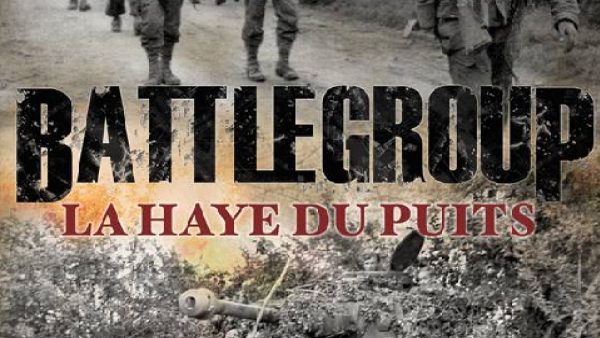
I agree with @coxjul . Myself and @aras had a Battlegroup game this afternoon modeled on the game Warren, Gerry, and I were talking about during Dunkirk Week, the British delaying action across a canal with the church on the British side.
I was playing the British. There was no way I could win. NO way.
God, it was fun.
However, we had our victory conditions set up where Alex had to draw BRC counters at the end of every turn. I could also roll for two additional tanks in reserve (A13s). I took out panzers with close assaults and even the 15mm light cannon on a Vickers Mark VIb.
In the end, well . . . I won’t spoil it because I’ll be putting it up in the forums.
But it was the best game I’ve had since the Desert War boot camp. And I had absolutely no chance of “winning” the battle. But winning the game – again, I won’t say who won, but suffice it to say for now that both sides had an equal chance and it came very very VERY close.
“Game Balance” is critical. Everyone wants their games to be fair. But Game Balance does not mean equal points (or even using points at all).
It’s like putting different weights on two sides of a levered scale, you can balance the game by changing the distance of the weights from the fulcrum. Put the lighter weight further away and the scale will balance. The “lever” is the victory conditions.
In this analogy, you can still use still use points to “weigh” your armies in order to judge how far to put each army away from the fulcrum.
But not to balance the points in their own right . . . e.g., you don’t need 500 points on each side of the scale. However, knowing that you have 500 or 1000 points can still be useful so you know how far to put that 500 out on the lever in order to achieve game balance).
Points are measurement, not a mandate.
Yeah great post knowing what is going on round you off table and that your not fighting an isolated one off encounter is important when creating scenarios
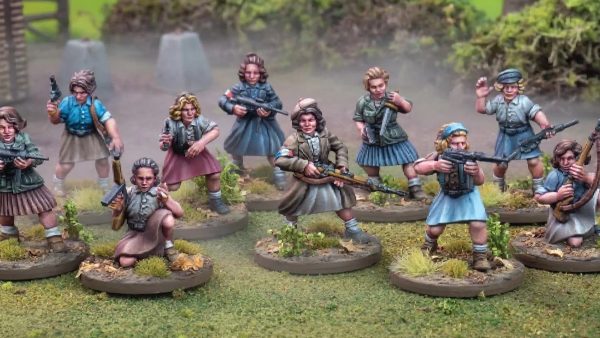
I quite like those Chibi models
GIT, the one time you get to stick up for me too!!! 😉
They actually remind me of an old PlayStation or Megadrive game from years back, but can’t think of the name. I thinking was Sgt …..something?
They remind me of a game called Cannon Fodder
Indeed, War has never been so much fun. 🙂
That’s the one
Loved that game!
Happy Sunday!
As for scenarios, I’m going to say ‘historical’ – especially those which can very easily play out differently from history due to the original’s outcome being on a knife edge.
Probably the best known examples being…
What if the Saxons had held their discipline and the shield wall at the top of the hill at Hastings?
What if Blucher didn’t arrive in time at Waterloo?
What if Severus’ troops hadn’t mistakenly believed he had fallen causing them to break at Lugdunum (197ad Roman civil war)?
The trouble with the Ticket to Ride special edition is that you.can’t us it with the expansions. I actually find the base game boring, even compared to the Europe set (which can be used as base for expansions).
And as far as that caveman club is concerned… I can imagine Warren saying “hey kids, that blow up club was a bit rubbish wasn’t it? Don’t worry, Daddy’s made a better one out of a log and steel…”
Lol yup!
Scenario wise back in the 70’s Charles Grant produced scenarios called Tabletop teasers. They put the gamers in lots of situations where they have to make difficult choices. Although mostly set up for 18th century gaming they can be easily converted to any period of genre
http://www.wargamevault.com/product/68983/Battlegames-Table-Top-Teasers-Volume-1
Happy Sunday!
I love asymmetrical wargames, one of the best games I ever played pitted WW2 Italians, a tank regiment, 3 infantry battalions and support, against a soviet mechanised brigade. I had absolutely no chance to stop the red hordes, but was able to delay them long enough for a German Armoured counter attack to arrive. Highlights of the game was my Italian M13 tank battalion killing a T34 section (needed 2 rolls of 11/12 on 2d6!) before being wiped out by the return fire and the remarkably tough entrenched infantry battalion on top of a hill holding back 3 battalions of Soviet infantry for 4 turns before dying to the last man! The scenario came from the Spearhead supplement Where Iron Crosses Grow. Spearhead is still to me, one of the best WW2 rule sets ever!
For more asymmetrical wargame ideas check out Scenarios For Wargames by Charles Stewart Grant which contains a number of unbalanced scenarios (50 or so if my old brain is working properly at this time in the morning) with realistic victory conditions. Many of these scenarios were immortalised in Battle/Military Modelling magazine in the 70’s and 80’s with 2 part articles, the first being the scenario set up and the second a battle report. I heartily recommend the book to all gamers, as almost all of the scenarios are adaptable for almost any period. Its still fairly easy to pick up a copy from Ebay or from second hand book sellers at shows, I think there might have been a reprint in the last few years but am not totally sure.
We have turned @warzan into a grognard?! Epic! 😀 😀 Victory at last! Plenty of room for you and your chair on our side of the gaming den, good sir!
An extensive collection of pipes and slippers for you to choose from awaits
Surely he’ll have to start off with a hard stool away from the fire until he earn’s the right to a chair – yet alone a padded one?
Great post, @dynarod1164 – it sounds like you were along the left wing of Army Group Don on the run-up to Stalingrad? The Italians and Romanians were hit very hard along that line, that’s part of what caved in and allowed the Soviets to encircle 6th Army (as I’m sure you know, by the sound of your post) .
“Where the Iron Crosses Grow” – a truly great line from a truly great movie. 😀
Do you mean Cross of Iron?. Did it have a different release name in the US?. This is the James Viburnum/James Mason film were talking about?
Great movie. If it is the same one? Love it when the T34’s ( real ones as well) attack across the trench lines especially when it just drives through the concrete block. Pity they ran out of budget to make it properly.
No, that’s the name, @torros – Sam Peckinpah’s Cross of Iron. The line FROM the movie is: “And I will show you . . . where the iron crosses grow.”
Oh, I see what I did, I capitalized everything and made it LOOK like a title. No, that was the line from the movie, not the title of the movie.
Still a great movie no matter and one of my top 5 WW2 movies
Yeah you got it @oriskany . Both of the Spearhead scenario packs are well worth looking at, if you can get copies, as they have some really remarkable divisional level scenarios based on real WW2 actions.
The old GDW command decision scenario books are great as well and easily converted to Spearhead
Warren, I’ll generously let you create some space and learn to be less of a hoarder by taking a sealed copy of Space Hulk off you 😉
And yes, if I could get five times what I paid for a game that I don’t play anymore, then it would get sold.
I´m a narrative driven player, because my gaming background comes from RPGs and less from Wargaming. So Scenarios are the core to my gaming experience, a game without scenario is horrible boring to me.
Best Scenario I´ve designed and played was for Pulp Alley in a Fantasy setting. The heroes must escort a wounded courier behind enemy lines, from one table edge to the other. In the middle was an Orc Raider Camp, played by the A.I., so it was a single player game where you have to sneak past the Orc patroles, making noise to distract them so you could pass them on the other end. If the Orcs getting to Alarm the Camp, you lost. It was very intense and fun.
You guys should try “Pulp Alley”, make a lets play to this awesome game and the many possibilitys of playing it. It is my Favourit Miniatures Game because it only works narrativly.
One of the main problems of playing asymmetrical games is just trying to find players wiling to buy into the concept
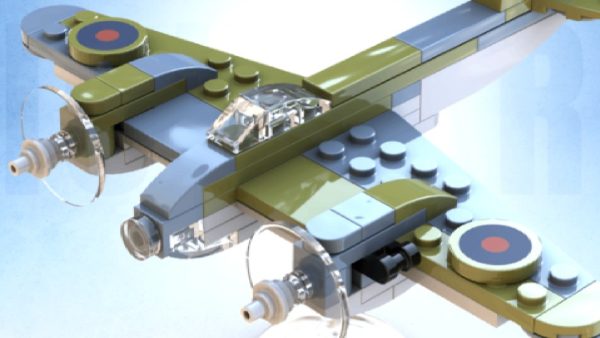
@warzan , ref that awesome airship: Don’t think Weird War II, I’m thinking it’s be great for Weird War I, or the pulp world of sky pirates. Imagine having one of these with a crew fending off (or even acting as) pirates in a mish-mash of fighters ranging from bi-planes to proto-jets, with everything in between (if at least one doesn’t havethe prop in the rear it’s missng a trick 🙂 )
Those airship models seem to be straight out of the old GDW game Sky Galleons of Mars
The airships remind me of Space 1889, John Carter of Mars or the LXG
https://en.wikipedia.org/wiki/Space:_1889
https://en.wikipedia.org/wiki/John_Carter_of_Mars
https://en.wikipedia.org/wiki/The_League_of_Extraordinary_Gentlemen
GDW – @torros , God they made great games. Including Teak Yankee, First Assault. And of course the Assault series, which did “Team Yankee” long before even the Team Yankee novel came out. 😀
@oriskany That’s because they had people like Frank Chadwick,Marc Miller and Loren Wiseman working for them
Man, what an episode.
First off, glad to see the return of Justin’s Mind Melter. I don’t think Warren quite applied the single electron theory right, definitely a new interpretation!
Awesome DAK forces from @suetoniuspaullinus .
Wow, thanks for all the mentions! Thanks, Ben, for the mention yesterday about the Americans in the new FoW release. You’ve certainly nailed it on how inexperienced the American forces were. The battles of Sidi Bou Zid, Kesserine Pass, Tebessa Gap … when Panzer Leader came out with the Desert Leader expansion, they had to invent a new morale level for how bad they were.
Now, if only Patton had ACTUALLY BEEN THERE at the outset of 1st Infantry Division’s (Big Red One) defence vs, 10th Panzer at El Guettar (sorry Warren).
Okay, Warren, you are right. I see these chibi World War II figures, and yeah. There’s a gentle sigh. It’s all good. But just … like I said … sigh
I agree with Justin and the gang on the longevity of the board game. Like Ben says, my first copies of Panzer Leader, PanzerBlitz, have long fallen apart. I’ve been playing these board games for 25 years. I just hope my miniature armies last that long!
Yep, Az – hexes and counters for life! 😀
Agree with Herrigold and Warren – the d10 –based games are so much easier to design. More of a number range as Ben mentions, the decimal option you mention, easier to calculate probabilities, etc.
Man, so much to talk about on Dunkirk and scenarios. Yeah, gotta say, Warren … I’ve been playing games for 25 years and only recently ran across the whole idea of points.
Wow, thanks again for yet another mention, Ben on the question of civilians in a combat zone. Can’t take credit for it, really, that’s a great mechanic that’s in Force-on-Force (20mm moderns).
Hidden and concealed movement and deployment (night fighting) is always a little tough. I always like the use of dummy counters. One is the real unit. Four or five others are dummies. Only when that unit shoots or an enemy comes within a certain distance is the owning player compelled to reveal the counter and place the miniature.
Warren, when we were talking about how far an army can or can’t go and we were discussing supply lines, maintenance problems, and dispersal of support assets, one thing I did forget to mention
regarding that 200-250 mile operational range of a mechanized push …
When an army moves across enemy country and we see these big arrows slashing across the map, we have to remember that the invader has to CONTROL all that ground behind the spearhead as well.
Often there are follow-on forces, but these don’t arrive until later (being less mobile). In the interim, these spearhead units have to detach holding units, especially along the flanks. The spearhead has to “cannibalize itself.” This quickly draws off striking power from the spearhead, and eventually the spearhead “runs out of momentum” until some of that tail can be brought up behind the leading elements.
Can’t wait for the GenCon coverage! Hope Ben and Justin have a great time in the US!
I think variety with wargaming is the key.
I enjoy a balanced games where generals test their skills against an opponent. Where the meta and the tactics are tested from a balanced or semi balanced point.
Also I enjoy the unbalanced or scenario based game. Where my small force has to defend/destroy (or whatever) against a superior force.
These however are 2 very different things both good.
For me the remaining space is the reenactment type game where you attempt to recreate anot event in history. Again a good game to play.
In all of these ways to play I have to feel challenged and to see the problem and work around it.
But for me the same priority remains the best games are against the best opponents. I’m not on about skill I’m talking about a fun and fair player! So I’m saying who I play is more important that what I play.
Both have their places in gaming
A dicksterity game where you flick your wooden meeple.
And yesterday @warzan reminded me that fist can be a verb.
My head hurts :p
Happy Sunday!
Just bought a new house,main criteria was room enough to take ALL gaming stuff with us. I live with an angel, a gaming angel.
Happy Sunday
As a follow up to the deluxe games topic, what are people’s views on the after market bling options that have appeared for boxed games over the last 5-7 years (custom meeples, tokens, sleeves and the like)?
Been a board gamer for about 25 years and I find they are a good way of not just improving the look and feel to a game, but also extending its life and any potential resale value (as the original content gets preserved)
As many of us, Kickstarter shiney syndrome has been a major factor in the increase in my collection since about 2013, and with it the stretch goals which upgrade components a major add-on draw if not directly added to the Core game for the reasons previously stated.
Unbalanced scenarios sound like a lot of fun, but they require planning and coordination. For my weekly game where we only get a couple of hours to meet down the shop and I’ve no idea when or who will turn up until they actually do, balanced games are more practical. Theres no time lost picking lists and agreeing on the scenario rules, and we can just play with whatever terrain we can find.
I like the idea of having a scenario both players are working towards, along with hidden objectives taylored to your factions play style. Deadzone Mk1 had some hidden objective random draw cards. I liked that idea, but I feel they would be better if they were developed further, if more options were available, and if they were a little more narratively influenced. Perhaps when you add Lord Commander Dave to your army he adds a card to the random draw deck to keep 80% of your infantry alive at the end of the game because he protects his men in the fluff? Perhaps when your opponent adds Lich Lord Trevor he adds a card to your deck because he eats the souls of models that die within 5″ of him and if you get this card you have to prevent him eating more than X of you guys souls? Or perhaps Dave and Trevor are enemies in the fluff and when both are in opposing armies you each add a card to kill the other guy, double points if its with their nemesis? This would be easier to impliment in a digital environment perhaps?
Thanks for another great shows guys. Also a nice tongue in cheek jibe about ahem spikey bits. The chiby ww2 models are okay but I much prefer the CMON game Rivet Wars minis set during an alternate ww1 which unhappily didn’t take off. For your air ship you just need a Vincent Price model from the Jules Verne inspired film Master of the World.
For me, the best scenarios I have found for games has come from Infinity. I think that’s mainly because there is a real narrative to them, you have to get to the control room, do this, escape. Or go rescue someone, and it all fits so perfectly with the games idea of small special force squads on the tabletop.
In those circumstances, it doesn’t really matter that its also equal points, I think it gives the same feel because it gives everything happening in front of you meaning. In fact, I would argue that a battle like Thermopylae isn’t so interesting to replay because its uneven, but because of the story. With narrative scenarios, you get that, equal forces or not.
interesting, but what if you played the Thermopylae game as a precursor to the subsequent Greco-Persian battles. The victory of the Persians at Thermopylae actually gifted the Greeks several things;
firstly heroic martyrs to rally around and I’m sure there are things that could be used to give a bonus on the battlefield, but we’ll gloss over that.
secondly it showed the superiority of the heavy infantry over the light Persian infantry, so some form of morale bonus could be added to the Greeks for that.
lastly the defeat of the Immortals by the Spartans and the decision of the Persians to use missiles to finish them off. I would make the Immortals only available to attack after a certain point in Thermopylae, if the Greeks are defeated by them, or indeed before they’re needed, then the Immortals would have a bonus in the subsequent battles. Maybe make them cause morale checks when they engage, or the Greeks have to test before they can attack them. If the Spartans survive or defeat the Persians then the bonus goes their way.
I will agree not every scenario works as a stand alone, but by taking it in context of a larger set of games you can bring that narrative back.
Just my thoughts on it 🙂
Haha….@warzans look of disdain at the Chibi WW2….priceless….come join us grognarts….haha..
Asymmetrical gaming is great, the challenge is balance. As @warzan says war isn’t fair, but most people want at least a fair chance to win. A challenge is good, esp if you win, but every gamer has a different line on how much of a challenge is acceptable to them. Equally it’s no where near as satisfying to win if you’re on the side with the advantage This makes rule writing extremely difficult.
Re Waterloo numbers; from Wikipedia –
The French army of around 69,000 consisted of 48,000 infantry, 14,000 cavalry, and 7,000 artillery with 250 guns
Wellington’s army consisted of 67,000 men: 50,000 infantry, 11,000 cavalry, and 6,000 artillery with 150 guns
Obviously there were various other mitigating circumstances, but on pure numbers they were pretty evenly matched.
Competitive gaming is something I not really enjoy in most of my games, I always enjoyed narrative and uneven scenario driven games more. For example I love Infinity but the one criticism I have about it is its competitive nature. Also I don’t think it shouldn’t be called unbalanced, uneven fits better. In a way the game needs to be balanced, the balanced in uneven games comes from the victory conditions.
One of my favorite articles in one of the old White Dwarfs was the one where they recreated the Battle of Rorke’s Drift with Orcs and Imperial Guards. That opened my eyes to the possibility to have uneven games we than tried to emulate that in our WH40k games.
Spectre Miniatures game is a game I’m very interested in because I love the narrative nature of it. Unfortunately my time is so limited right now I really have to plan and think about what I want to do with my limited hobby time. A Black Hawk down scenario comes to mind, taking out/arresting the head of a Latin American cartel with just a few operatives, or bank robbers who have to escape before they get overwhelmed by law enforcement. Actually I can think of many possible uneven scenarios which makes this system so interesting to me.
I’m not sure but didn’t Flames of War Vietnam had scenarios that featured that uneven game style? I can remember one scenario for the Navy Seals where they have been dropped of, needed to fulfill an objective and than get to the extraction point before the Vietcong took them out.
One of the scenario’s that I’ll be trying to play (and write) in the next couple of weeks is a 40k ‘Get to the choppa!’ game. It’ll feature my IG Catachans (a 10 man squad, armed to the teeth) that will have to get to a getaway point across the board but they’ll be stalked by small groups of my friends Tyranids. He won’t have huge amounts to start with, but he’ll get reinforcements and some will respawn at certain locations. I want the game to have a number of difficult decisions for both of us, what road do I take, do the tyranids attack right away or do they gather numbers first, do I split up or does he? Victory will be decided on how many guys make it out, if any!
Obviously it’s based on the Predator and Aliens movies and it’s something that I’ve been wanting to write and play since I first started collecting Catachans some 10 odd years ago. Now that I’ve got my jungle terrain finished, I’ll really have to give it a go! ^^
Oats Studios’ Firebase short-film made me want to get my Catachans out of storage.
I think there was a Warhammer comic were a team of Catachans had to hunt Chaos Cultists in the jungle. Their monosyllabic Ogryn used to repeat the word ‘MooM’ 🙂
With the new 40k I was thinking of re-doing Catachans with non-GW bits. Check out the jungle bits from Anvil Industries and Mad Robot Miniatures – they have a recognisable ‘Rescue Team’ 🙂
I have come from more of a collecting/modelling background and though I painted and collected 40k miniatures I never game with them, it was only with the rising popularity of skirmish games that I have become a gamer.
When I play a game I will got far more satisfaction from it if we have told a great story whether I lose or win, than I do from a slug fest.
I feel the balanced armies approach is lazy game design (probably get shot down for this, but i have never been into the competetive scene, maybe down to the fact that I am a sore loser)as it is far more difficult to design an asymmetric game with victory conditions that then provide the balance to the game.
One of the most memorable games I played was a French Foreign Legion v Arab tribesmen where the Legion had to hold a fort for 5 turns against the Arabs which once killed where bought back on to the table in subsequent turns, the tension felt as we approached the final turn with everything balanced on a knife edge was terrific.
Recently I have been playing quite a bit of Malifaux and although this is point based I think they overcome the slug fest mentality really well through having the shared primary objective, along with each player choosing two from a choice of five secondary objectives, which can be kept secret or revealed at begining of turn. This adds a further level of narrative to the game as well as forcing you to focus on your objectives rather than going at each other hell for leather, I have won many a game of Malifaux with only one or occasionally no models left on the table. I have also lost many a game but still thoroughly enjoyed the game because of the stories we told.
I am not saying one way is better than the other but for me I gave to tell stories and have fantastic adventures so will always look for innovative scenario design or design my own.
That airship from TRE games. I have the same difficulty with that as with a lot of MDF/wooden terrain/model kits in that no matter how detailed they get, they still look flat-pack, and two dimensional. They don’t look real to me.
In terms of games you’d use something like this in, can’t believe nobody mentioned the kharadron overlords for age of sigmar.
Back in days of yore we used to play Charlie company which was a Vietnam game where all the players were American and an umpire played the VC. We made up scenarios like finding a tax collector etc. During the game the players moved and spotted for enemy infantry ,booby traps etc and in some games got tense as sometimes a civilian would appear and disappear or they would be attacked in force etc. It was good fun and then one day we ran a a scenario when absolutely nothing happened . Still took 2 hours to play the game as it was ingrained in the players to search and spot for everything from previous games
who was the umpire for that one, it’s a genius idea letting the players own paranoia do the work and I imagine similar to how some patrols would have went after a while.
Me and Jerry ran it
Although looking back it was more luck than judgement as if I remember correctly it came about as we couldn’t think of a new scenario to run and it sort of developed from there
Books and d10 for the win! and nowhere is this more exemplified than in the Call of Cthulhu rpg, I love the CoC can’t get enough of the CoC. *ahem*
Nice to see @warzan joining the grognard table, there’s always room for another armchair before the fireplace to sip whiskey, brandy and discuss the games like the armchair generals we all are.
As far as scenarios go there are some great gaming examples of the hidden objective style games, one of the most recent that I recently picked up is Frostgrave’s Ulterior Motives. It’s a set of cards with some open, but mostly hidden bonus objectives that you can either play along with a standard game scenario or as the main thrust. What I find particularly fun is that they require a specific feature on the table, like a Zombie, doorway, portal etc. However each card tells you what you need and two red herrings. You place all 3 and then your opponent is left trying to work out what you’re after.
I enjoy balanced games, being able to play KoW, or Bolt Action, Saga or whatever with anyone who fancies coming down to the club it’s great for a small period and you’re not sure who is going to be about.
But, and this may shock some people, I do have a fondness for scenarios in games and asymmetrical games. They are not as easy to play, and sometimes I feel this is what puts people off. Take the Rorke’s Drift game as an example, I’ve gone through several play tests before rolling it out the first two times. Then some more play test games as I added extra units, or another one to bring in night fighting. I’m still tweaking it, but I have a game that I enjoy and can run at conventions or clubs whenever I want. That’s an extreme example but if you’re thinking about running a scenario based game you need to work it out in advance, it’s a bit more effort than turn up and play a pitched battle but I feel it’s a lot more rewarding at the end of the day.
On the subject of hoarding, I try hard not to own all the things but I do. Who knows when they’ll come in handy. In the past I gave away or sold old armies or things I didn’t believe I’d need again. Years later I’ve wanted to pick those minis up again and they’re OOP, more of a scifi and fantasy problem.
I think it’s still a requirement to bring your own condiments so you can demonstrate great battles at the dining table during the port
always
I cannot deny the feel of books but my issue is with games where you have so much errata and need so many notes that your book is full of sticky notes. There is also something to be said for the PDF. It is far easier to search and find what you want and game companies can update the PDF and you always have the latest errata baked into the latest version of the PDF.
Also, some game systems need multiple books to play. You have carry around a library versus a tablet where you have them all in PDF form and they can all be opened at once and book marked.
The are pro’s and con’s to both. Nothing beats the feel of the books but nothing is like the efficiency of the PDF.
I actually think GW have done a lot to bring scenario based gaming to a lot of people’s attention recently by adopting their three ways to play, of which only one uses balanced pointed out forces, for their two main games.
I think people are more open to the idea now.
There is something unholy with Ben being in the studio. He should have Skyped in from the other room.
I am totally onboard with scenarios vs just 1 vs 1 games.
However, you cannot have competitive play without symmetrical games. If you are just playing at your local club you can agree on unbalanced asymmetrical play scenarios.
While 1v1 games work for competitive play, IMHO they get tiresome. I play X-Wing and while I like the jousting, I also love to play Epic Battles, Heroes of the Aturi Cluster and its variants and the Trench Run Scenarios as well as others. I like the thematic and the tension of the scenarios.
I would love to see if there could be a game system where you have chained scenarios where the result of one impacts the next and so on until there is a final battle.
My favorite game to play right now is Star Wars Rebellion (and cannot wait for the expansion) board game. The entire game is a struggle. You can feel the desperation of the Rebel side as you play. You can feel the sense of WTF from the Empire side when you thought you had a battle won. I keep wondering if there would be a way to translate that same feeling to the table top.
Not sure if you have played Memoir ’44 — Although no longer in print, the Campaign Book Volume 1 and Volume 2 are amazing in setting up different scenarios to play. You could go from one end of the book to the other and just play the scenarios. There were great back and forth scenarios and many asymmetrical ones where thinking your way out was the only way to win.
I also agree with AZ about one vs many. I love the idea but unless you have an overlord app like in Descent 2e, it is hard to pull off because that overlord needs to have so much knowledge and skill to play against others. It is like the chess master playing 5 different games at once.
I would love to see someone put together rules to recreate the scenarios similar to Lord of the Rings. You have an objective or castle one player must hold back from a horde that greatly outnumbers you. You have several parallel scenarios that are smaller battles. Depending on the outcome of the smaller battles the person with objective may or make not get reinforcements. So, the main battle requires the person holding the objective to hold out for time. The side battles are to determine if the reinforcements arrive in time and how depleted are the reinforcements when they arrive. You can do this all in real-time. As one of the reinforcement battles completes, if the reinforcements win they just get moved to the main battle. For each reinforcement that come into play, the person playing the main objective get moral boosts that lead to more accurate shots.
@turbocooler – that gives me a great idea for a ‘doubles’ campaign. Two pairs of players fight through a series of battles simultaneously.
One player is leading the defence of Gondor: in scenario 1 they’re fighting at Osgiliath; in scenario 2 it’s Pelenor fields and scenario 3 it’s the final assault on the city by the Witch King.
On the same day that scenario 1 is taking place, the other pair of players could play the scenario where the Uruk Hai ambush the Fellowship where they end up being split up, Boromir dies, etc.
Depending on how this skirmish goes, it could make an impact on how many Osgiliath veterans make it back to defend Pelenor. And vice versa. Depending on how successfully Gondor fights at the Osgiliath battle could have an impact on the second ‘Fellowhip’ scenario. If they did well, then perhaps there are fewer orcs left guarding the entrances to Mordor, or Saruman can’t throw all of his Uruk Hai against Rohan, but has to divert a portion of his army to defend his flank.
This is all just off the top of my head, so you’d need to properly think about it, but the point is you could have two sets of linked scenarios being played simultaneously. As well as each game impacting upon the next and/or the final scenario, how you do could also impact your team mate’s next game.
That would be really cool. (And obviously this principle could be applied to any game or period.)
@angelicdespot — Yes, exactly what I was thinking. However, it does not need to be limited to LoTR. What you stated make perfect sense. Would love to see it written up as a framework for game systems.
One of the most interesting games I’ve seen at a con (Historicon I believe, I wish I could give credit but I don’t remember) was a WWII scenario on the Eastern Front. The gentleman running the game had set up a fantastic rail yard. Basically it was a German force embedded in the rail yard with wave after wave of Russians attacking. Whenever a Russian player had his unit wiped out he go back the edge of the board and re-enter with a new one. The Germans were going to die, no question. The objective was to see how long they could hold out. I remember the German players just tallying up how many Russians they had eliminated.
I’m almost completely uninterested in games with no narrative. That said, I think it’s fairly easy to add narrative, even to points-match style games.
I’m not someone who thinks of himself as much of a tournament player, but I enjoy Dropzone Commander tournaments. The game itself is so thematic that even without any effort, every single game feels like a scenario, and you know the context of the game. (This is also why I’m not a fan of the way the Resistance play as their rules don’t really match the ‘fluff’, in my opinion.)
When I used to play 40K, when we set up the terrain for games we would talk about where we were and why we were fighting and let that guide what kind of terrain we picked and how we set it up. And then even without needing to write any special victory conditions, we would agree who our commanders were and what the context was for the battle. Made games much more fun, even if the rules did their best to frustrate us!
I like scenarios (asymmetric or not) but I need to have the feeling that I will have fun or that the objectives are achievable for both players. Because it can be a let down or a person wouldn’t like to play one side just because they know in advance that they will get slaughtered and lose.
AWESOME SHOW GUYS..made my Birthday all the better..you should do more like this with all of you involved, brilliant..
This post is a bit meandering, I hit the topics of XLBS in places though! Apologies for going all over the place!
I do like a scenario that is narratively cool and mechanically interesting.
In the early 90’s I played a lot of Warhammer Fantasy, 40k and loved the big armies going against each other. I played some interesting scenarios (I think one was from a White Dwarf where you had ‘nids spawning forever against a small army of Dark Angels trying to hold out for X turns or something like that. I switched to RPG’s in the late 90’s (Many many RPG’s, but a lot of D&D both 3rd and 4th ed). Two things brought me back to miniatures gaming (well 3 if you count BoW!).
One was Malifaux, the cool setting and character design, but also the scenario play. Malifaux does a really good job of giving you a few models with very interesting abilities, that can have a lot of synergy with other models. Very quickly the 2VP/4VP main objective score plus hidden strategies mean’s you can have a game which is about “how do I best combine these abilities to achieve my objective, whilst preventing my opponent” not just kill-kill-kill (though that can be fun too).
The second was DropFleet, which is the first time since I was a kid that I think I bought something purely on the strength of the models alone. Beautiful mini’s. The game takes too long and involves too much in the way of buckets of dice, and the factions mechanics for the most part don’t follow through on the factions flavour enough. That is harsh, I am picking out the things I like the least, I still bought the starter set at Spiel and have enjoyed it.
I would say almost all war games we play now are fundamentally asymmetrical (the forces are not identical). Sorry, that is a bit pedantic, but I think it is a relevant point. I think the guys are saying we want the asymmetry to extend beyond just the special rules and statistical values of our troops.
That can be taken to mean asymmetric objectives, and that might mean altering what forces are available, and removing the idea of “equal points”. I find list building fun, and I like taking my favourite mini’s into battle, so it’s nice to keep that in mind. I would caveat all this by saying there is a place for all these kind of games, and I don’t want to judge or hate on anyone who wants to play any of these things and have fun with their mates.
Games should strive to be fun, and there is some pretty sound research that shows that we have the most fun under the following conditions.
– When we feel like we “just about” beat a challenge. (“Rubber Banding” in racing games came from this idea, because it’s rarely fun to be 3 laps behind the only other player).
– When the outcome of an action was largely understandable after the fact. Not that you know the outcome, just that it’s internally consistent from what you’ve come to know about the simulation. (E.g. I expect my sniper to shoot well at long range, but I missed because the enemy had actually placed a hologram of themselves there) as opposed to (I expect my sniper to shoot well at long range, but he missed because actually shoots poorly at long range).
I think even in what this weeks episode is identifying as asymmetry, you wouldn’t want the above things to be true. You still want it to be a close thing, you still want tension, and to be able to plan your actions to try and make a cohesive strategy to solve the problem before you.
I don’t really like mass battle games, games that take longer than 90 minutes, games with too much randomness (how much is too much?) and I’m not a fan of historical. I think all of these things can be fun. Certainly, I’m glad the hobby is filled with people who enjoy so many different things and games to suit all tastes. Sometimes cool stuff can be borrowed from another part of the hobby that I might normally avoid and use it in something I do love.
Physical rulebooks for me. And i also like d10s for their range and because they can scale.
I prefer asymmetrical ‘narrative’ gaming. Part of what made Space Hulk ( and the like ) a good game was the asymmetry. It was a disappointment to me that the Tyranids didn’t retain that uniqueness into W40K. As it happens, a Necromunda re-release has just been announced. Again, part of what i liked about that game was that different gangs progressed in different directions and would be strong at different times. Android Netrunner springs to mind too.
Is that Avatar from the cover of the 2nd edition of the Nobilis RPG?
My dear chap. You have a good eye and good taste, at least i infer your good taste. It is indeed Sphinx Mystérieux, from the cover of the Great White Book.
It certainly counts as one of those very wonderful cases of a beautiful physical rulebook. I did see the 3rd edition the other day, I can’t recall what it looks like, but not nearly as iconic on the shelf.
Alas not, though the web chit chat would seem to indicate that the game has been improved in the third edition. As i understand it it was James Wallis who facilitated, and even pushed for the aesthetics of the second edition. When the time came for the third edition R. Sean Borgstrom ( now Jenna Moran )didn’t have the same kind of support that James gave her and went for an easier to manage option of en masse manga artists and printing in China. ( I think they were in China, i’m not sure about that. )
The Great White Book is definitely a keeper for me.
The airships are differently “Space 1889” styled. I used to build these from scratch with plastic card and “Llyod collection” style pieces.
As to selling off games, I can’t do it. Esspesally I can’t sell off an army!
After I build the army troopers, paint them, and then play them I’ve invested too much time to ever let them go. I don’t play tabletop games to “just win”, I play these games for the adventure. After I’ve been on campaign with my troops and survived ambushes, triumphed against over whelming odds, and presented the colors with honor, I could never sell the lads. I can look at an army on the shelf and retell the adventures as tho they were movies or a novel.
@warzan Noticed the look of confusion that briefly crossed your face regarding the nature of metallic paints and tactility. Check that one off the bucket list…anyhow, the caveat to that comment that couldn’t be properly conveyed in a short summary is that it was not a favorite gaming piece but a favorite hobby piece. I was feeling a little nostalgic while painting that day and remembered how much I really enjoyed the different way they cover the model, the texture and how they flow off the brush; first time my parents bought me a set I ended up with the most blinged out skeleton mob ever.
I also think you’re missing a trick with those chibi guts figures. Strikes me they’re the perfect way to introduce (indoctrinate) young ones into the modelling and painting aspect of the hobby. Once their skills start to really shine should be roughly when they start asking for an allowance, then you rub your chin and say “well…I guess for each napoleonic/imperial guard/Viking unit I could give you a little allowance”.
If you want to see a bunch of asymmetrical scenarios, go check out Panzerblitz from Avalon Hill. Published in the 70s, it was my very first Wargame. With around 20 scenarios, some have delaying action scenarios. Set on the Eastern front of WW2, there’s a small German mobile force and a huge Russian attacking force. Victory conditions are determined by the number of Russian units that exit a specific location. Very tough but a lot of fun. Even if you don’t play Panzerblitz, it’s worth looking at the scenarios for ideas.
Happy Sunday
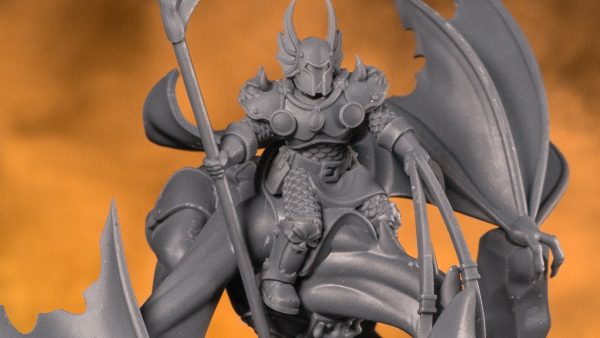
@warzan the Order cultists can drag enemy models through portals 🙂
I have to admit I do really like those airships and feel they would be great for a John Carter game.
There was quite a bit of talk about games scenarios for tabletop but surely an RPG campaign exhibits an even broader spectrum of scenarios often put together by the GM on the fly. We have played a number of skirmish level games using the Deathwatch RPG rules to great effect and when combined to some of the boardgames such as Warren’s virgin Space Hulk sets you can have some real fun.
Taking what Az said today about the haunted house game I am now looking to put together a Genestealer cult version with Imperial Guard. Using the Space Hulk tiles and the purestrains mixed in with the new Cult models and smal teams of IG in a temple setting. I think a special deck of cards will be needed for a mix of stage 1 cultist IG which can be activated by the cultist player who can have a number of actions to choose from. Scent trail (purestrains bait), sabotage (increased risk of jams), enemy amongst you (attack your team), where’s Jonesy (Genestealer player takes control), things like that.
I like a mismatched scenario but feel to be effective it needs to be in a campaign setting. Things like Rearguard, Delaying Tactics, Sabotage and Last Stand have always been favourites of mine to play.
Years ago I came up with a scenario which I call “A Spanner in the Works”
One player is defending an area in which are placed 10 objectives,
The attacking player sets up outside of the defenders area and must destroy these objectives.
Using a 4ft by 4ft board (28mm scale) as an example:
The defenders set up inside a 12” Square area 18” from each table edge; and place the 10 objective markers inside this area.
The Attackers set up to 6” from the edge of the board.
The Attackers make the first move.
Each destroyed objective has a value of 10 points
In a one off game count the markers destroyed by the end of the game.
The Attackers win if they have 60 points or more, 50 points means a draw and 40 points or less is a win for the defenders.
For campaigns you can use this scenario to hinder the opponent who is being attacked by making pre determined equipment and/or vehicles more expensive to use in the next battle.
Convert the destroyed objective points to a percentage and that is how much more the determined equipment and/or vehicles will cost (hence the scenario name “A Spanner in the Works”).
How the objective markers need to be destroyed is left up you as is the number of turns the game will be played over.
And there you have it “A Spanner in the Works”
Happy Sunday and thanks a lot for a great weekender!
I have to agree with you @warzan, I don’t like those chibi WWII soldiers.
One of the best asymetric scenarios I’ve played, was from a old White Dwarf, featuring Shaeffer’s Last Chancers against a whole 1000 points 40k force. Great fun and lots of cool hollywood like scenes you can recall even decades later 🙂
Good nigth good flight for you Ben and Justin.
When it comes to asymmetric games and scenarios there is rules like black ops and force on force, each set of rules has night fighting and other asymmetric rules, the problem is that the rule books are not popular.
Wow that UHT monitor you have is fabulous ben actually looks as if he is their.?
UHT? Does that mean Ben is the BoW milk monitor?
Oops.
UHTV.
my mind was melted by a Russian on You-tube making living Homunculi named after Pokémon characters – he put them in a fish tank together and they… !!!
https://www.youtube.com/watch?v=8pwbTYSclic
I thought the One Electron Theory meant our reality was Pixilated – we are programs in a Digital Simulated World…
Like in ‘World on a Wire’
The Baltic Sea Anomaly is an ancient UFO with a thousand-foot long skid mark…
https://www.youtube.com/watch?v=J-ANwWWGB64
a brilliant funny show the starfinder figures are fabulous looking.
Those Airships are pure Space 1889.
Bring on the Red Menace.
See ya’ll at GENCON
happy sunday!
Great show guys
I used to run Battle at the camp at tournaments i used to run, though we tweaked it for 2 players.
hilarious to see an imperial guard colonel meeting a hive tyrant for negotiations in the middle of the table 🙂
most fun event i did, i themed all the missions, and everyone was either on the good guys or bad guys side, and i had enough missions that each turn it changed depending on which team won most games (i had a decision tree of missions).
it was all themed over the invasion of a world, and each round i would announce how it was going, all the players really got into it, and while i recall that the imperials just won, i have no idea who won the actual tournament!
Age of Sigmar with the airship. Kharadron Overlords, the sky pirates!
Or Star Wars, Jabba’s Palace style ship.
Or Final Fantasy X:
https://www.youtube.com/watch?v=n-qViD2WbeQ
Great show.
I really like scenario driven games and find that a game that tells a good story is often more fun then an equal battle. For our ongoing Victorian Science fiction campaign we have never used a point system or equal forces. The campaign started with a scenario very loosely based on ‘The Eagle has Landed’ and I mean very loosely. Prussian forces attempting to kidnap Queen Victoria whilst also stealing the blueprints for a new British walking Gun platform. The whole battle took place in a little village of Sandringham during a landship naming ceremony. From there we just wrote little stories to continue our campaign. Since then we have had battles were refugees are on Mars are trying to escape pursuing Prussian Aeronef bombers, battles between logging teams and giant astral squid and even a battle at an ancient dig site where some Martian giant spiders took to the field in a four player game. I’m keeping track of our campaign games on my little blog if anyone wanted to look at our scenarios and use them for their own game systems.
I guess for our little band of players we don’t really care about winning or losing a particular game, just as long as it tells a fun story.
One scenario I would like to try is one based on ‘Black Hawk Down’. I imagine that would also be a pretty good scenario for 40k players too. It’s basically a rescue mission and would be great at a more squad level setting.
First of…community spotlights. Wow!!! Just…WOW! Friggin amazing stuff.
I’m on board with the narrative game as well. I know it got a lot of critique, but I actually really liked the idea of no points in Age of Sigmar. Where you and a friend come up with a story and just go with the models you like and match what you agree on. One guy escaping the hordes of Khorne, trying to close the portal before they overtake it, and thus gain access to the home village. Stuff like that…even if one side fails, there’s plenty of options to continue the story. What happens once the horde enters the village? Or maybe the portal led somewhere else entirely. Those are the games I remember. That goes for my roleplaying experience as well, btw. It’s the odd matches, the weird solutions, the unexpected that sticks in my memory.
Thanks for another wonderful XLBS. Have an awesome journey to GenCon.
In regards to scenarios, I quite like rear guard actions, where a smaller force is trying to slow down a bigger force, so that an ordered retreat can take place. Exampkes if tjis can be found throughout history, Corunna 1809, Dunkirk and Napoleon’s retreat from Moscow are a few examples.
We once played a four player game of 40k where we each played forces from one of the chaos gods. We used a square 4×4 board, each player deployed in a corner with their nemesis God opposite them (Khorn opposite Slaneesh, Nurgle opposite Tzeench. The objective was the centre of the board and I there were bonus points for killing your nemeses troops! It was awesome!
Great discussion on dice. Having modded a number of games, I’ve ruminated on the virtues of different kinds of dice quite a bit. As Warren mentioned, d10 are fantastic in that they scale quite nicely, and I like using them as scatter dice as well (the pointy diamond shape of the d10 provides both direction and quantity, which is great). d20 are great in that each dice result represents 5% of a chance, making it easy to determine the difficulty of a challenge. I think Ben is quite right in that d4 are quite deliberate, and it’s very easy to apply the logic of “there’s a 1-in-4 chance of this happening.” Having cut my teeth on BattleTech, I’m still enamored with d6s. d6s operate in that space between d10 and d4s where things can be thirds of a chance. Also, using 2d6 provides an interesting mechanic over a d12. Where d12s provide an even chance of 8.333% for each result, 2d6 provides an inherent bias because 7 is the statistically most likely number in 2d6, with a decreasing likelihood of results heading upward or downward from there (1 and 12 being the least likely combination of results). This inherent mechanic is a great starting point of a “base to-hit” target number or trigger for a game effect. Settlers of Catan uses it to great effect with the movement of the thief pawn. d6 are also great at cross-referencing results with tables, where one d6 represents a value in a particular column and the other d6 plus some attributes is a value in a particular row. Confrontation 3rd edition uses this very elegantly to resolve wounds. The weirdo dice for me have always been the d8s and the d12s.
To me a D4 will always be the damage for a magic missile and for that reason will always one of my favourite die
Me and my friends were always coming up with custom missions for dropzone commander.One that stood out was one where the mission was to take out a giant scourge creature.My wife made a scourge style sarlac pit looking creature with modelling clay and I made 4 tentacles.We wrote a stat line for the tentacles giving them damage points and a weapon stat.The sarlac pit was placed in the middle of the board.Once per activation a d4 was rolled to see which tentacle rose up from under ground.It was placed 4d6 in a random direction from the pit.It then attacked and then stayed there for the rest of the turn.The tentacles could be attacked by any team and if one was killed,it stayed in place and became a focal point.If it was not killed it went back underground at the end of the turn but any damage it had taken carry over to the next turn.If the centre pit monster is killed then any tentacles in play remain in place and become focal points and any underground remain underground as the creature is dead.The last time we played this we had 5 players.I became the scourge “AI” player and set up in the middle, the rest teamed up 2 per team.My objective as the scourge AI player was simply to defend the creature and be a hindrance to the other players.on turn 3 the first 2 tentacles appeared on the same side of the board,the team on that side then killed the creature resulting in the only 2 focal points being on their side.The other team spent the rest of the games piling over to that side to capture them.I didn’t last long fighting 4800 points worth of units with only 1200 points worth but it was a lot of fun.After that we came up with the idea for the “AI wars” were each session 1 player plays as a neutral force and has to think up that sessions mission.It was a good way of playing a game with 5 players with 2 players per side making up the other forces.Another we came up with was a neutral resistance force escorting 3 trucks across the middle of the board .The other 2 teams had the capture the trucks and drive them off their own board edge.
Ok how’s thus for a 40k scenario? A world is being invaded by (place your chosen hated for here) and after the hive city or town has been setup, the Imperial players only main objective is to funnel large monstrous creature sized and chariot sized oval bases packed with panicking civilians. The poor doomed souls of the Imperial citizens start 12″ from the enemy players table edge, already in shooting and charge range. On turn one of the invaders they can direct as much fire as they want at the citizens but each base removed as a casualty adds a command point to the Imperial side. The citizens automatically fall back at the end of the defenders movement phase, roll a D3 as the direction they fall back in is either “run to left, run to the right or run straight ahead”. The citizens fallback 2D6″. Here’s the catch; the defender can direct the citizens if there is a friendly INFANTRY model that is not pinned or falling back within 6″ of the citizens. If the model or squad IS pinned, they can attempt a morale check on the citizens to make them stay put! “Stay there! We’re here to rescue you!”
You can add transport and the like, requiring a passing a morale check to get in. Enemies within 6″ autofail the mirale; monstrous anywhere on the board is -2, gargantuan? -4
Hey gaudy, great XLBS, much fun!
As far as Asymmetry goes, yeah I get ya!
Back in the day I used to play much Necromunda. It definitely had flaws, but it did have a factor built in for Asymmetrical gang fights… but more as a way for the Underdog to even the score.
One of my favourite scenarios was also for Necromunda. It was one I devised myself too.
In the old rule book there was a scenario called “King of the Spire” designed not as a confrontational fight but more a race up a tall tower to be the first to hit the Big Red Button. It supported up to 4 players. It was ok, but I wanted something more challenging. I set up all the terrain I had on a 6 x 4 table, designed in lanes. The goal was simple: run from start to finish first. Not so simple… Near the start was a 3″ high Aqueduct (Aka Quicksilver Creek, for which the main settlement was named), half way along was a tower with two lasgun bearing snipers. At the end was the goal, but built into the goalpost was a flamer!
Make it from the start to the finish line…
To get across the creek a player had roll a successful initiate test to bounce across using Rubber Moss, or hope they rolled well on a d3 + scatter die. The snipers were controlled by the player to your left. Finally as a racer approached the goal post their run would be interrupted by a single flamer shot… which I think I let them try to dodge on an initiative test.
Players could select any three gangers ( so if one had a Movement increase they always got selected). If a Ganger was taken out by an attack, fell or ran into an area that wasn’t part of their lane or fell into the creek itself, they were removed from play. To make it easier there were no rolls for Serious Injury, I reasoned that an impartial medic was on hand to fully heal any competitors ( Soft, I know lol). If you lost all thre competitors you were out. Other wise prizes as appropriate for 1st, 2nd, 3rd and 4th.
I don’t recall ruling against it specifically, but I never recall any players attempting to stop and shoot their opponents.
Every time we had a Necromunda Weekend at my place (and we had many) I always had requests to set up the scenario, so it became a thing to play it once every time we had a Necro Weekender. 🙂
Best scenarios are in my opinion the ones where one side has the ultimate numbers advantage and the other side position. DDay would be a prime example. You charge a beach with thousands of men only defended by a few hundred, but in nearly perfect position. Another example would be Imperial Assault. 3-5 elite rebel fighters are trying to achieve some objective before they are overwhelmed by the sheer might of the empire.
Of course these are the most difficult to balance. And by balance I don’t mean equal points or win conditions, but equal chance of achieving your very asymmetric win condition. Because in a game where both sides have the feeling they can just pull off a victory until the last turn are the best (in my mind at least).
On the topic of dice: For me the best dice (combo) is the 2D6. Because it is not linear. You can model some normal situations or occurance around the more likely middle numbers (6-8). And some very unlikely events on 2 or 12. But they still will happen. Prime examples would be the kickoff table in Blood Bowl. Or the nerve test in Kings of War. I just love it.
@warzan, have you considered Heroes Wanted? In case you’re not familiar with it, the premise is that the famous hero team is recruiting and the players are the wannabes. To make your hero, you get a top half and a bottom half, each with a different name and abilities. In my first game, I was The Naked Fury! There is a board that they villain travels around and you have to defeat his minions and attack him, but the real goal isn’t really to defeat the most or even defeat the villain. The main goal is to gain the most fame so that the real heroes notice you. In that way, it is co-operative, but also competitive.