


































![O-12 Infinity Fast Response! Firebat Attack Wing Unboxing & Review [7 Days Early Access]](https://images.beastsofwar.com/2026/01/unboxing-corvus-belli-infinity-firebat-attack-wing-coverimage-225-127.jpg)






SITREP: OPS Center – Six Day War Part 2
February 15, 2019 by stvitusdancern


Welcome to Episode Two of the Ops Center with your host Oriskany! He takes us deeper in the conflict of the Six Day War and gives us even more great information that we can use to create scenarios that relate to this conflict.

Grab your favourite beverage and get stuck into the next instalment of the Six Day War of 1967. Can anyone say tanks?
What would you like to see as the next series?















Nice work again Jim
Thanks very much, @grimwolfuk .
Now there are two very minor corrections to this video I’d like to make before our sharp-eyed viewers see them:
1) 12:33 I say “General Nasser” – this should be “President” Nasser
2) 16:25 I say “Israeli” 20-pounder Centurions and M48s – this should be “Jordanian” 20-pounder Centurions and M48s.
Hope everyone enjoys the video! 😀
Oh man! Grabbing some popcorn and sending this to the big screen in the home theater.
Thanks very much, @templar007 ! Hope you like it! ?
Great stuff look forward to see properly when I get home
Thanks very much, @rasmus , I hope you like it! That reminds me, I have to go check out your Dropzone PHR Reborn project …
https://www.beastsofwar.com/project/1265841/
Great video! So were there any Cold War repercussions here between the Soviets and the US – with the Soviets more or less instigating this war? Or did the Israeli preemptive strike large force the US to stand back on the issue – since Israel has struck first and thus gave up the international high ground?
Thanks, @pslemon – I almost feel as if you’ve answered your own question there. 😀 In summary, the Soviets hoped to destabilize American interests by putting their alliance with the Israelis in something of a dilemma. Align yourself with an aggressor, or turn your back on Israel (which the Israelis never really forgot).
The problems for the Soviets was that Nasser pushed his “saber rattling” too far, and when the war finally started, the Egyptians lost far worse than even Soviet, DoD, or CIA analysts had predicted.
The Americans never really followed through, however. They’d been forced to distance themselves by Israel’s option for a preemptive strike. So while there was tremendous popular support for Israel here (remember the religious angle of Jerusalem, the West Wall, and how religious much of the US is), the government had to keep a certain distance. This was Israel’s victory, we’d been forced to step back, and they’d won anyway. Furthermore, American foreign policy was much more mired at the moment in Vietnam.
So long story short, the Soviets tried to stir up a little drama, got more than they (and especially their allies) bargained for, yet more or less got away with it.
The only lasting damage to the Soviets was the proof of just how bad a lot of Soviet armaments (and military support in general) really was compared against Western equipment in a Western-style army. Across Africa and Asia, the Soviets would have a much tougher time selling the case that: “We’ll give you a lot of our hardware, my Revolutionary Brothers. It will serve you well against imperialist aggressors.”
Well, not so much, as the graveyards of the Sinai could attest.
Great Ops Center. Learned more about that war listening today than I have since hearing the war started on the news in 1967. The tie-in of games and simulations to the historical events are a real bright spot too. I was glad to hear Mike Benninghof’s “Sword of Israel” recommended. Beside the games in the Panzer Grenadier series being beautiful to look at and very playable, they are all chock full of scenarios that would take years to play. Which is a good thing since their new release lead times can take that long. Looking forward to the upcoming Ops Center episodes. Tanks a million.
Thanks so much for the kind words, @dodgyfarmer ! Really, this is just really just a summary of a much larger topic. For quick yet solid references, I would recommend the two books Osprey published on this, one for the Sinai, and one for the West Bank and Golan.
https://ospreypublishing.com/the-six-day-war-1967-jordan-and-syria
https://ospreypublishing.com/the-six-day-war-1967-sinai
Yeah, I was very happily surprised to see Benninghof’s name among those who wrote Sword of Israel. When I first saw this a few years ago, the only thing by him I’d seen of his was his PanzerBlitz expansion for Finland, which I did NOT like very much. It seemed like he had an ax to grind with the Russo-Finnish War, and made Finnish units practically godlike in every conceivable way.
I would have feared that the Israelis would get similar treatment in this one, but no, these are amazingly detailed, balanced (well, as balanced as can be expected in 1967), and evenly presented. A huge improvement in my opinion.
I agree, the incredible detail in the scenario write ups are definitely the salient point for me.
Another great one! Though I almost wonder why they bothered. I mean it seems like everybody got their butt kicked by Israel. Was Israel just that good and they were just that stupid to even try? Though I can see the draw in playing this as a game on table top, because you can see if you can try and beat the Israelis for a change.
Honestly, @gladesrunner – they DIDN’T try. Nasser was lied to by the Soviets about a false Israeli mobilization against Syria, and as “leader of the PanArab World” Nasser felt he had to start rattling his saber, well, he rattled it too hard to the point where the Israelis thought he might actually use it. Of course we have 50+ years of hindsight now but even at the time it was pretty clear he didn’t INTEND to start anything, just look like he wanted to in order to gain political support.
Unfortunately for him and an estimated 25,000 Egyptian casualties, the Israelis took the threat seriously, and struck first.
In very broad summary, it seems clear that Nasser expected the Americans to control the Israelis and “hold them back” the way the Soviets were holding Nasser back. But then the Soviets let him go. And to make matters worse, the Israelis don’t really care what anyone thinks (Americans definitely included) when she feels her safety is threatened. Now whether Israel was really threatened is a matter for debate, she honestly WAS and WASN’T, depending on how you look at it, but in any case the Israelis decided they were, and ignored American requests for them to sit tight, and hit the Egyptians first.
Long story short, the Egyptians weren’t “that stupid to try.” They didn’t try. The Israelis hit THEM. And the rest is history.
More good stuff.
’67 really cemented the ‘Victory Disease’ in the Israeli mindset and set up the next war; the Arabs have to try to reclaim their pride.
“Against war one might say that it makes the victor stupid and the vanquished malicious.”
Friedrich Nietzsche
1967 to 1973 in a nutshell, if you ask me.
nice one @oriskany loved the details on the tank models though they were photos for a sec.
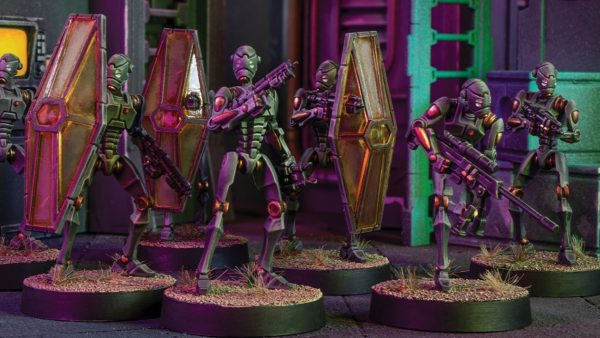
Thanks, @zorg – yeah, those first two slides are right from the new NEW Fate of a Nation book, which is actually pretty good (I only have the Kindle version – but I have some other Battlefront hardcovers and they’re great).
The last slide of the Magach M48 Pattons are mine.
Excellent as ever. I remember this war from when I was at school and discussing it in an art class. The general class consensus was pro Israel (possibly due to two popular members of our class being named Cohen) and being praised by the teacher for it. Probably wouldn’t happen in this day and age! Looking forward to the next part.
Thanks, @gremlin – The Six Day War at the time was incredibly “popular” here in the US.
1) America loves a little guy beating up on bigger bullies. Of course that wasn’t true, even from a strictly military view of the balance of actual power on the field, but that’s how it LOOKED.
2) American equipment blowing up Russian equipment.
3) Battlefields in places like Jericho, Jerusalem,and Bethlehem, places that resonate in the heartland.
4) The war was FAST. Quick, decisive, and OVER. I think many Americans quietly wished our war in Vietnam was going that way. This was the height of the 67 build up, remember, when the US was finally coming to terms with the idea of a long, expensive, bloody, and uncertain war in Southeast Asia. Meanwhile, it almost looked like little Israel was “showing us how to do it right.”
Of course, none of this was really true.
But if the American public can do anything in a hurry, it’s to oversimplify complex and nuanced issues.
another fine episode Jim, I am actually learning stuff
Thanks very much, @wolf320f . We’re doing our best! 😀
Great work Jim!