














Six-Day War 50th Anniversary: Middle-East Blitzkrieg [Part One]
June 8, 2017 by oriskany


Greetings, Beasts of War. Today we’re starting a new commemorative article series marking the 50th Anniversary of another of the 20th Century’s great conflicts: The Six-Day War in June 1967.
The Six-Day War is commonly accepted as the third in a series of conflicts called the “Arab-Israeli Wars” – fought between 1948 and 2006. The nation of Israel, threatened by her neighbours, launched a startling pre-emptive strike against the armed forces of Egypt, Syria, and Jordan, and won a dazzling victory that amazed the world.

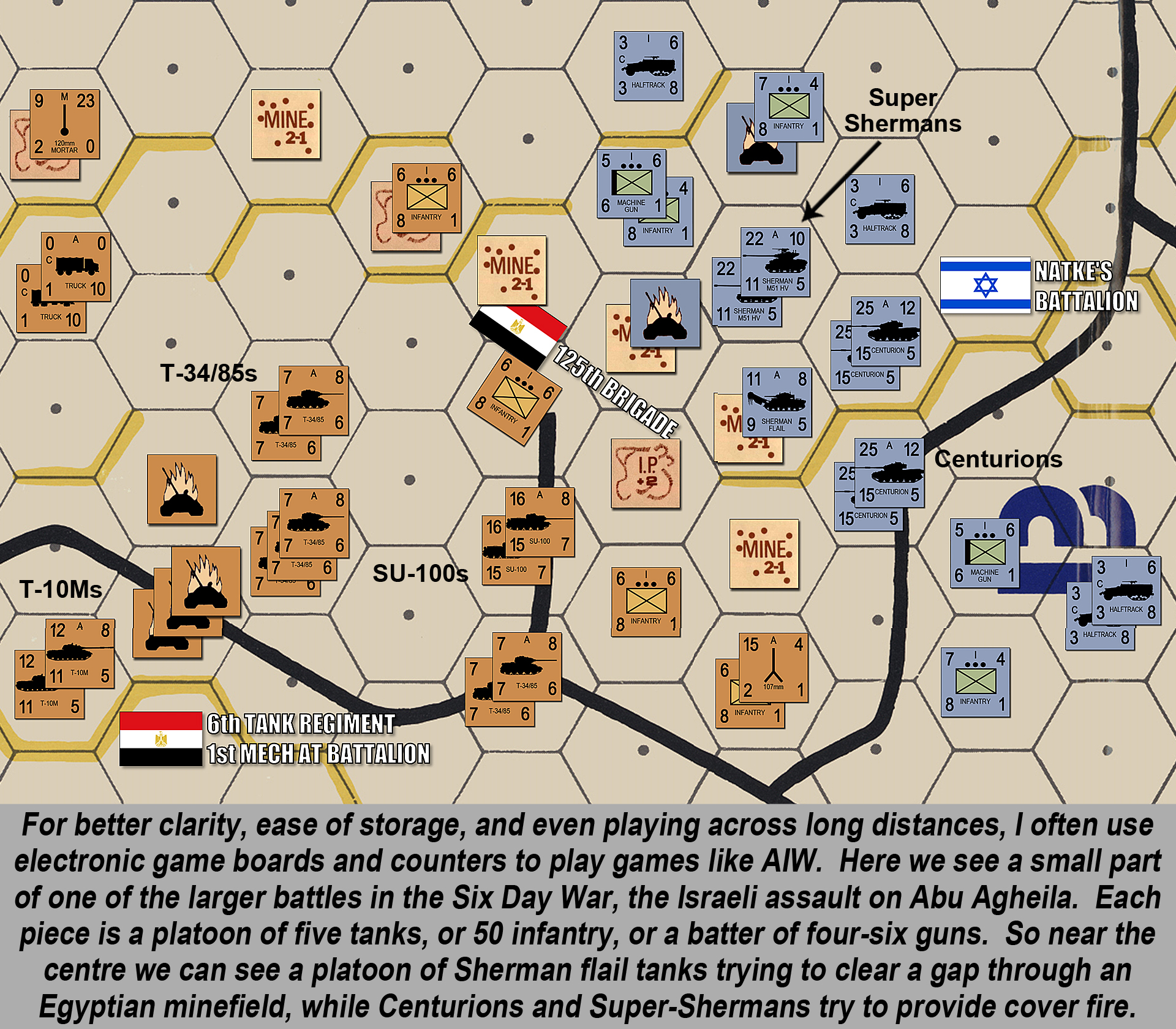
As part of this series, we’ll be recreating some of the war’s biggest battles with “The Arab-Israeli Wars,” a “scaled tactical” hex-and-counter wargame published by Avalon Hill. This may be a different kind of wargame than many are used to, but only by using this kind of scale can the true dimensions of the 1967 battlefield become apparent.
Background
Although there had been simmering conflict between local peoples for decades, the Arab-Israeli conflict became a dispute between nations when the state of Israel was founded in Palestine in 1948. The Palestinians did not accept the UN-sanctioned partition of the land, and Israel was invaded by the armies of five neighbouring Arab states.
Somehow, Israel survived that war and won her independence. Another war broke out in 1956 when the Egyptian President Gamal Abdel Nasser nationalised the Suez Canal. Israel was drawn into a conflict between Egypt, France, and the UK, and wound up winning another war against the armies of Egypt in the Sinai Desert in just four days.

Now it was 1967. Nasser was ready to avenge his 1956 humiliation, as well as position himself as the leader of a collation of Arab states. In short, it was time to pick another fight with Israel.
The Six-Day War is probably the most famous of the Arab-Israeli Wars, a status which … in all honesty … it doesn’t really deserve. It wasn’t the largest or bloodiest of the Arab-Israeli conflicts, nor the most far-reaching or bitterly fought. It didn’t lead to peace, it didn’t make Israel safer, nor was Israel ever fighting for its survival.
But the Six-Day War was probably the flashiest, and in the unfortunate arena that constitutes “cultural” history, flash is what counts. People remember little more than a tiny army of citizen-soldiers trouncing armies three times their size, bravely staving off extinction through sheer élan.
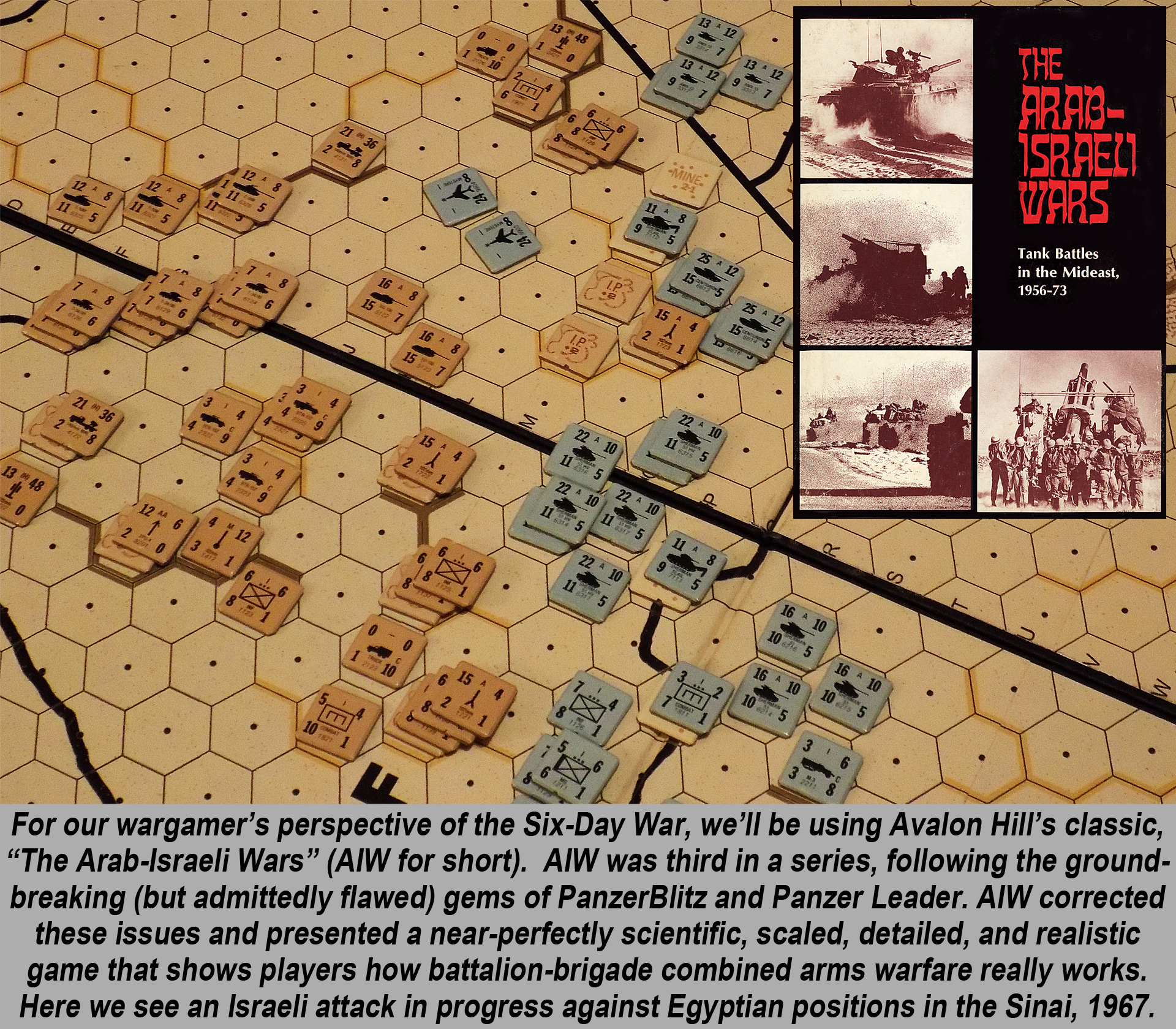
While such a view is laughably simplistic, the Six-Day War admittedly showed the world just how far warfare had come since 1945, stunning the globe with its sheer speed and horrific violence. Furthermore, this lightning bolt campaign came in a decade where slow, grinding, unpopular wars like Algeria and Vietnam were more the norm.
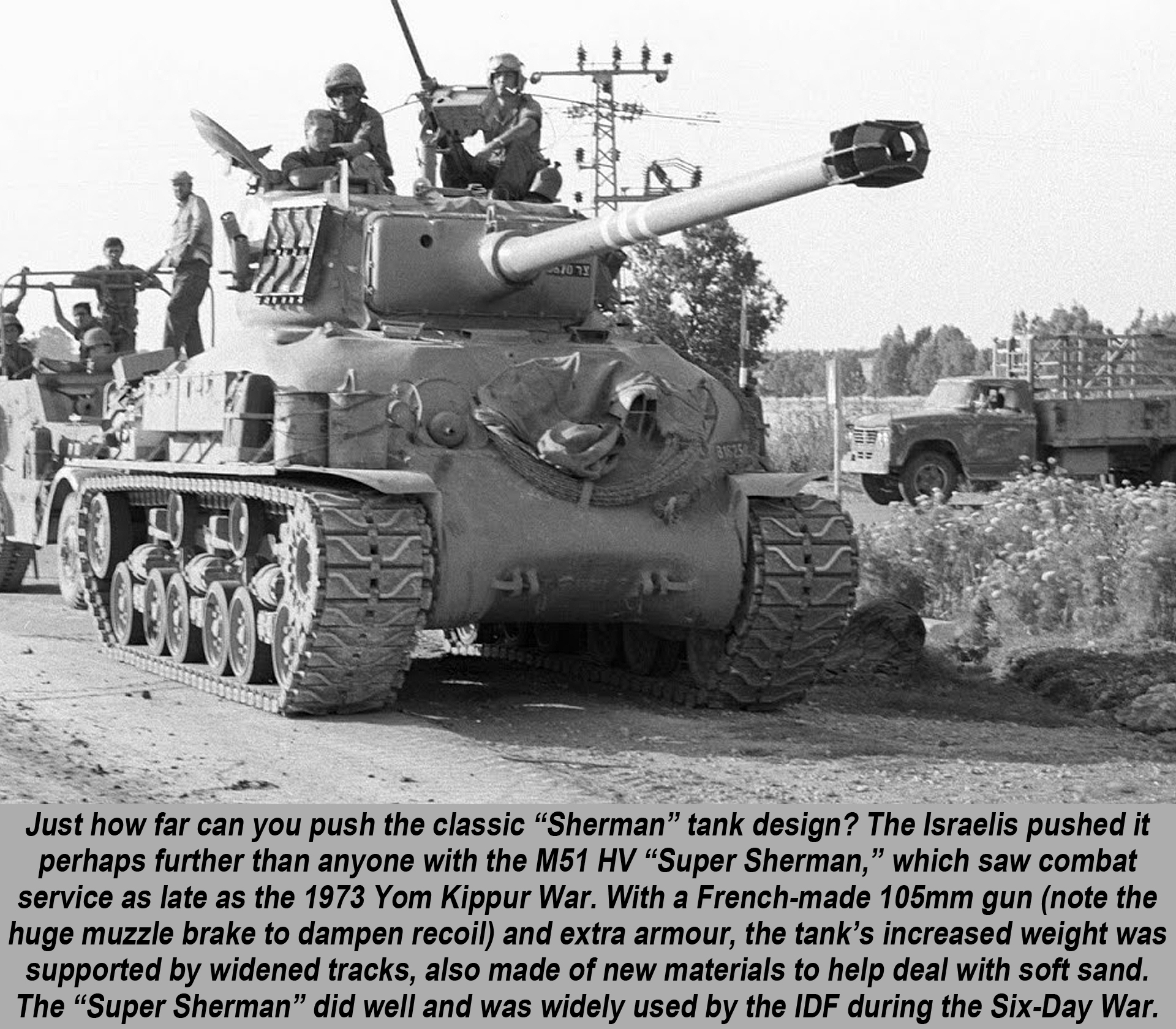
Observers in the US, the West, and USSR also watched with particular interest as their respective military equipment and doctrines were pitted against each other. Such equipment included not only tanks but also air superiority fighters, air defence networks, strike aircraft, new types of mechanised infantry, and other elements.
Perhaps most ominously, those six days in June showed what happened when one side had prepared for a sequel to World War II ... while the other unleashed a prequel for World War III.
Origins Of The Six Day War
Put most basically, the Six-Day War was an explosion waiting to happen. After the defeats in 1948 and 1956, the Egyptians were nowhere near ready to make peace with Israel. For political reasons, the Egyptian President Nasser would be unable to back down from his anti-Israeli posture even if he wanted to.
By the mid-sixties, hints that Israel could be developing an atomic bomb further prompted Nasser to promise a “preventative war” to ensure that Israel never attained such a capability. The Egyptians moved more forces into the Sinai and reached out to Jordan and Syria about the possibility of another all-out assault on Israel.
Egyptian warplanes overflew the Israeli city of Dimona, and Nasser demanded that UN peacekeepers be withdrawn from the Sinai. Nasser then put his own troops back in the Sinai, blocking the Straits of Tiran and Gulf of Aqaba, thus sealing off Israel’s only maritime access to Asia, Africa, and the Pacific.
Debate simmers to this day over whether Nasser really meant to “invade” Israel. In a word, almost certainly not. True, he and his Arab allies mobilised powerful forces along Israel’s borders. But the Egyptians paraded their new forces into the Sinai on Israel’s Day of Independence, making as much fanfare as possible.
Clearly, this was political sabre-rattling, not a calculated military move aimed at achieving battlefield surprise. When the Egyptian forces reached the border, they fortified themselves in depth and deployed armoured reserves far behind the lines. These are defensive deployments, and not how one sets up an army with orders to attack.
Also, there were 60,000 Egyptian soldiers fighting in support of a socialist revolution in Yemen, so Nasser didn’t have a big part of his army available. Is then when you plan an invasion against an enemy that’s already defeated your army … twice?
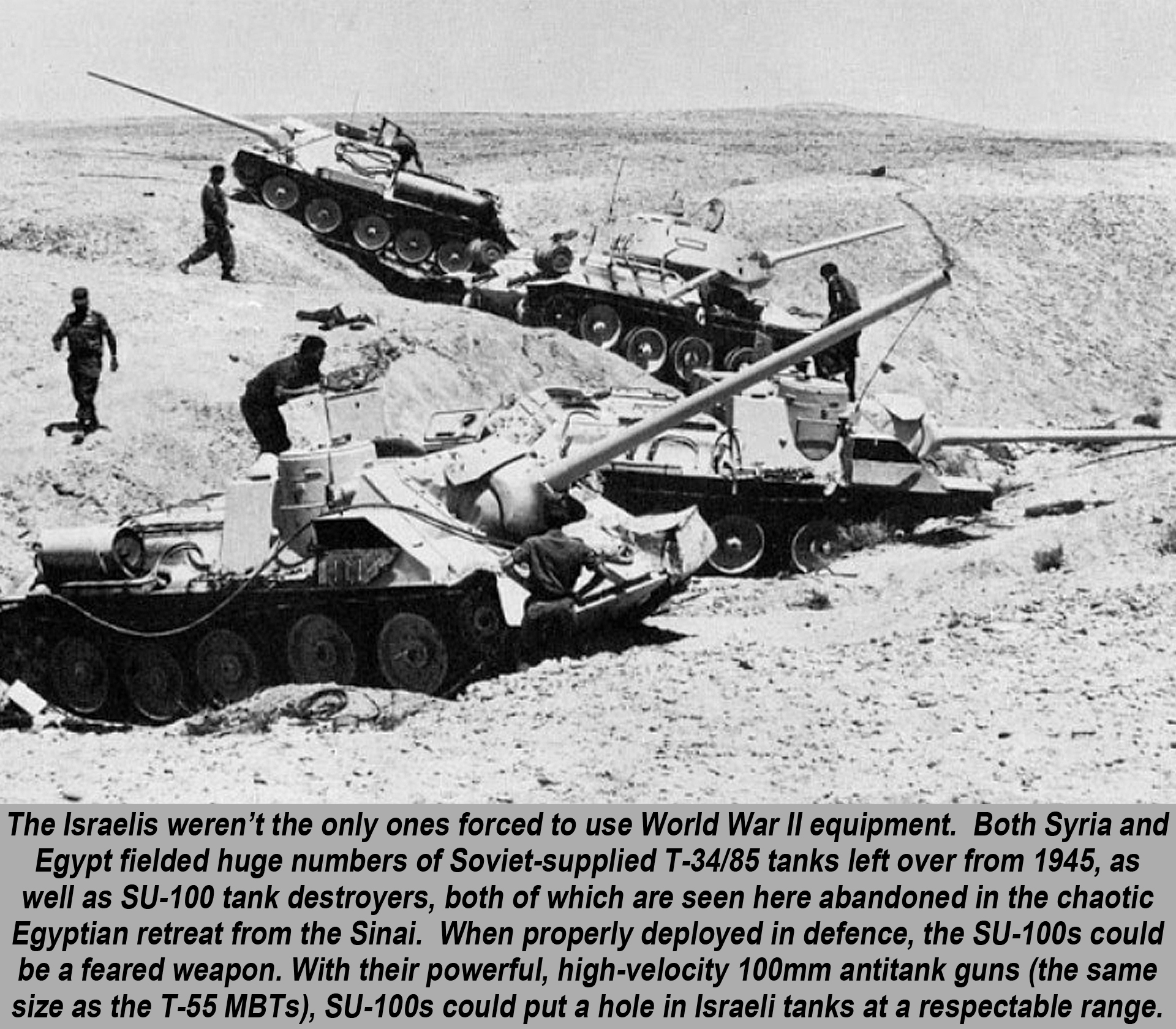
As far as Nasser’s demands to withdraw UN peacekeepers from the Sinai, this seems like more posturing. John Hadden, CIA station chief at the American embassy in Tel Aviv at the time, characterised Nasser like an aggressive little boy being held back by his father, yelling “let me at him, let me at him!” Then the father suddenly lets go ...
In any event, Israel could afford to take no chances. So badly outnumbered and with Egyptian aircraft already flying over their cities, they weren’t about to wait until Egyptian spearheads had struck across their border and into the Negev Desert before making the decision to go to war.
Remember that the IDF (Israeli Defence Force) was built entirely on a “citizen-soldier” model of mobilised reserves. When the call goes out, virtually the whole country reports to mobilisation centres for active service. The problem is, the whole country (and its economy) shuts down. Israel cannot fight long wars or wait for a war to start.
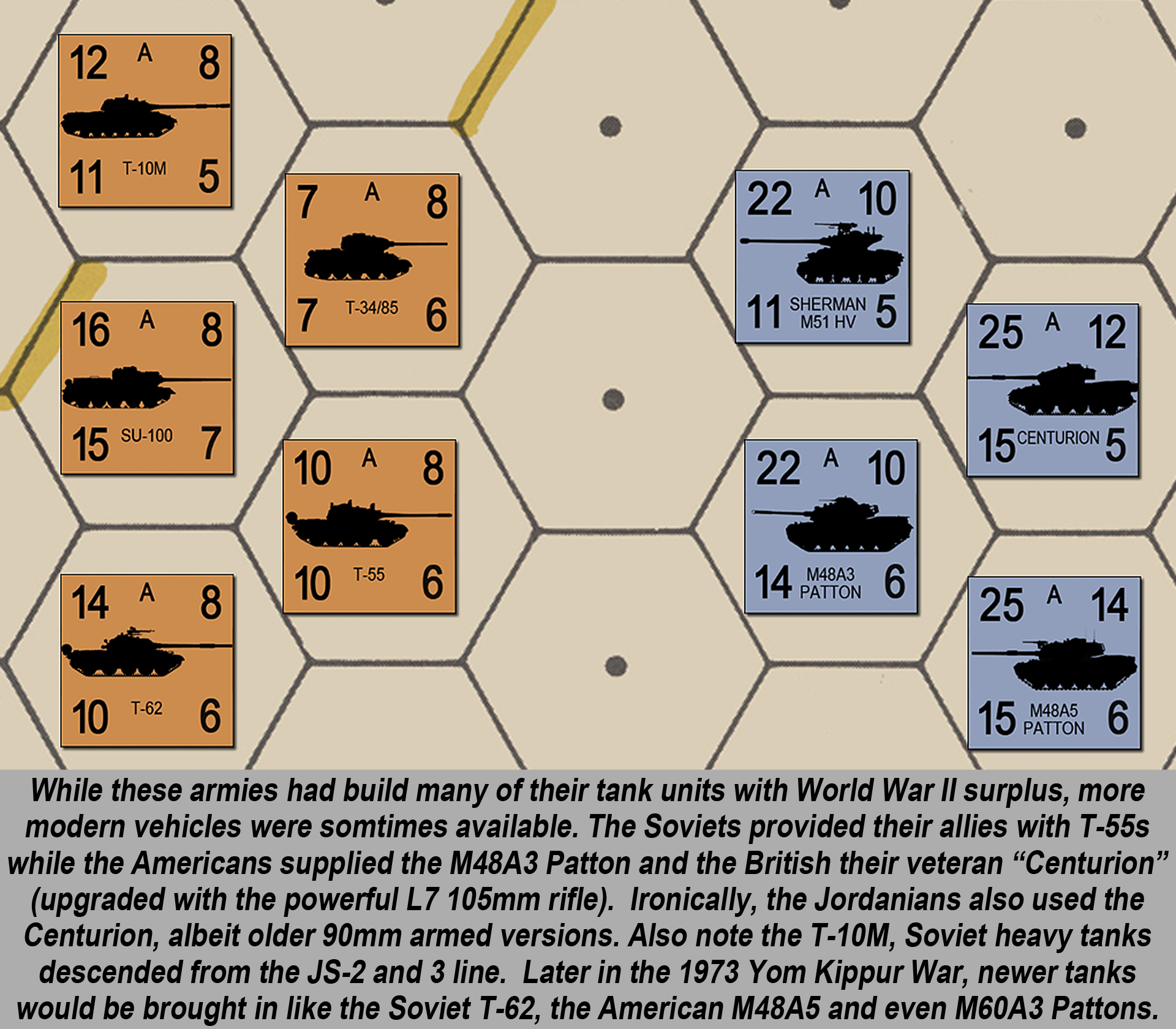
This means Israel can only expect to win a war (especially against such massive numerical superiority) when it either chooses WHEN the war will start, or at least knows the EXACT moment. For the Israelis, there was only one way to guarantee this … to strike first.
The odds, however, were daunting. To the south-west, the Israelis faced a huge Egyptian army massed in the Sinai Desert. To the east, they faced the advanced Royal Jordanian Army and Air Force in the West Bank and Jerusalem. To the northeast, they faced the Syrian Army along the high ground of the imposing Golan Heights.

The Israelis would get only one shot at this. They had to hit first, hit hard, and hope to hell their vastly larger enemies didn’t survive the blow. Thus the stage was set for one of the most decisive pre-emptive strikes in modern history.
The Storm Breaks
The Six-Day War started on Monday, June 5, 1967. Contrary to what many think, Israel did not actually attack all three enemies at once. To a large extent, they were able to focus their forces and attack each enemy in turn, which of course played a big part in their eventual success. The first enemy to be hit was the biggest: the Egyptians.
On June 5, 1967, the Israeli Air Force basically annihilated the Egyptian Air Force within hours, mostly still on the ground. Just hours after that, a full-scale invasion built around three “ugda” (roughly, a reinforced armoured division), smashed into the Sinai with orders to push all the way to the Suez Canal.
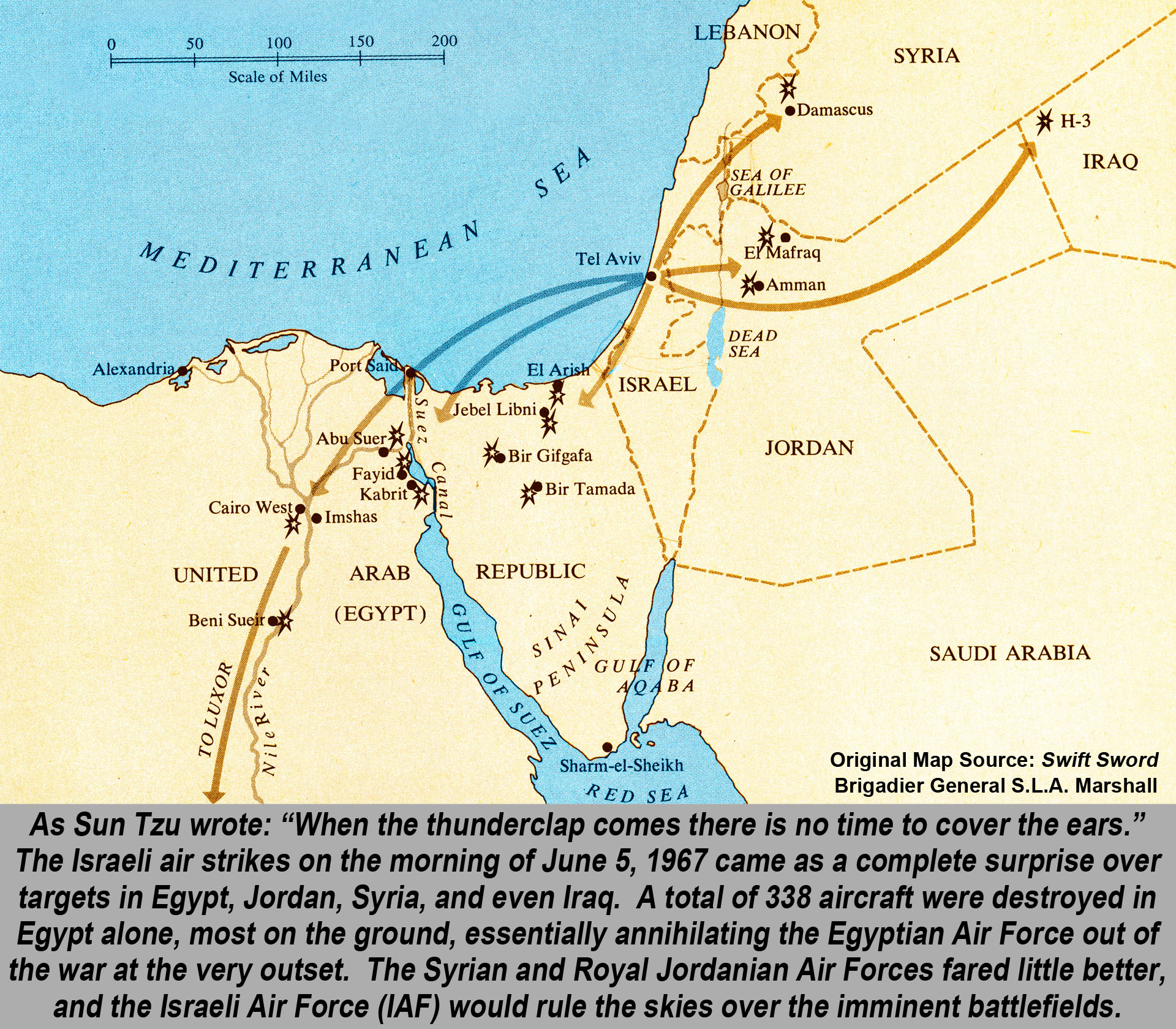
Israeli intelligence for this strike was painstakingly detailed, down to the time most enemy air units would be finishing “dawn patrols” and starting the morning shift. Months of training and briefings had ensured that Israeli pilots knew every inch of their targets. Ground crews were drilled to turn aircraft around in just seven minutes.
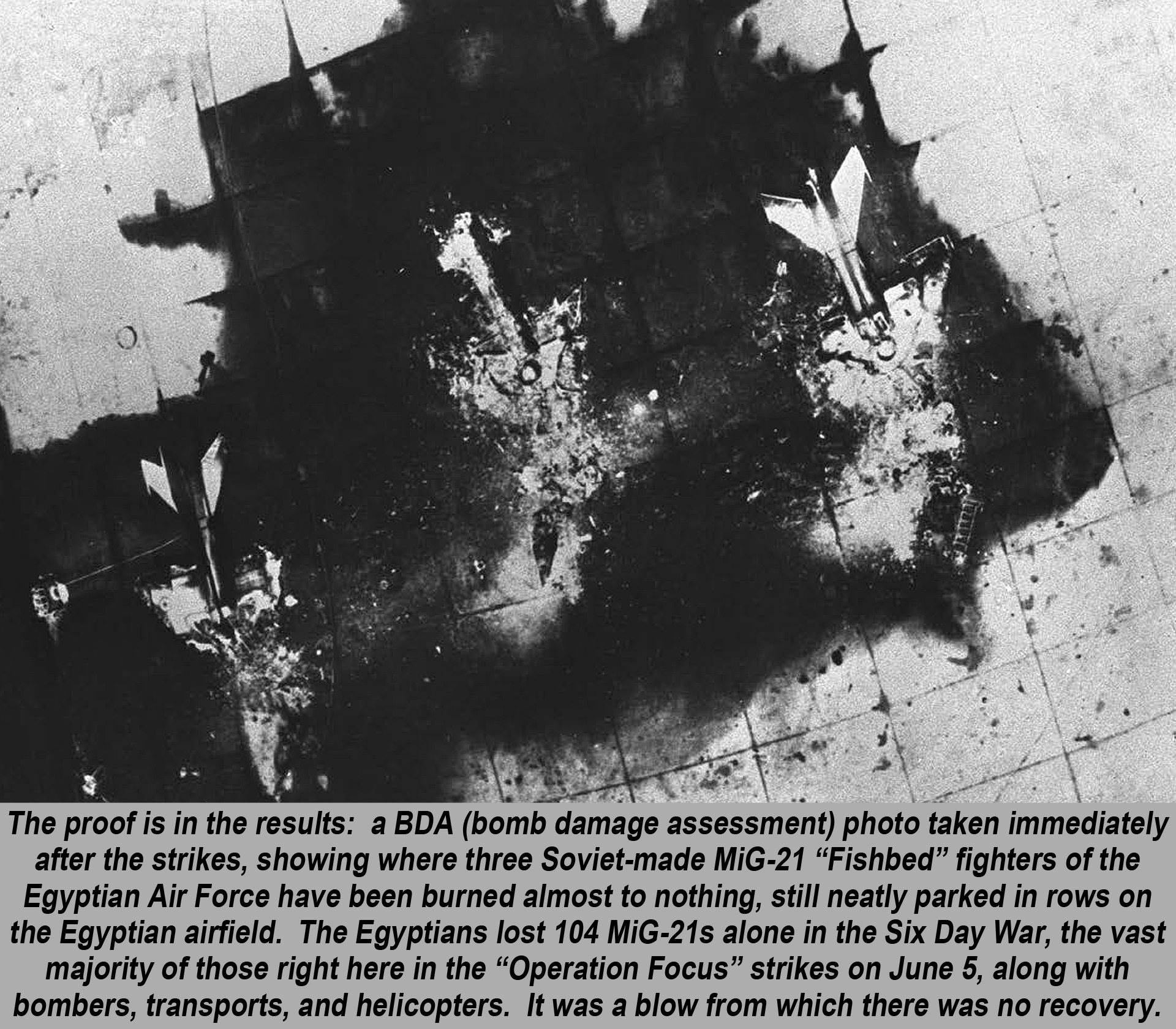
The effect was devastating. In just a few hours, the IAF (Israeli Air Force) annihilated something like 85% of the combined air forces of Egypt and Syria (Jordan’s air force would be attacked later in the day when she entered the war – a move initially unexpected by Israeli planners).
The surprise was total. The first strikes included special ordinance designed to wreck the actual runways so enemy aircraft on the ground couldn’t take off.
The handful of Arab aircraft that managed to get into the sky (now terribly outnumbered) were swept away by Israeli fighters already waiting for them. By the end of the first day, Israel owned the sky, and strike sorties were turned toward enemy air defence, command and control, and ground forces support assets.
We hope you’ve enjoyed this first look into the Six-Day War. We hope you’ll join us next week when we return to a look at the major ground actions between the Egyptians and Israelis in the Sinai, and some more detailed battle reports from Avalon Hill’s “The Arab-Israeli Wars” command tactical wargame.
Part Three will shift focus to the battles against Jordan on the West Bank and in Old Jerusalem, along with a look at the fighting between the Israelis and the Syrians along the Golan Heights. Finally, we’ll look at the legacy of the Six-Day War, its importance, and how it led inevitably to the biggest Arab-Israeli war of all, the Yom Kippur War of 1973.
In the meantime, we hope you’ll add to the conversation by adding comments or questions below. These Arab-Israeli Wars are a topic that doesn’t get a lot of attention in historical gaming, outside of Battlefront’s “Fate of a Nation” and a few other supplements. Let’s start fixing that, and keep the conversation going!
If you would like to write an article for Beasts of War then please contact us at [email protected] for more information!
"It wasn’t the largest or bloodiest of the Arab-Israeli conflicts, nor the most far-reaching or bitterly fought. It didn’t lead to peace, it didn’t make Israel safer, nor was Israel ever fighting for its survival..."
Supported by (Turn Off)

Supported by (Turn Off)
"We hope you’ll join us next week when we return to a look at the major ground actions between the Egyptians and Israelis in the Sinai..."
Supported by (Turn Off)











Another great start to another great series. Great info on the Israeli first strike. I guess it’s like you’ve always said, he who shoots first – shoots last. Is this what you and @aras have been playing ?
Thanks for kicking us off, @gladesrunner – and yes, this is what @aras and I have been playing for the past few weeks. Last weekend was the Battle of Jenin, where Israelis of Peled’s armored ugda met up with Jordanians of 25th Infantry Brigade (and some hypothetical reinforcements) in the northern West Bank during the battles around Jerusalem.
* * *
Godd**m, I threw that game away. 🙁 Happily I did a lot better with my Egyptians at Abu Agheila! 😀
Great article. A brave choice of subject given the sensitivity of arab-Israeli relations even today and I personally think it’s very well written.
Can’t wait for the next article.
Thanks very much, @onlyonepinman – after the lumps I took for my Ukraine 2014-2015 War series, I feel pretty confident I can weather this one. This is a great community loaded with respectful members.
Also, as I’m sure you noticed, I’m steering well clear of any ethical or political questions. We’re making no judgments here, this is about the military history and subsequent wargaming potential. Full stop.
And lastly, if Battlefront can make Fate of a Nation supplement for Flames of War (and there are at least 20 other wargames on this subject – mostly about the more recent, controversial, and important Yom Kippur War), we should be all right.
On that note, I have to already make my first errata . . .
The 7th Image includes a counter for the M48A3 Patton. This is incorrect. The M48A2 Patton is what was used by the Israelis during the Six-Day War. I saw the error, fixed the error with a new image plate, but when I checked my files, it doesn’t look like I uploaded it to the article queue in Beasts of War. So that’s totally on me.
M48A3 has a different cupola, big search light, replaced the old gasoline engine with a diesel engine, etc. So the counter has a PICTURE of an M48A2, I just mislabeled it.
Same gun and armor, I think, so the combat values should be more or less the same. I should maybe knock down the defense value by one (form 14 to 13) to more clearly distinguish it from the ruggedness of the “Sho’t” Centurions, and also to reflect the flammability issues suffered by the M48A2 and its gasoline engine.
Again, thanks for the supportive comment!
WOW great reading, another one of the bests from you.
and please Keep them coming.
Wow, thanks very much @nosbigdamus ! Didn’t want to let the 50th Anniversary of this go by without at least a short article series (even if it “stacks” a little on top of the ongoing Midway series).
June’s a busy month when it comes to conflict, I suppose. A couple days ago was Normandy, June 1 is Cold Harbor in the American Civil War, June 15 is Marianas landings on Saipan and Tinian, June 18 is Waterloo . . .
“Please keep them coming”
After Midway and Six-Day War, there will be a slight hiatus as I try to align myself with what BoW has planned in the future. But never fear I’m not going anywhere. 😀
Great article @oriskany I really enjoyed reading it and already waiting on part #2 🙂
Thanks very much, @ecclesiastes ! Part 02 should be coming out on Wednesday, June 14 so it doesn’t conflict with Part 04 of Midway (usual Mondays).
Speaking of Midway, I should have that support thread started sometime tonight (US EST time) – so Friday morning your time it should hopefully be started? 😀
great read buddy! 50 years, amazing. Now to replicate it on the table-top hehe
Thanks very much, @bigdave – seriously appreciate the comment. 😀 Indeed, 50 years since the Six-Day War is nuts. I remember “reading my way through” the all 40th anniversaries of WW2. Of course I was just a kid at the time. Time flies. imagine my depression in 2016 when the war I was “around for” had it’s 25-year anniversary. 😐
For tabletop game, we have plenty of choices. Of course the first thing that comes to mind is Battlefront’s “Fate of a Nation” expansion for Flames of War. Of course, the ranges involved make a realistic approach in 15mm a little tough. Hex games like Sword of Israel (Avalanche Press’ expansion of PanzerGrenadier, I think), IDF, and etc.
These work well for the big tank / aircraft / artillery duels we see along the Sinai (Rafah, Abu Agheila, etc), the Golan Heights, and West Bank (Jenin, Ramallah, etc)
For when things get closer, modern-set infantry-based games like Force-on-Force would probably work well for the street fights in Gaza, Khan Yunis, and or course Jerusalem (Ammunition Hill, Latrun Valley, Mount Scopus, etc).
I’m sure with just a little work, Bolt Action could be updated to 1967 for these kinds of close-in infantry fights as well. 😀
Thanks again for the comment!
If it makes you feel any better, I was born in ’91 hehe honestly, another great read – I very much enjoy taking time out of my day to read your articles with a mug of tea then let my imagination run wild. @oriskany, you are a tremendous asset to the community sir 🙂 I was looking for an excuse to give Force on Force a go and you’ve presented the perfect opportunity… Uzi-armed Israeli forces trench sweeping an Egyptian strong point…
Yeah, @bigdave – in 1991 I was already in the military for two years. 🙁 🙁 🙁
Ehrr Mer Gerrrrdd . . .
Seriously though … thanks very much for the kind words! Big comment counts definitely help determine what kind of historical content gets covered in the future (although to be honest – if I went by comment counter overall I would be writing nothing but BattleTech. 😀 )
I’ve run FoF for USMC vs. Insurgents, Iraqi Regulars, and Taliban (basically 2003-2004 Iraqi Freedom and Enduring Freedom).
Egyptian vs. Israeli infantry would be a great comparison – and much more “balanced” and “fair” than Israeli tanks vs. Egyptian tanks, aircraft, etc.
The trade off is many Israeli squads and platoons carry a lot of Uzis, as you say. There are also some FN-FAL based rifles (this is before the modern Galil, obviously)
So Uzi = 9mm Parabellum
FN-FAL = 7.62mm NATO
FN-MAG are usually in other specialized platoons – if my sources are correct.
Egyptian infantry platoons, however, are usually much more heavily armed. EVERYONE has an AKM family rifle (7.62mm COMBLOC) – with PK-series or RPK-series GPMGs in the squads. Also RPG-2 and RPG-7s.
So in a game like the Arab Israeli Wars, Israeli infantry is SHORTER RANGED – and more or less helpless until they get closer. This is the range at which they are chopped up by Egyptian infantry. Closer in, though, the higher ROF and mobility of those lighter weapons starts to pay off.
Not sure if that would work out the same in Force on Force (especially since the tables are small, ranges are already short). 😀
Thanks again for the comment!
Note In the Jordanian Centurion 3/5s the 20lb main gun was 84mm not 90mm the QF20 was the successor to the WWII 17lb and was much more powerful than either US 90mm guns in the M-47 or M-48
Thanks @steel2 – As said in an earlier comment, there were mistakes in that plate that were subsequently corrected, but for some reason I never uploaded the new file (??)
Thanks for the comment.
Woah, hang on – how am I expected to read and digest two concurrent historical article series? My head’s still somewhere in the clouds over the Pacific and now you want me to get all hot and sweaty in the Middle East?
Great article, so thanks. Not sure where you get the time to put all of this together. I only just about have time to read it….
another massive war series starting are you not sleeping or has your work reported you MIA to have so many articles out @oriskany
Thanks very much, @zorg ! 😀 Just too many good anniversaries of interesting campaigns to cover. “50s” and 75″ and”100s” – you can’t miss those (note I’m not doing another one on D-Day, “73rd Annivrsary?”)
Besides, the “Historical Editor” has to do something around here. 😀
this could be a nice refresher the way things are you could be seeing news of IS hitting Israel soon they seen to be everywhere look at all the shit in London going down,
ISIS / ISIL hitting Israel? Totally guessing here, but I don’t think that’s a mistake ISIS / ISIL will make. Israel has a reaction time vs. terrorists measured in heartbeats and gives no shits about proportionality or world opinion.
Also, that’s a totally different conflict. Even I’m not crazy enough to take on Iraq / Al Qaeda / ISIS / Syria. The Six Day War was mostly built around the Israeli-Palestinian conflict, combined with Nasser positioning himself as a leader of a largely secular pan-Arab coalition. If there’s one thing ISIS isn’t, it’s secular, and I honestly don’t know if they give a damn about the Palestinian problem. Anyway, Nasser vs. Israel was settled decades ago by the Six Day War, the War of Attrition, the 1973 Yom Kippur War, and finally the Camp David Accords with Answar Sadat. Even his protege, Hosni Mubarak, has been ousted by the Arab Spring starting in 2011.
So there’s not a lot of connection between a review of the Six Day War and current issues with ISIS.
They give lip service to Hammas but that conflict isn’t where they want to go yet. They would like to end the ‘zionist’ regime holding the region hostage but they know now is not the time.
I don’t think that Israel will allow the region to turn that far against them. They can easily control the economics of the region, almost as if it was a light switch. They control food production and water, really the same thing but…, and as of now they are happy to sit back and watch their northern border and they are prepared to defend it vigorously as usual.
This puts Israel in a position to survive and thrive in a region that is still trying to destroy them. The biggest change from earlier is that though the other nations around them publicly decry their existence, internally the governments know they can not survive without a robust Israel.
What a change 50 years can make.
Thanks @ghent99 for the great input and comment!
Yeah, Syria today is such a tangled mess of factions it’s really hard to keep track of. I certainly agree ISIS would naturally be opposed to Israel, “when they have the time” as you say (paraphrasing there). Yet in another way, isn’t one of ISIS’ many enemies the Assad regime and the SAA (Syrian Arab Army – the “official state army” of Syria – or at least used to be)? And since Syria is the only major state in the immediate vicinity that HASN’T made peace with Israel (i.e., never formally recognized the state), wouldn’t that make ISIS and Israel partial allies in a completely perverted sense (i.e., both enemies of Assad and the SAA)?
I realize it’s nonsense. Just making a point of how bewilderingly convoluted and complex the situation in Syria is (one of many reasons I agreed not to touch it for an article series … and I’m the guy who plowed headlong into the Ukraine 2014-15 War – still no regrets on that, by the way).
Excellent point on the control of food and water in the region. Absolutely true. One of many reasons Israel refuses to give up the Golan Heights, where a lot of this irrigation and water comes from. This was one of the “weapons” Syria used to leverage against Israel from the Golan Heights (disrupting / diverting water for irrigation to agricultural settlements through Galilee) that probably helped spark the Six-Day War in the first place (covered briefly in Part 03). Then of course, comes the artillery and rocket attacks . . .
This puts Israel in a position to survive and thrive in a region that is still trying to destroy them. The biggest change from earlier is that though the other nations around them publicly decry their existence, internally the governments know they cannot survive without a robust Israel.
A huge part of this is also the Camp David accords when Sadat met with Begin and Carter in ’78. Israel agreed to a phased pull-out of the Sinai (all Egypt really wanted after the death of Nasser in 1970 – and the reason Sadat took Egypt to war with Israel again in 1973). In exchange, Egypt recognized Israel, essentially making peace. This is probably the only time the general American diplomatic policy of “land for peace” has ever worked in the Arab-Israeli Conflict. It sure hasn’t worked in Golan, the West Bank, Gaza, or elsewhere.
Once Egypt stepped down from full-scale military confrontation with Israel, that really the end of the ballgame. As you say, Arab states may engage in rhetoric, diplomatic measures, or even quietly support organizations like Hamas, Hezbollah, or (back in the day) Black September, but any more full-scale wars? No way Syria would ever be strong to organized enough, and Jordan was never strong or motivated enough anyway (partly due to so much British influence, perhaps).
This is what had me more than a little worried when the Arab Spring came to Egypt in 2011. The dictator ousted there Hosni Mubarak, head of the Egyptian Air Force under Sadat during the Yom Kippur War and Sadat’s vice-president and protégé. Sadat’s assassination in 1981 during the anniversary celebration of the October 6 crossing of the Canal, Egypt’s greatest military success in the Yom Kippur War, just goes to show how much the army and Muslim Brotherhood hated Sadat for making peace with Israel. So Mubarak took over and crushed the Muslim Brotherhood. Okay, so what happens 30 years later when Mubarak is outed? Does this anti-Israeli sentiment re-surface in the Egyptian government and military, and does Egypt re-enter the ring against Israel?
So far, no, which is a relief. Have you seen the order of battle of the Egyptian Army lately? It is freakin’ powerful. No more T-34/85s and T-55s, that’s for sure. Hundreds of M1A1 Abrams, AH-64D Longbow Apache attack helicopters, etc. A new Egyptian-Israel war would be a horrific thing to witness.
Tracing back the roots of the current ISIS/ISIL problem and the Israeli-Palestinian problem show them to be different conflicts altogether. I know you know this, just wanted to make a point in general. But that’s too much to go into right now, in another comment perhaps.
So true and there are probably 2 good reasons why there hasn’t been a current direct conflict as to the Egyptian Israeli relations, the game theory of Mutual Assured Destruction and ’78 agreement to have outside patrols of the border with the intel going to both sides, so no prepping for war with out the whole world knowing. As to the Egyptian army, yes it has been extremely modernized, though I think that Israel is even more modernized as they take base level equipment and upgrade it while the others that we sell arms to are not in a position to take the base model and improve it. This goes to the importance of how foreign policy of the west (read the USA as we are the only ones willing to cut the check and discount the arms) in keeping with long term goals. When we fall off for short term goals the long term goes away. And yes the question is what will 30 more years bring to this region? Of course I think that Northern Iraq and Western Turkey will hold a huge influence on this region once ISIL is not the issue.
As to ISIL (a more accurate term for the group as they manifest a wish for the end of Israel) it tends to be the way of the Arab states. The old adage of Me against my brother, my brother and I verses our cousin, and all of us against the world. It is very simplified but seems to be happening again. But lets keep to the past and enjoy a romp through history.
One of these days we will have to sit down for a pint. 🙂
@ghent99 –
as to the Egyptian army, yes it has been extremely modernized, though I think that Israel is even more modernized …
Oh, absolutely. I’m not even saying Egypt would “win,” just that it would be a hell of a fight. Played some Steel Panthers: Main Battle Tank hypothetical scenarios where Egyptian M1A1 Abrams go up against Israeli Merkava IVs. Nasty. Fun in a harmless wargame, would never want to see that kind of a war kick off in real life, obviously.
Me against my brother, my brother and I verses our cousin, and all of us against the world …
You know, that’s a brilliant little axiom. Simplified, obviously, but explains how some of these sects and factions can be blood-enemies at “one level” and blood-brothers on another level, and why so many of these conflicts are difficult to research.
The one I ran across recently was the “Black September” War between Syria and Jordan, September 1970. Large numbers of Palestinians are displaced from the West Bank during the Six-Day War, they set up huge camps in Jordan, terrorist cells take root and start strikes on Israel, Israel responds by shelling and bombing into Jordan, Jordan protests, Israel demands that Jordan to “clean up their back yard,” Jordan starts mobilizing their army against and around this “state within a state,” the Palestinians appear to Syria for help, Syria invades Jordan, and before you know it you have full-scale tank –infantry-artillery-air battles between Syria and Jordan at places like Irbid.
Just three years later, Jordan is lending elite armored brigades to help Syria fight the Israelis on the Golan Heights during the Yom Kippur War.
(???)
You’re on for that pint. If you ever come down to South Florida for a vacation, let me know. 😀
possibly would all depend on the leader’s of the IS they wont be the ones dying for the cause.
Thanks, @zorg – Arab-Israeli Wars has a small expansion for Operation Peace for Galilee (Invasion of Lebanon, 1982) – but I haven’t tried it yet. I really don’t agree with the values they give for Syrian T-72s for example. They give them a 16 attack factor – the same as WW2 Panthers (??) and with a short range (8 hexes instead of a Panther’s 12).
Other sources have tackled more modern Soviet-built armor with greater fidelity in the PanzerBlitz system, I might have to try one of them out one of these days.
Anyway, a little more modern and further north, closer to what you’re talking about. Just trying to keep the subject focused on the Arab-Israeli Wars, which is a very different conflict that the one with ISIS/ISIL.
true may make a interesting alternative history battle report? in the future.
@zorg – Lebanon 1982 maybe. But seriously, I don’t think I’m ever touching ISIS/ISIL/Syria. 😐
Apologies, @redvers – like I was saying to @nosbigdamus up above . . . June’s a busy month when it comes to conflict. A couple days ago was Normandy, June 1 is Cold Harbor in the American Civil War, June 15 is Marianas landings on Saipan and Tinian, June 18 is Waterloo . .
Where do I get the time to pull all this together. Oldest trick in warfare. Spend weeks and months amassing a big offensive, then release it all at once! 😀
Thanks for your support and for the comment. 😀
That’s the problem with being the Historical Editor – as time marches forward, there’s just more for you to look at!
On the plus side, you’re never bored. 😀 And quite literally, the whole world is your “background fluff.”
There is something to be said for not fighting during the winter. It does make for a busy spring.
Like all big business, war tends to be “seasonal” is one way or another. 😀
@oriskany 2 series at once, how do you do it dude
Two parts to that answer @rasmus –
1) I had a ton of help with one of them (the bigger one) 🙂
2) I’ve been building these up for a while in anticipation for the June 50th and 75th Anniversary events.
It’ll slow down by the end of June. 😀
Thanks for the support and the comment!
Fantastic read @oriskany. Iv’e got some Battlefront and peter Pig tanks for use in the AIW series. I’ll get some pics up later.
Thanks very much, @davebpg . I remember those big table pictures you were showing me at the Team Yankee bootcamp! 😀 We should start a side thread soon where we can display these photos.
Another great article.
Easily the most story driven war with the most flash but not nearly as important in the context of Arab Israeli conflicts. In the world of political war I think this had a huge influence on the Cold War. Your comment on the sequel to WWII compared to the prequel of WWIII is very apt. Western vs Soviet tactics, and yes the equipment also but not to the same degree, was on display and may have slowed some of advances into western Europe the Soviets wished to undertake. It also showed how difficult it would be for NATO to support another Hungarian revolt or similar without taking a much larger role of a preemptive nature.
Thanks so much for doing these articles. As a historian I can always debate the opinion portions but never your research, top notch.
Thanks very much, @ghent99 – perhaps I am a little biased, having done so much reading / gaming / writing on the Yom Kippur War of 1973 – the battles just seem a lot more “fair” from a wargaming perspective (especially in the south in the Sinai). Wadi Marbouk, Chinese Farm, and Deversoir = some of the largest tank battles in history (after monster battles like Prokhorovka, Dubno, etc).
Debate is always welcome, doubtless you’ve seen @jamesevans140 and I “tangle” on occasion. Always very respectful, of course, we never debate the facts (they are beyond such) but conclusions drawn from those facts is of course much more subjective. 😀
Great article series on a topic very close to my heart. As an IDF vet, I grew up reading and studying these conflicts. I’m very interested to see how you dissect this from a non-partisan perspective. To most on BoW, the names of Moshe Dayan, Yitzhak Rabin, Ariel Sharon… these names have meanings within the political realms of the late 20th and early 21st centuries. To us they were lauded as heroes of multiple struggles for survival, and one seriously “flash” surprise attack for the ages. (I guess you could call them our “flash gitz?”)
Thanks very much, @cerberus1987 – of course, with only three articles to work with, I almost “have no choice” but to stick to a non-partisan perspective (at least as much as possible), because there simply isn’t room for any politics or moralistic slant. As we roll out Part 02 (Sinai) and Part 03 (Jerusalem / West Bank and Golan), I hope you continue to enjoy the articles. I think you’d agree this is an anniversary we didn’t want to let slip by.
Because I’m steering clear of higher-level policy decisions etc. (trying to stick to the battlefield), I’m not mentioning people like Dayan and Rabin very much, although Sharon gets plenty of mention in Part 02 because of his role at Abu Agheila.
Personally I think my “favorite” Israeli commander is Israel Tal, if for no other reason than his influence over the IDF’s armor program and development of tank doctrine. Also, his battles through Khan Yunis and Rafah in the Gaza Strip, pivoting west down the El Arish road are probably some of the most interesting in the 67 War (at least for me).
Still, the conflict I always find myself most deeply involved in through research, gaming, writing remains 1973 Yom Kippur. Avidgor Kahalani’s Heights of Courage remains one of the the top battlefield accounts of armored combat ever written, full stop. Far too much to cover in a simple article series, though.
The biggest obstacle I find to writing 1967 from a “balanced” perspective is simply the lack of writings or accounts from the Egyptian, Syrian, or Jordanian sides. There really isn’t a lot out there. There are some TV and internet documentaries that try to correct this a little, but it isn’t much.
There is Martin van Creveld’s Sword and the Olive: A Critical History of the IDF, but this doesn’t so much as show the Arabs’ perspective of the Six-Day War as detail the IDF learning many of the “wrong lessons” from the conflict. The writings of Edward O’Ballance does a pretty good job of presenting the Egyptian and Syrian views, but again this is the 73 War (No Victor, No Vanquished), not 67.
Thanks very much for the comment, and I hope you like Parts 02 and 03 as well!
Strike First!
Strike Hard!
Strike Deep!
Napoleon and Frederick the Great would have been applauding from the stage side like a pair of groupies.
Hit your enemies individually before they can unite their armies against you.
Offensive use of internal lines of communications.
This is the essence of old school mobile grand tactics (operational warfare) revisited. If the old Prussian states were still warring, this is how it would be done. Yet it also sets the wheels in motion down the road to the Air Land 2000 concept. The very principles of modern mobile operational warfare.
So many documentary series have given an episode to this war that seemed so alive to the quagmire of Vietnam.
A great start to the series @oriskany. Looking forward to your telling of the Six Day War.
😀
Thanks, @jamesevans140 – and great point about the “offensive use of internal lines of communication.” Absolutely true.
In Part 03 we see how several Israeli brigades and even divisions were originally slated for use one one front, but instead used on another. (55th Parachute Brigade originally to be deployed against Egyptians in the Sinai, instead shifted to Jerusalem once Jordan unexpectedly joined the war).
Or first used on one front, and THEN used on another just a day or two later (7th Brigade, Sinai then the West Bank . . . Peled’s Division, West Bank, then the Golan Heights).
Looking forward to reading the next installments @oriskany. The new guy has read this. He was amazed again by how you put so much detail into so few words and yet be highly entertaining. Yet again I told him he should signup with BoW so he will be able to leave comments, ask questions and get emails when new comments are made. Truly I don’t understand my mob, how hard is it. At least he could come up with an online name so I don’t have to keep calling him the new guy. 🙁
I don’t think there is anything new in warfare, just that things are rearranged with perhaps latest tech knobs are added here and there. You get new toys but there application does not really change that much. They called blitzkrieg a new form of warfare yet it’s principals goes back to ancient times.
In WW1 we see Germany make effective use of the railways and both make effective use of railheads in handling responses with reserves. Not too different with what Israel has done here.
I think the trick is in warfare is using the same old cards stacked in unexpected ways or understanding how the other guy has stacked his cards.
I gotta say, @jamesevans140 – I’ve had very similar experiences with my group on occasion. 😀
I would agree that at a most fundamental level, there is rarely anything truly “new” in warfare, because the underlying objectives never change. You’re trying to get a big group of people to do something they don’t really want to do, in order to force another even larger group of people to submit to something they really don’t want to do. As you say, the tools change, the game doesn’t.
I’m just getting to this. This is a great conflict to game, perched as it is on the cusp of WWII weapons and the modern ones that came later. AIW is, of course, tremendous fun, and I would highly recommend it if you’re in search of a tactical boardgame with tremendous depth. I bought the game when it came out in ’77 (?)
Well done, as always, @oriskany .
Couldn’t agree more, @cpauls1 , about Avalon Hill’s The Arab-Israeli Wars (AIW for short) wargame. Here is where they finally fixed the glaring issues of PanzerBlitz and Panzer Leader and created what is seriously one of the best wargames ever made, full stop.
I hesitate to ever point my finger at a single system and say “this is my favorite” because different games work better for different eras, settings, crowds, etc. But AIW is one of the very few games that can teach a player how tactical warfare in WW2 / Cold War (basically 1930s-1970s) really works. A true classic.
Thanks for the comment!