




























![Atomic Tank – The Robot Wars Review | Fast-Paced 10mm Sci-Fi Wargame [7 Days Early Access]](https://images.beastsofwar.com/2026/01/unboxing-hydra-miniatures-atomic-tank-the-robot-wars-coverimage-225-127.jpg)
![246 Dwarves in One Box?! | Wargames Atlantic Dwarven Host Unboxing & Review [7 Days Early Access]](https://images.beastsofwar.com/2026/01/unboxing-wargames-atlantic-epic-fantasy-battles-dwarven-host-coverimage-225-127.jpeg)




Age of Sigmar Fyreslayer Lodge



Recommendations: 236
About the Project
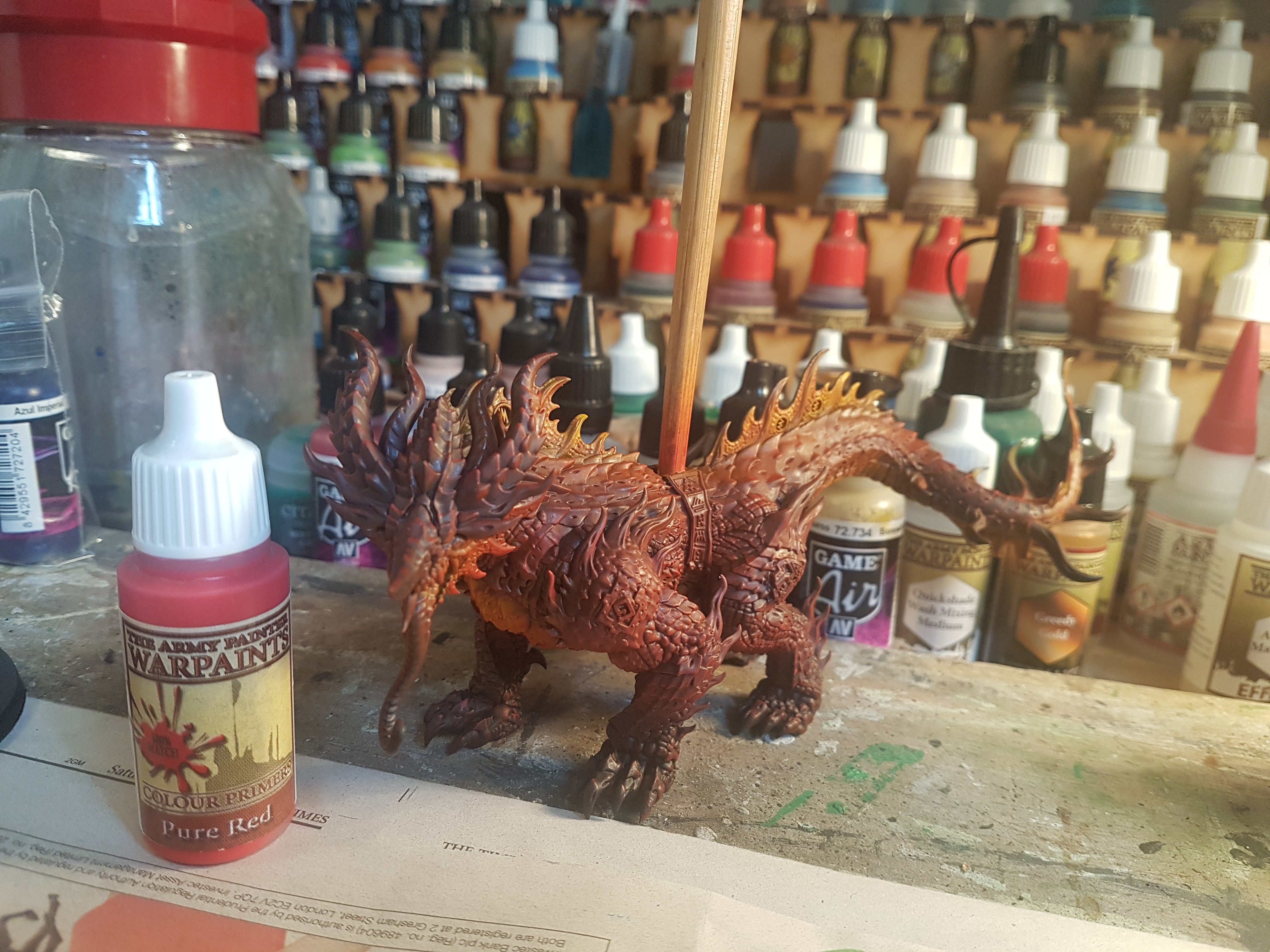
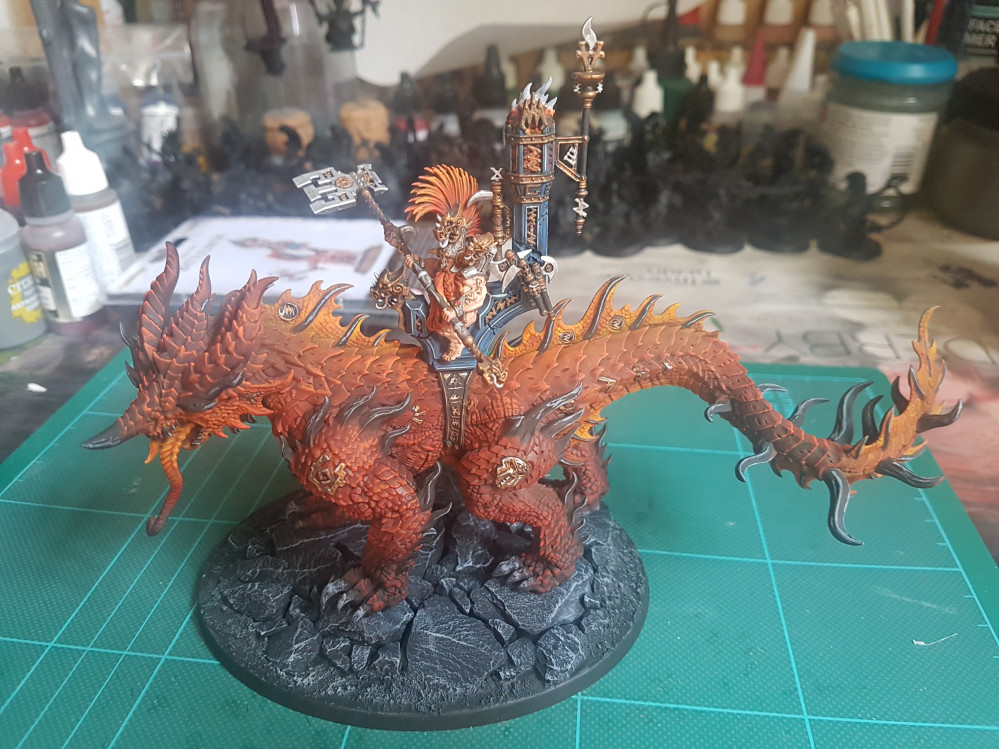
With the new edition of Age of Sigmar on the horizon I am getting on with painting up my Fyreslayer Dwarfs. Thought I'd share my progress with you all. For the Magmadroth I took inspiration from an online video by Big Mek Workshop and the GW TV pages, but have been varying it to suit my ability and style. I have learnt a lot painting the Magmadroth, and forced myself to use new techniques I normally shy away from like edge highlighting and flesh tones. Really pleased how it has turned out so far. There are some superfluous steps in there, especially on the riders hair where I went back and forth trying to get the right balance and contrast, but the lessons learnt will certainly help me formulate a speedy approach to painting up the rest of the foot troops.
Related Game: Warhammer Age of Sigmar
Related Company: Games Workshop
Related Genre: Fantasy
This Project is Active
Using the 2 part oak brown to 1 part Matt Black mix I have gone back and picked out all the runes and the saddle, this will act as a consistent base colour for the runes.
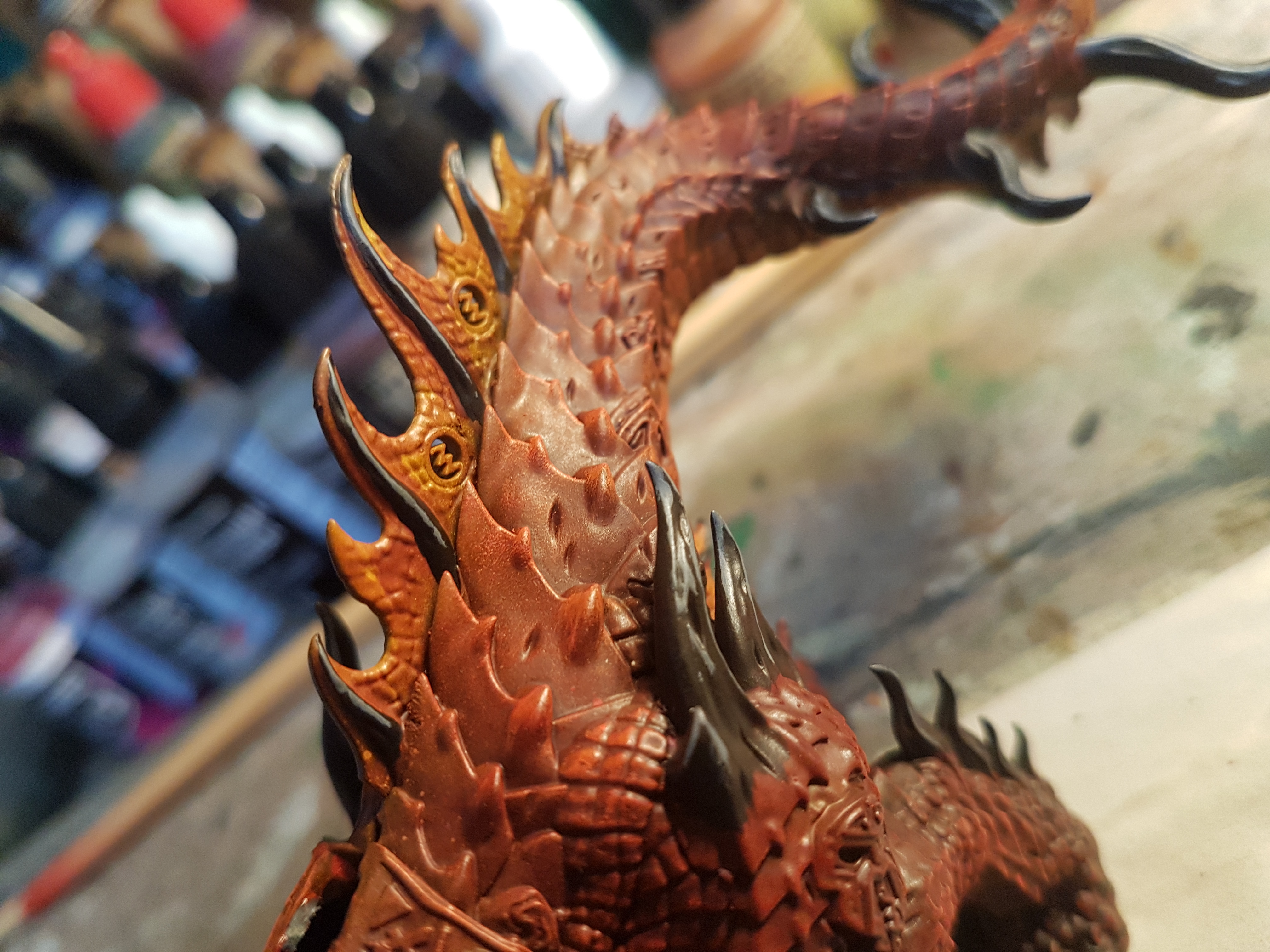 Next up I used Army Painter Uniform Grey to edge highlight the spines and spikes. On the larger areas of the spikes doing a light drybrush. I then also drybrushed the claws.
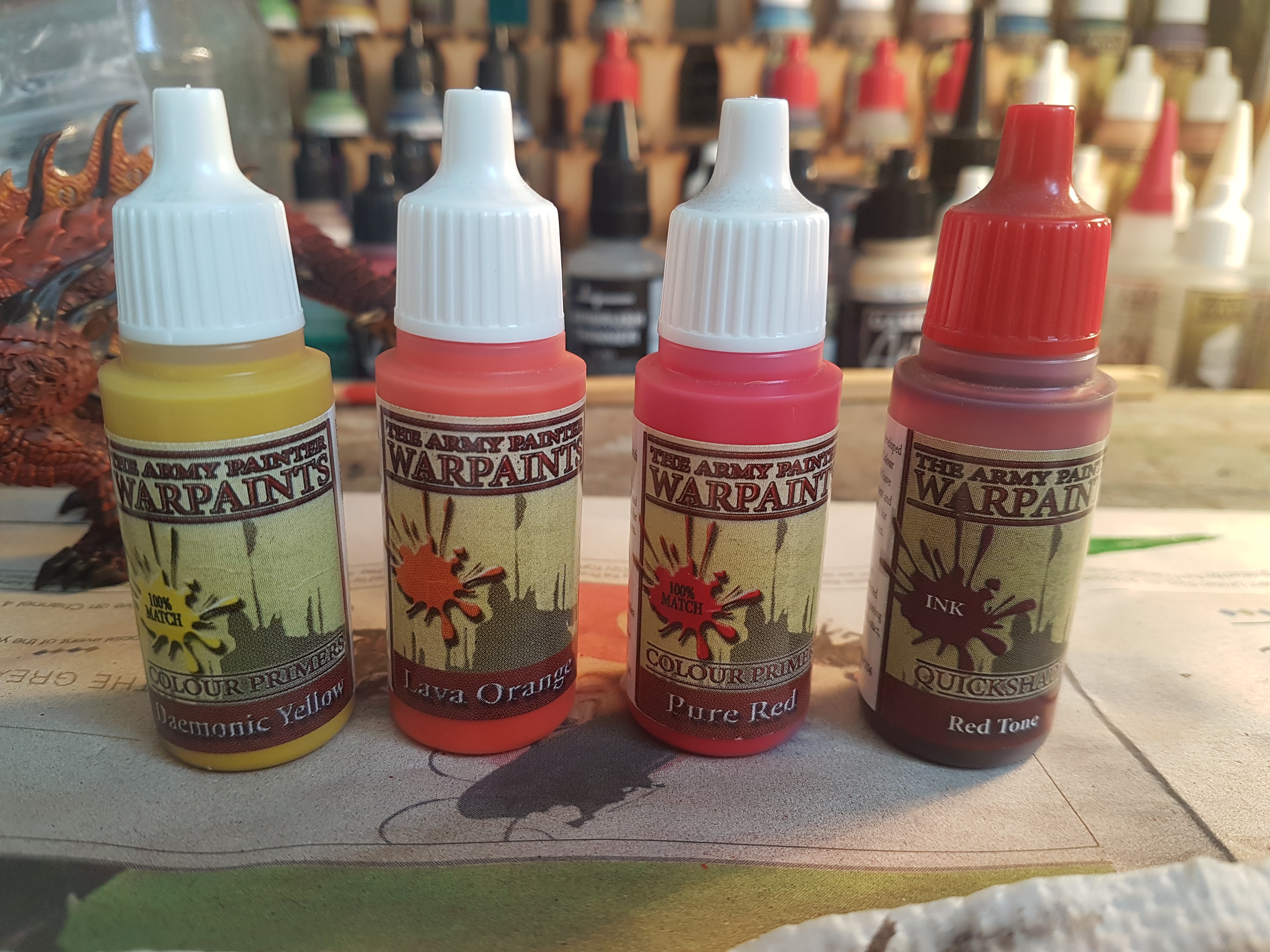 Next I did the tongue. I wanted it as if the fire/magma insides of the beast were cooling as you reached the extremities. So I added yellow around the law and done the tongue, grading this in to a lava orange and then pure red, letting it fade off to black at the end of the tongue as it cools in the air. The result was a bit stripey, so I gave it a wash with red tone ink which helped to tie it all together. I might go back and drybrush this later to pick up the ridges on the tongue, undecided at present. Would welcome your thoughts.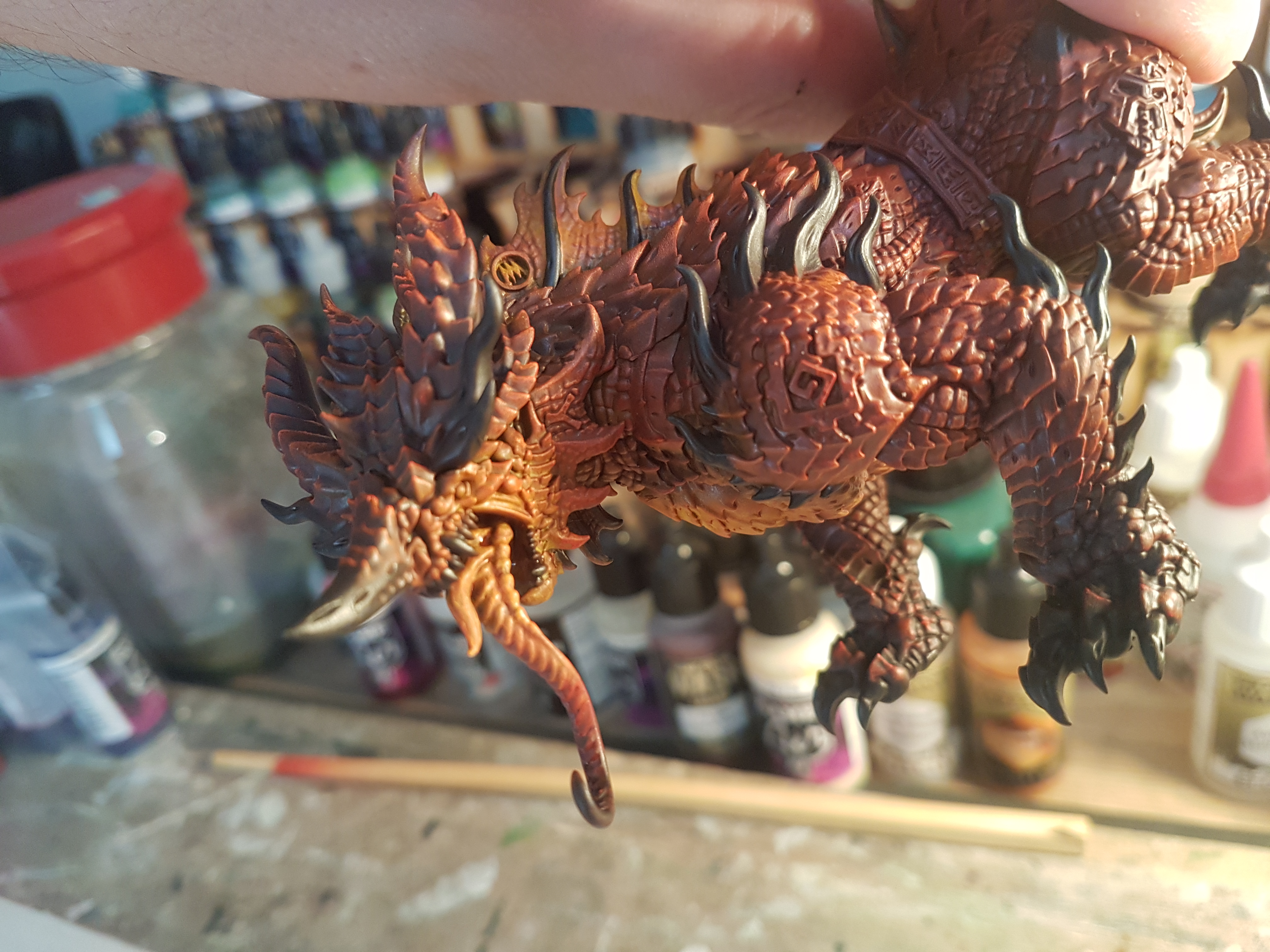
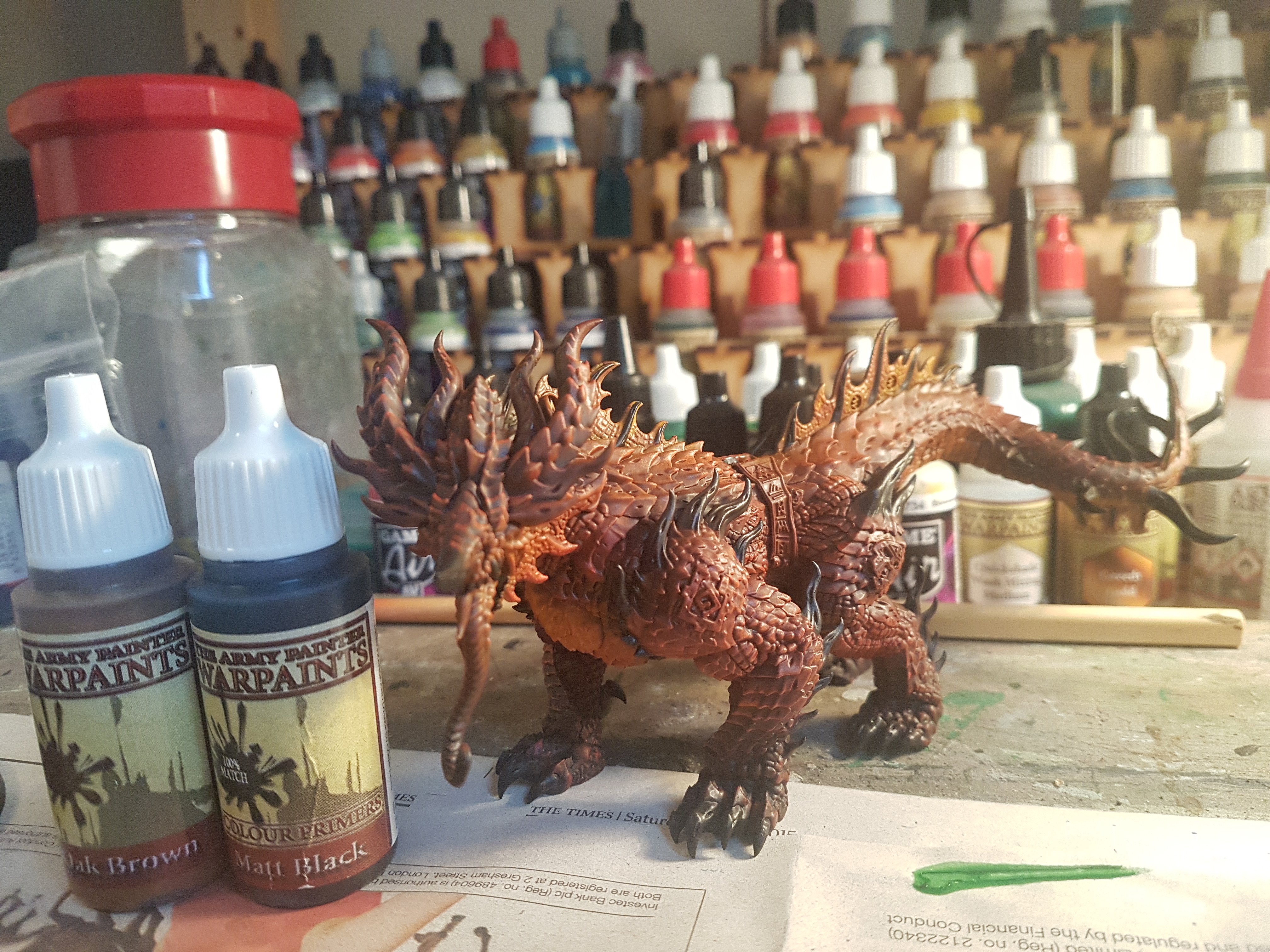 So the next step was to do a light yellow dry brush over the back fins and tail (no photo). I then mixed Army Painter Oak Brown (2 parts) and Matt Black (1 part) and picked out all the spines, horns, death and claws
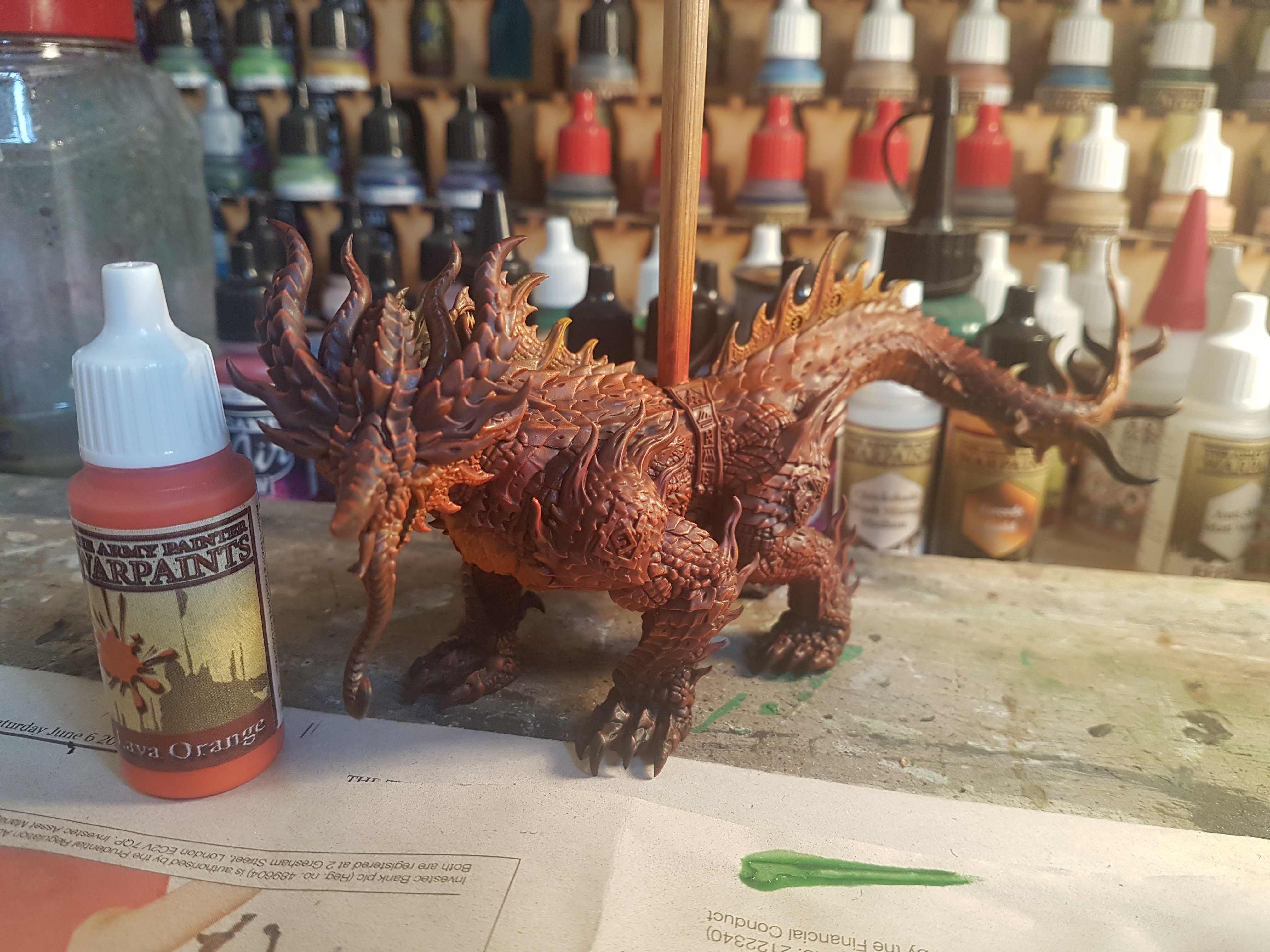 So the next step was to use Army Painter Lava Orange as a drybrush. I generally stayed away from the black feet areas this time, concentrating more on the scales, again drybrush against the direction of the scales.
I am clearly going to need to take some higher definition photos once I’m done. As some of the subtleties are lost in the photos from my mobile.
🙁