















![A Perfect Zombie Apocalypse Starter Set? Civilians & Survivors Review | Wargames Atlantic [7 Days Early Access]](https://images.beastsofwar.com/2026/01/unboxing-wargames-atlantic-civilians-_-survivors-1_2-coverimage-225-127.jpg)
![Wild Australia Wargaming? 28mm Ned Kelly Gang & Victorian Police Review [7 Days Early Access]](https://images.beastsofwar.com/2026/01/unboxing-traders-galaxy-australiana-ned-kelly-gang-_-victorian-police-coverimage-225-127.jpg)


Building the Old West



Recommendations: 1278
About the Project
I attempt to make an Old West town to play Fistful of Lead, Reloaded.
Related Genre: Western
Related Contest: TerrainFest 2023
This Project is Active
The Horse Soldiers Pt 1
A movie from 1959 starring John Wayne and William Holden. A fictional account of an actual cavalry raid by the Union army during the Civil War.
The US Army was heavily influenced by French military doctrine and uniform aesthetics from the time of Napoleon until the Civil War. A lot of the French influence on doctrine and tactics was largely supplanted by experience in the Civil War and subsequent operations against the Indians however the influence on uniforms remained but was tempered by a more practical bent of the post war era.
One of the more interesting aspects of the army at this time was that enlisted soldiers were issued uniforms and officers had to buy theirs. If an enlisted soldier had to be issued a new uniform due to it being lost or damaged, the cost was deducted from his pay. However, there was an exception. If the item was lost “on campaign” it was replaced at the Army’s expense. It was very common for troopers to “lose” damaged, worn or soiled uniforms on campaign.
These uniforms were made of a heavy wool. Great for the winter but utterly unsuitable for the higher summer temperatures of the American South West. This fact combined with the above policy of replacing uniforms lost on campaigns resulted in a large number of soldiers buying civilian clothes for active service and changing into these clothes once out of sight of the post. Numerous photos and journal entries noted that the only way you could tell a group of armed men were soldiers was to look at their gun belts or saddles as these were invariably marked with military symbols such as the ubiquitous US or the eagle and wreath design on officers belt buckles.
I used the following paints and washes.
Army Painter Matte Black – all leather items. Specifically boots, gun belts, holsters, ammo pouches, carbine slings, map and binocular cases. Also campaign hats and the brim of the chaussers cap and the trim and facings of the officers undress uniform (more on that uniform later) as well as rifle and pistol barrels.
GW Eshin Gray – used as a drybrush on everything painted black.
Vallejo Pastel Blue – uniform pants
Army Painter Blue Tone – used as a wash on the pants
Army Painter Deep Blue – uniform coats and a few of the civilian shirts
GW Chronus Blue Dry Brush – used as a dry brush on the darker blue uniform coats.
Vallejo Mahogany Brown – gun stocks and pistol grips.
GW Seraphim Sepia – used as a wash on the gun stocks, pistol grips and on the red and yellow bandannas.
Vallejo Dark Flesh – hands and faces
Army Painter Oak Brown- hair, beards and mustaches.
GW Reikland Flesh Shade – used as a wash on hands, faces, hair, beards and mustaches
Vallejo Brass – bugle, spurs, belt buckles, buttons, and the clip that attaches the carbine sling to the carbine.
Army Painter Bright Gold – officer’s hat cord.
Army Painter Matte White – suspender straps
Army Painter Ash Gray – flannel undershirts
GW Basilicanum Grey Contrast Paint mixed with speed paint medium at a 1:3 ratio used as a wash on the flannel undershirts.
Vallejo Beige – cavalry gloves and the officer’s civilian coat. Both were also washed with Seraphim Sepia.
Flames of War Deep Yellow – I think this is actually an Army Painter manufactured paint with a Flames of War label. It’s a light yellow and I used it for the trim on the uniform coats, the leg stripes, the officer’s shoulder boards and the bugle cords and tassels
Brief Historical Interlude
I have about a dozen books on the US Cavalry covering everything from the origins during the American Revolution to the last mounted cavalry charge in the Philippines against the Japanese. Even after being dismounted, the cavalry units continued to serve in combat operations in the Pacific theater. During the occupation of Japan, the lead unit of the US occupation was the 7th Cavalry.
But the post Civil War era, referred to as either the Plains Wars or Indian Wars, is the subject of this entry. One of the most interesting things about the US Army of this period is it’s doing a lot of experimenting with uniforms and equipment while performing lots of building of civilian infrastructure such as erecting telegraph lines, building roads and delivering the US mail in addition to the Indian Wars.
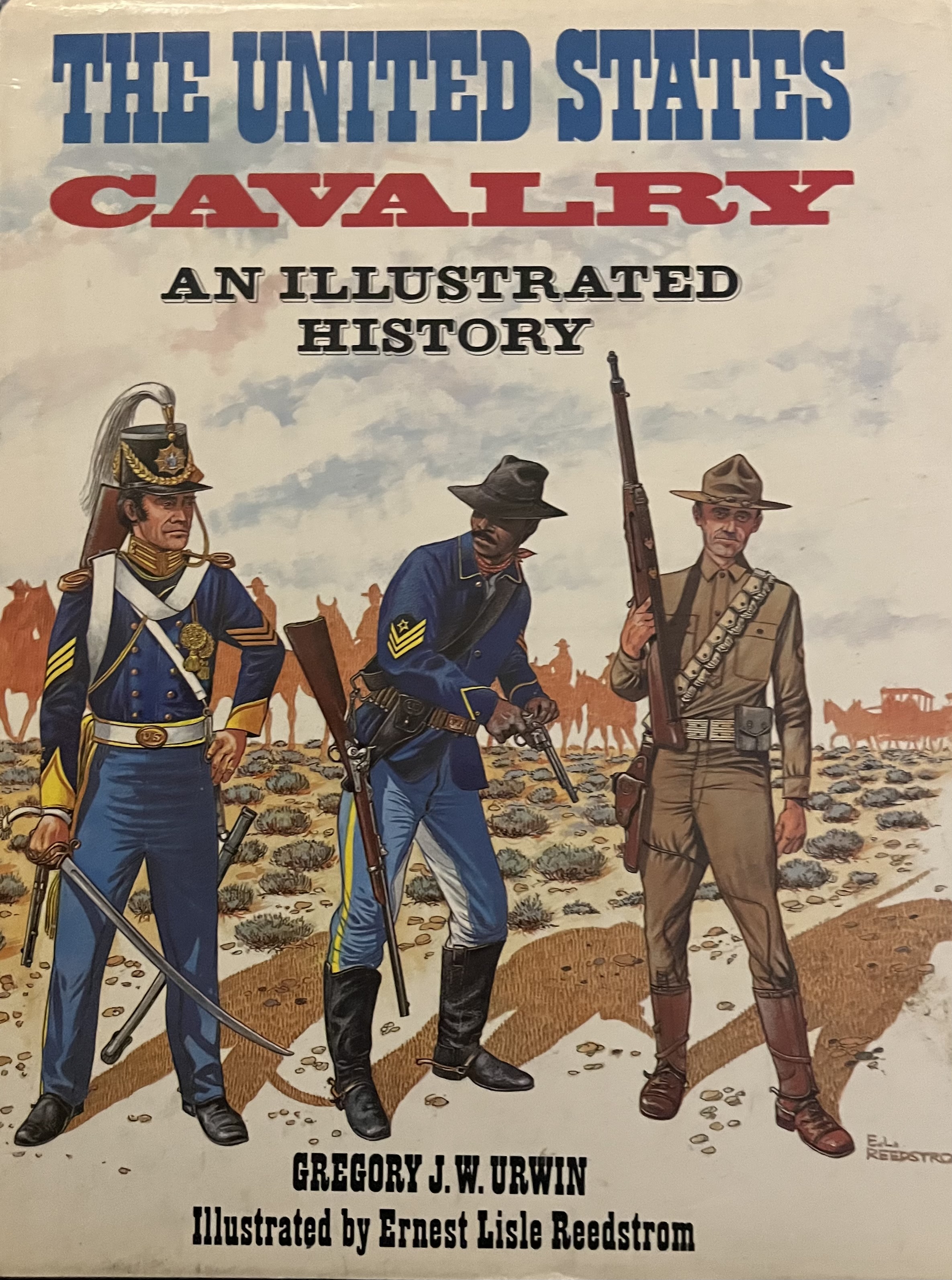 This book is nicely illustrated but is better for providing a basic history of the cavalry organization and both its peace time and combat operations.
 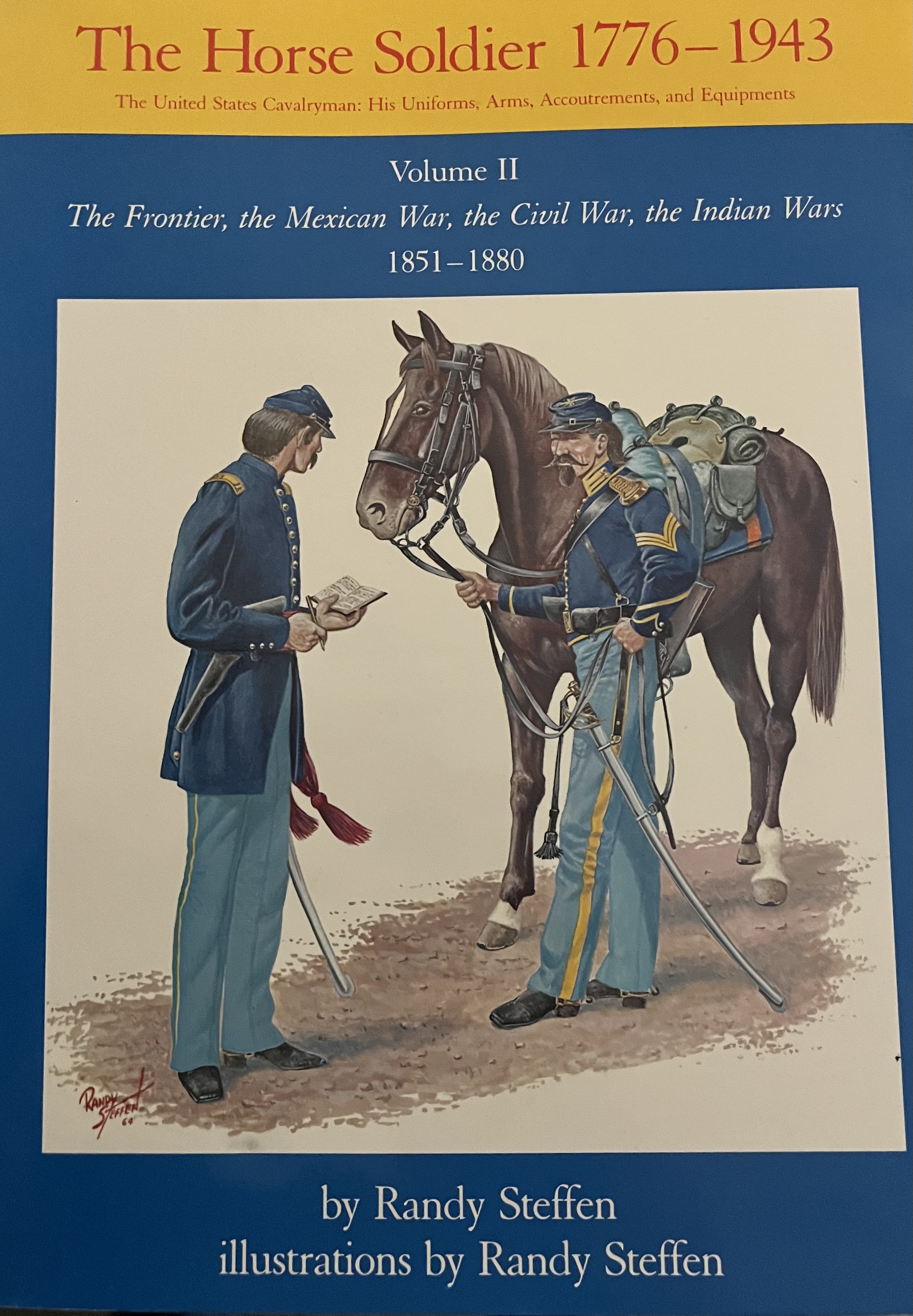 This book is volume 2 of 4 and if course I have all four. This is a great reference source for the uniforms with lots of black and white illustrations and an immense amount of primary source documentation plus a good number of color plates.
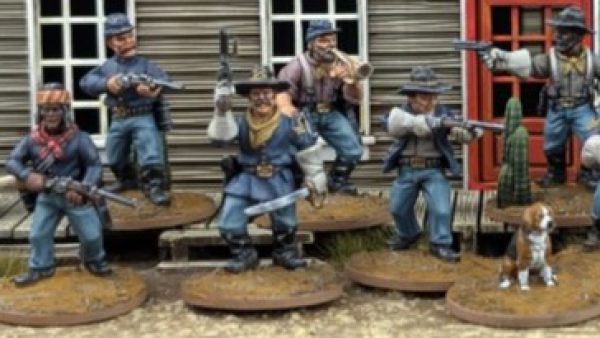
 I’ll be painting up these troopers in the uniforms of approximately 1876. This was the year of the Battle of the Little Big Horn which the Indians referred to as the Battle of the Greasy Grass. The uniforms were a mix of Civil War leftovers, new gear issued in 1872 and 1874 plus civilian clothes as most troopers found the issued uniforms unsuitable in warm weather.
The cavalry has arrived!
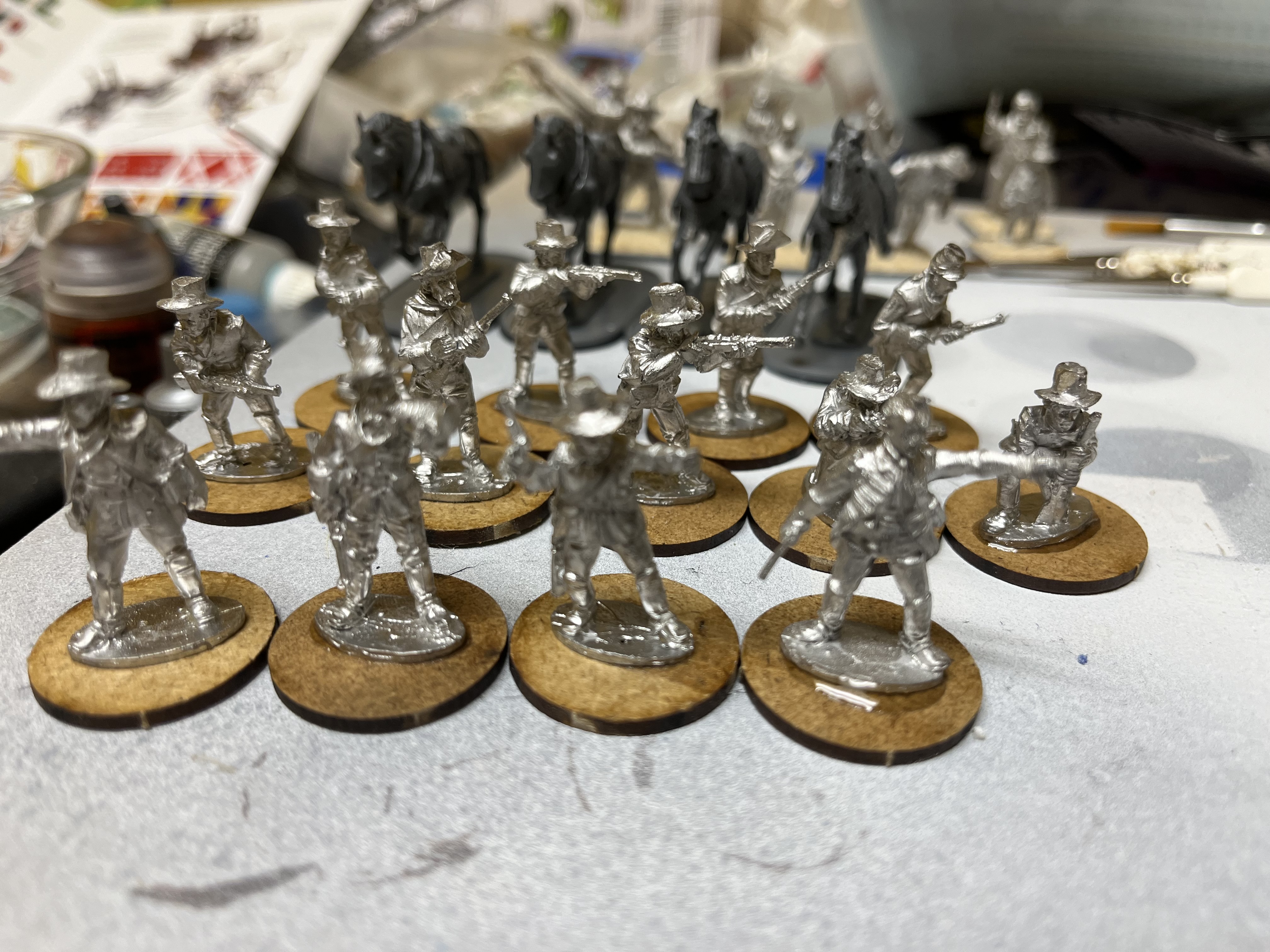 These US cavalry troopers arrived today. They’re from Brigade Games Plains War Kickstarter.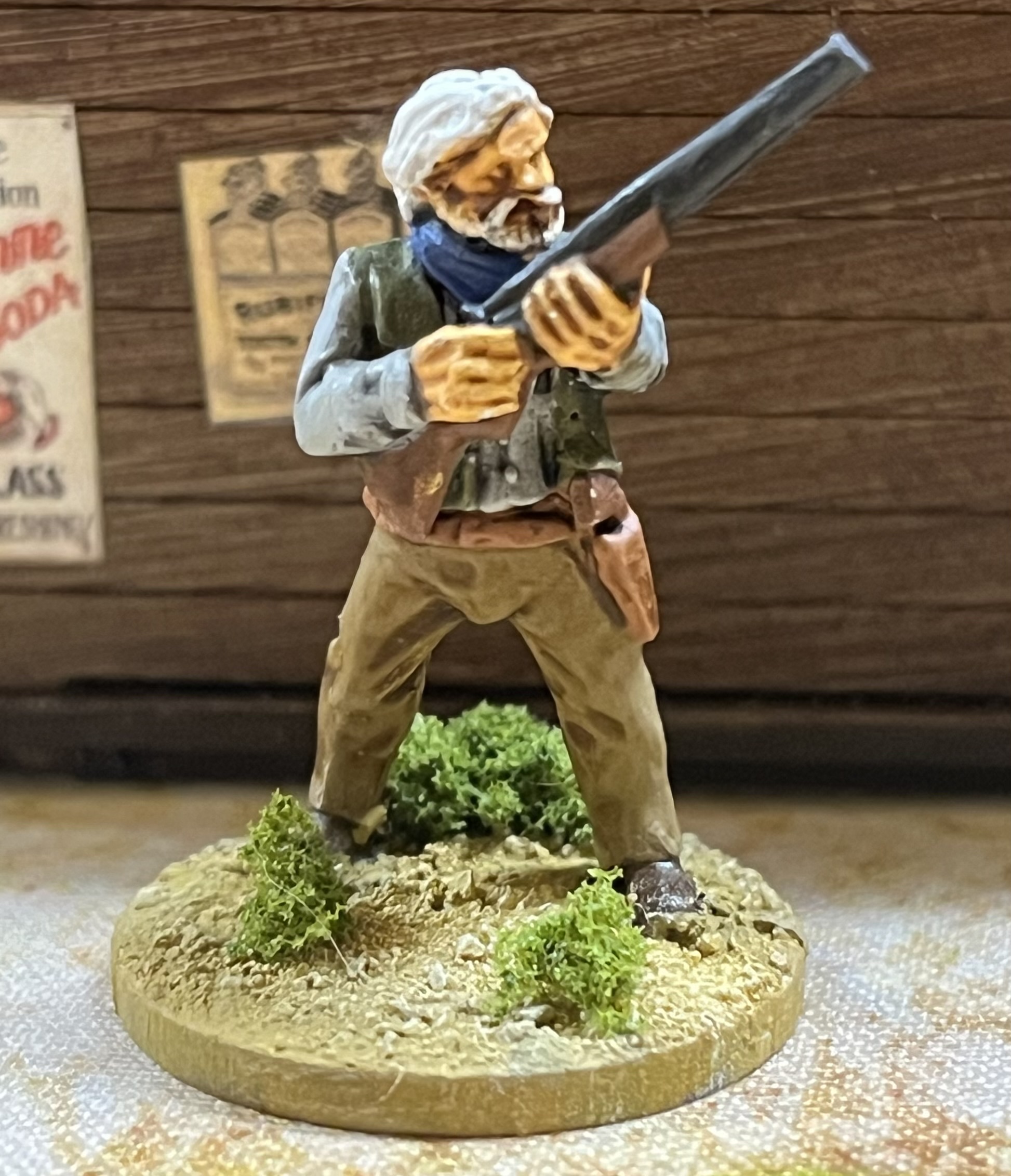
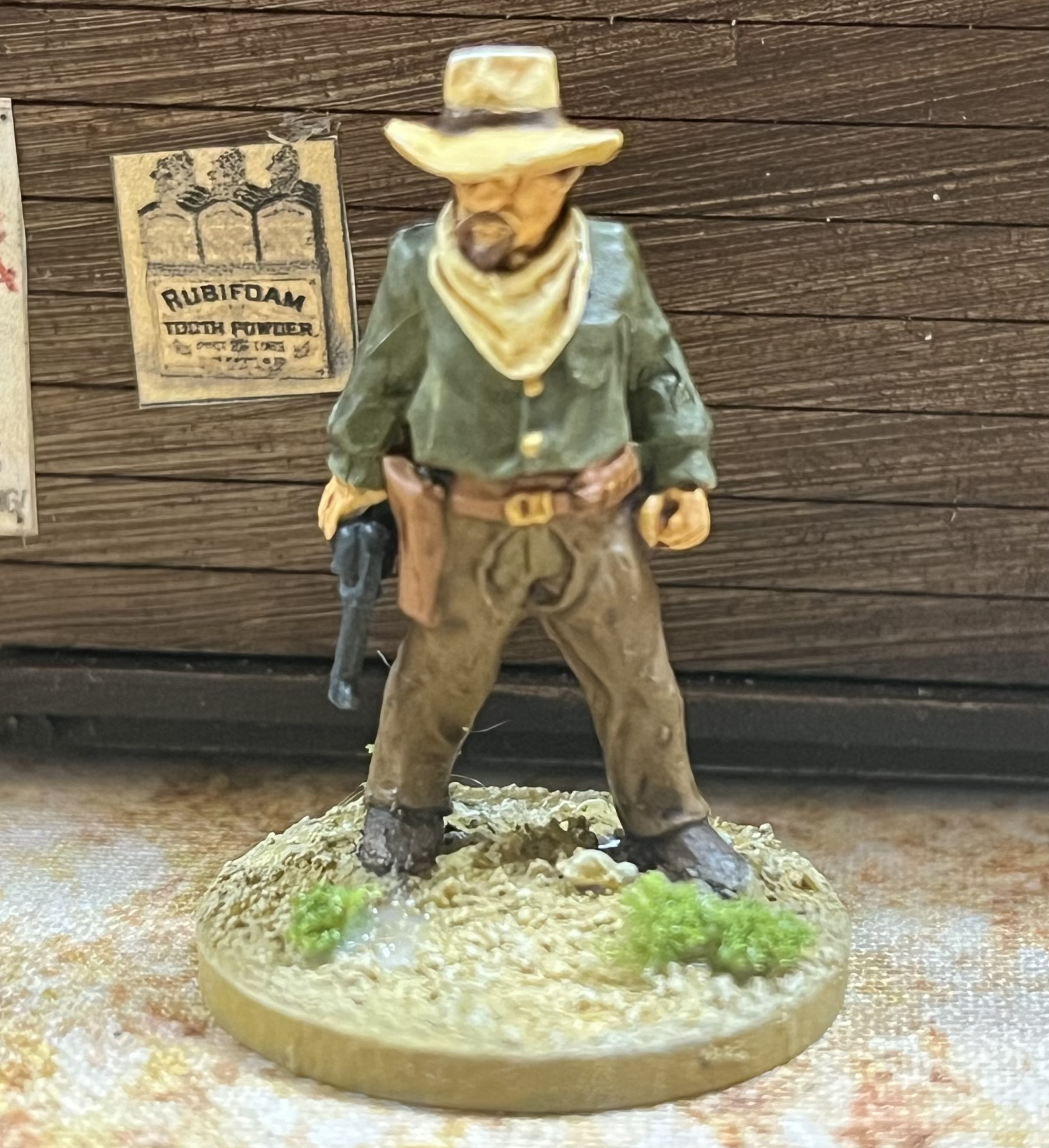
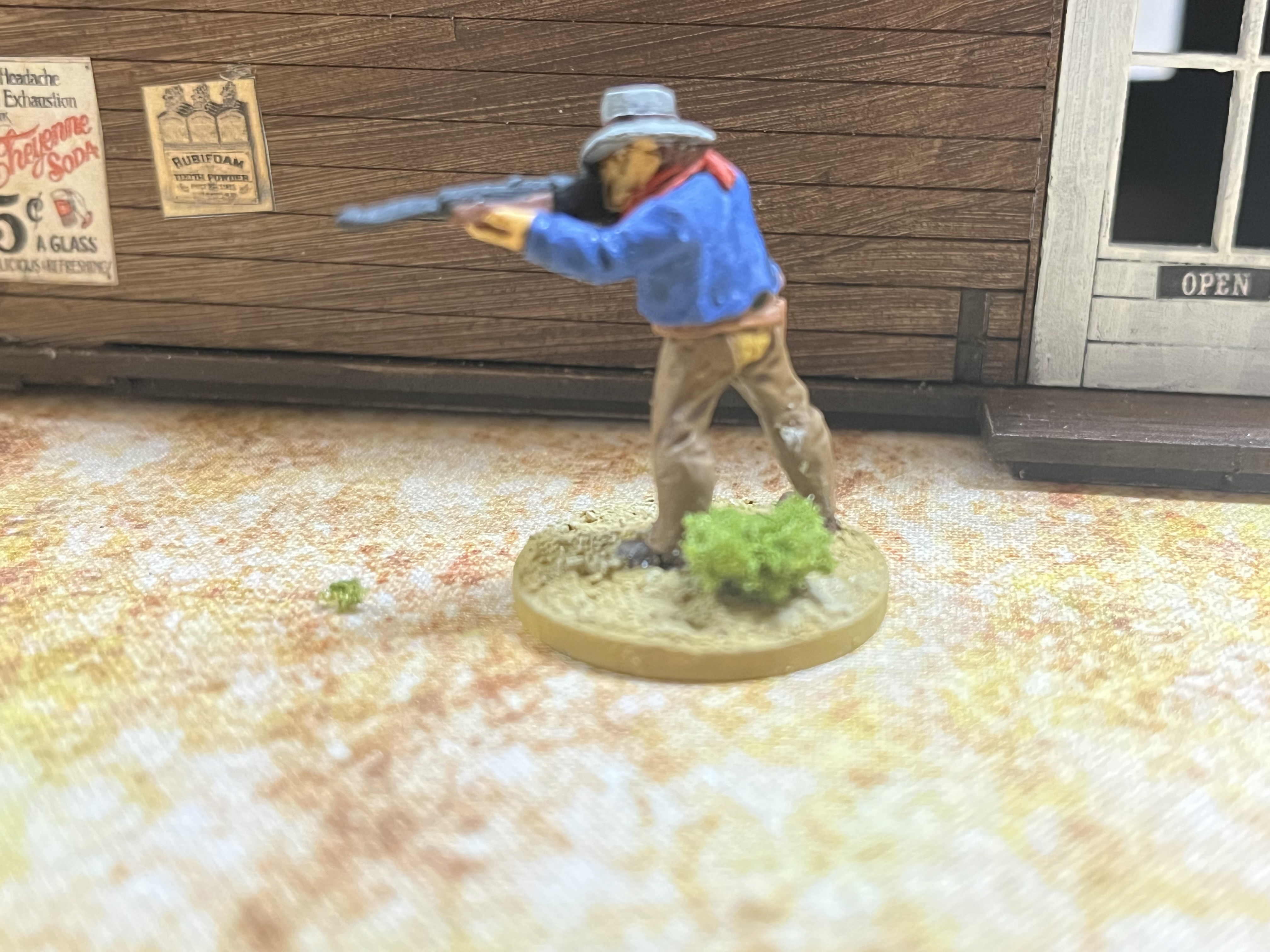
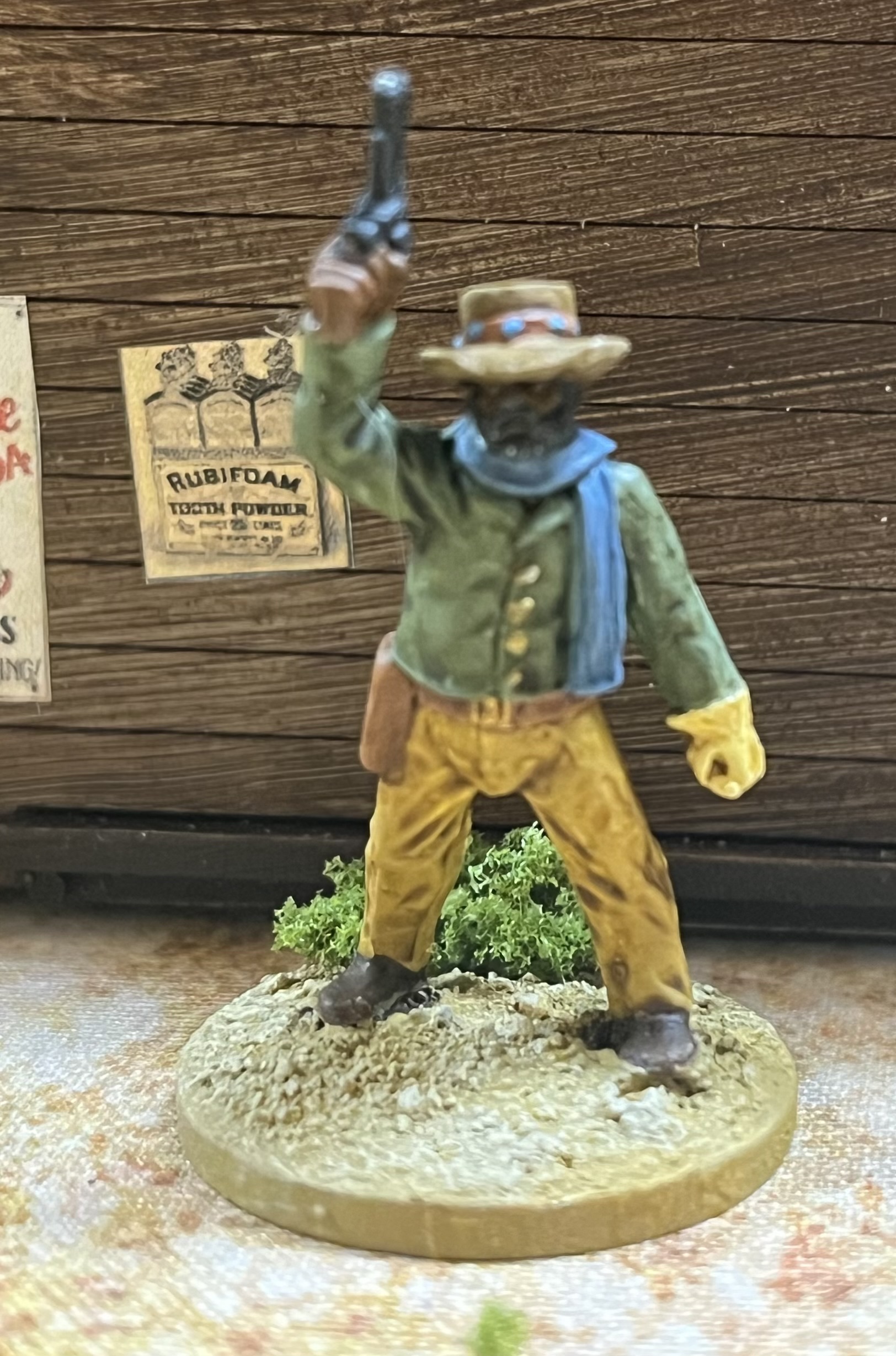
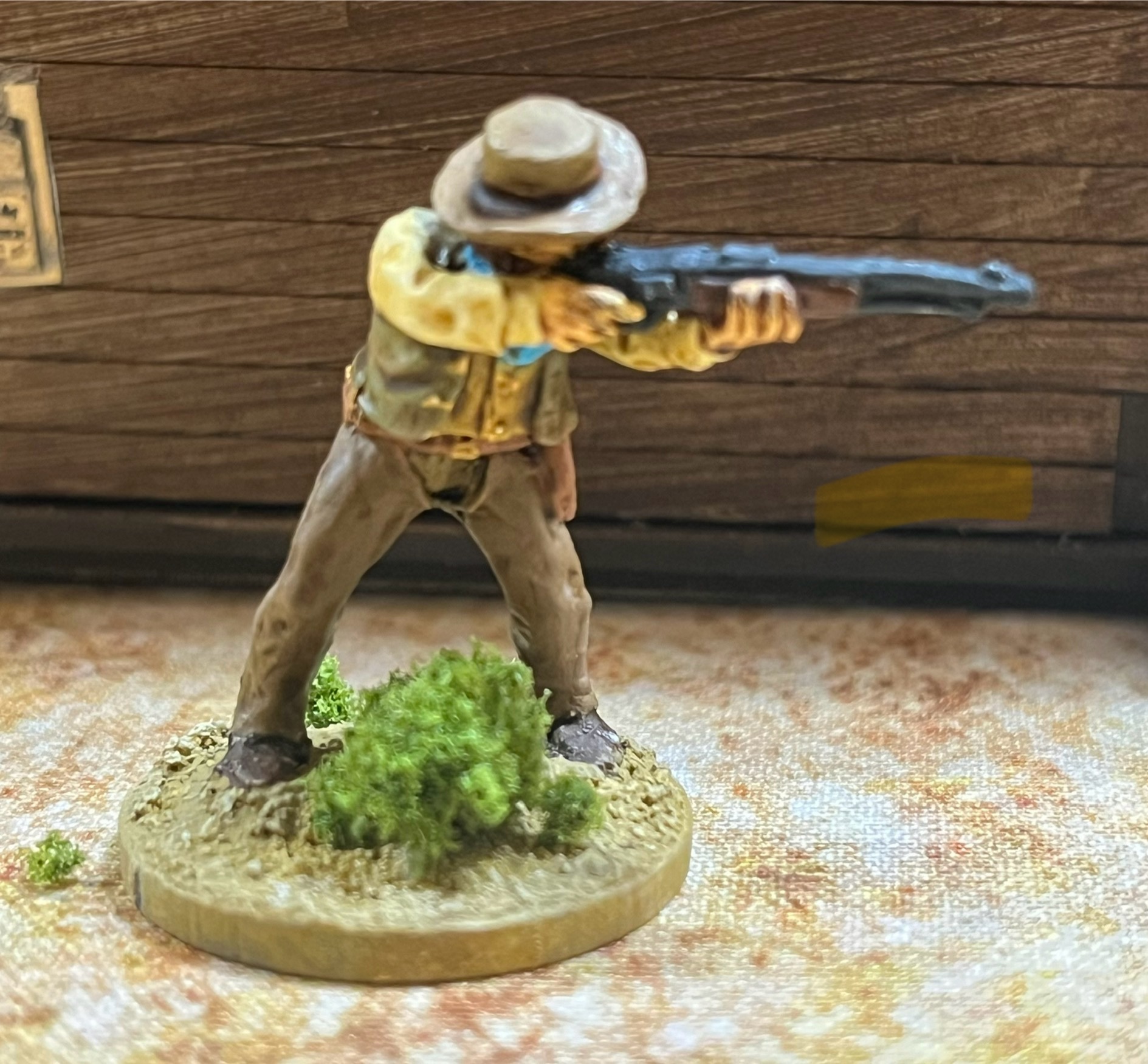
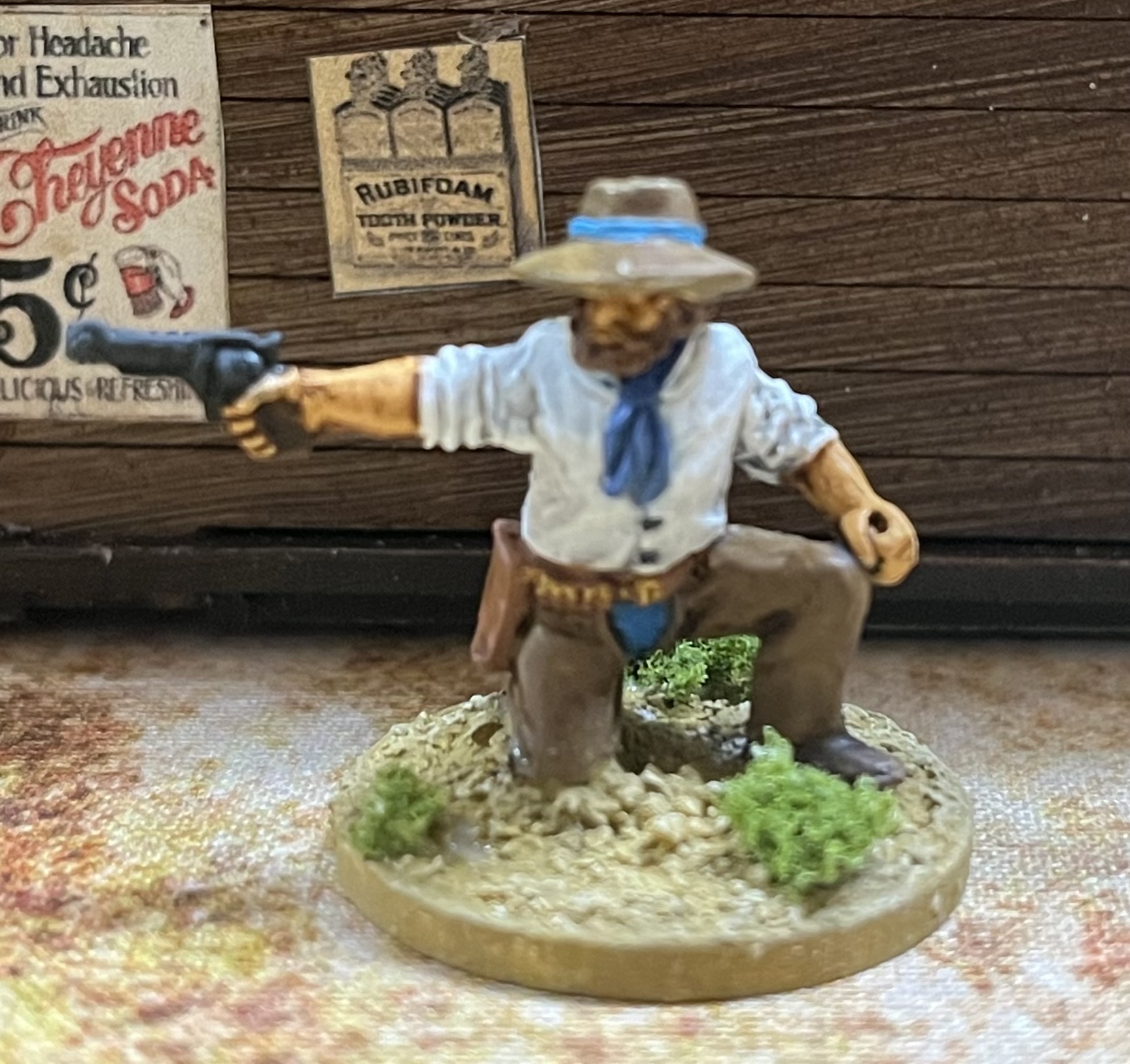
First Games
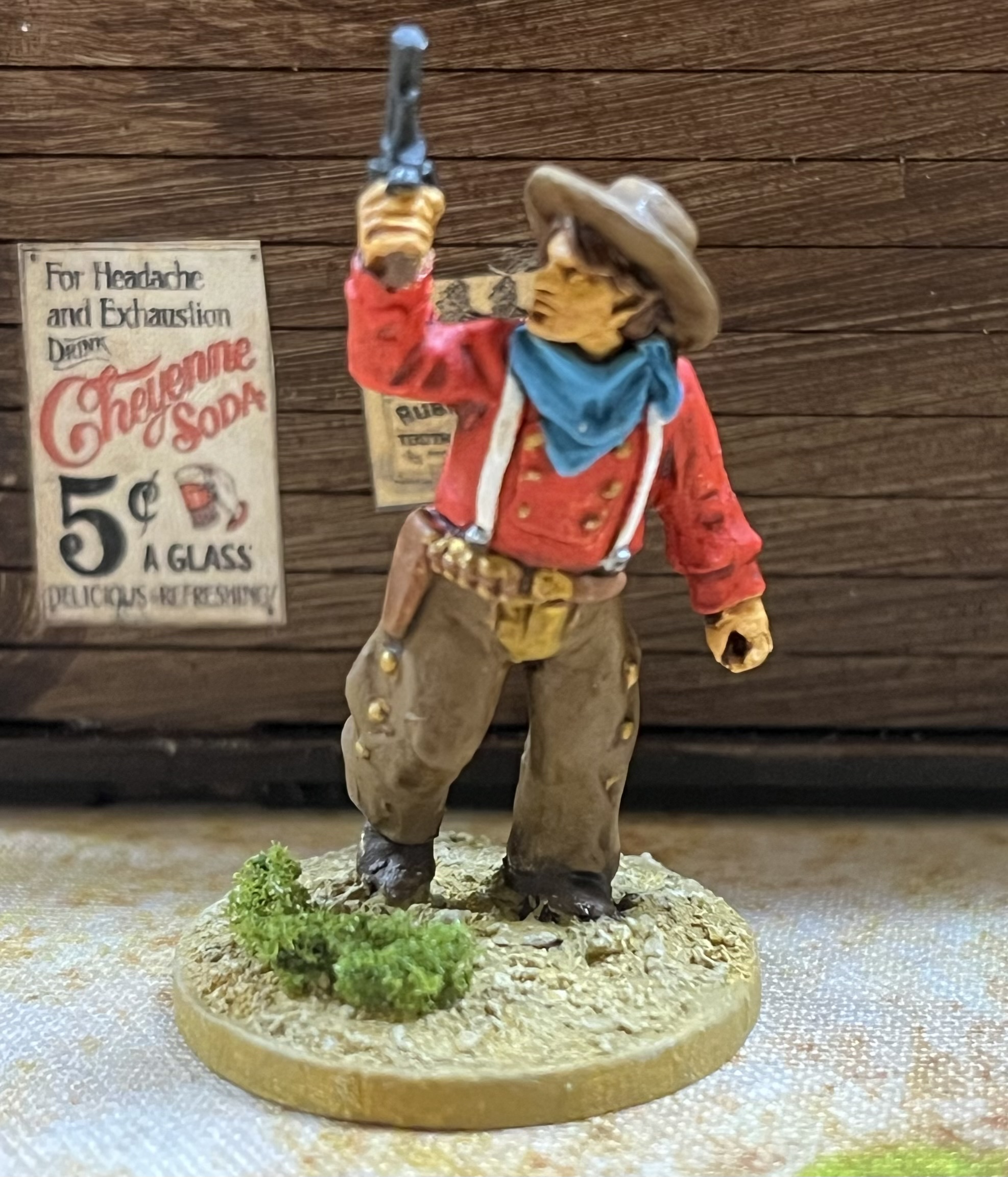
We knocked out our first three games over the weekend. Two games of 1 vs 1 and one 3 player game. Everyone picked up on the rules very quickly. Here’s a few in game shots and I’ll be doing a separate battle report on one of the games.
 A couple of ne’er-do-wells creeping around the saloon.
  Sheriff John “Deuce” McClain outside of his office.
 Unit Cards
The folks at Wiley Games are kind enough to provide free downloadable PDF unit cards. Pretty nice as it has drop down menus to add traits and weapons as well as import pictures of the miniatures but I wanted to add some of the special rules as well.
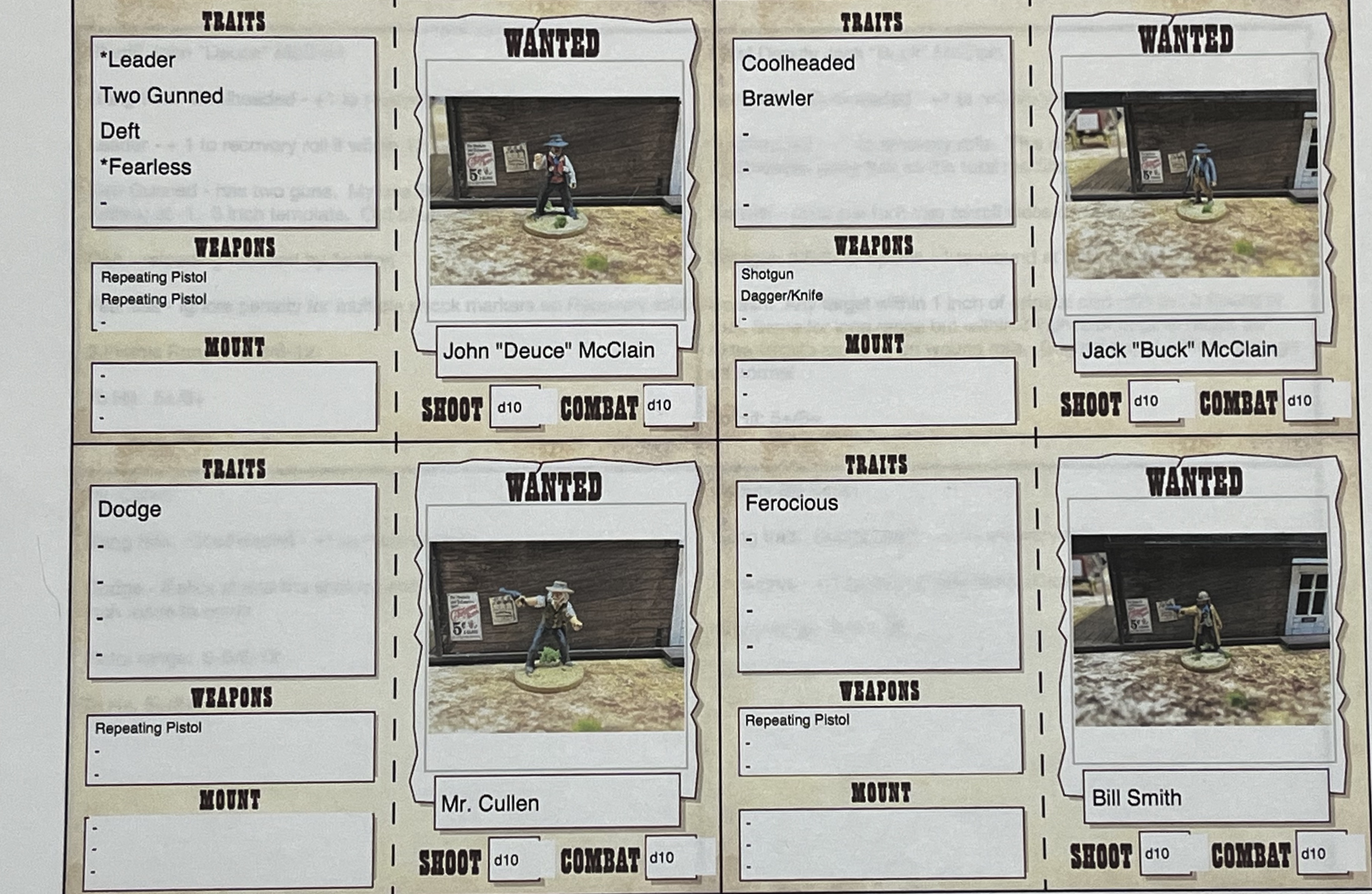 Wiley Games unit cards are a PDF you can fill in and add images to. Here's the front side of the first four characters of the Sheriff's posse.
 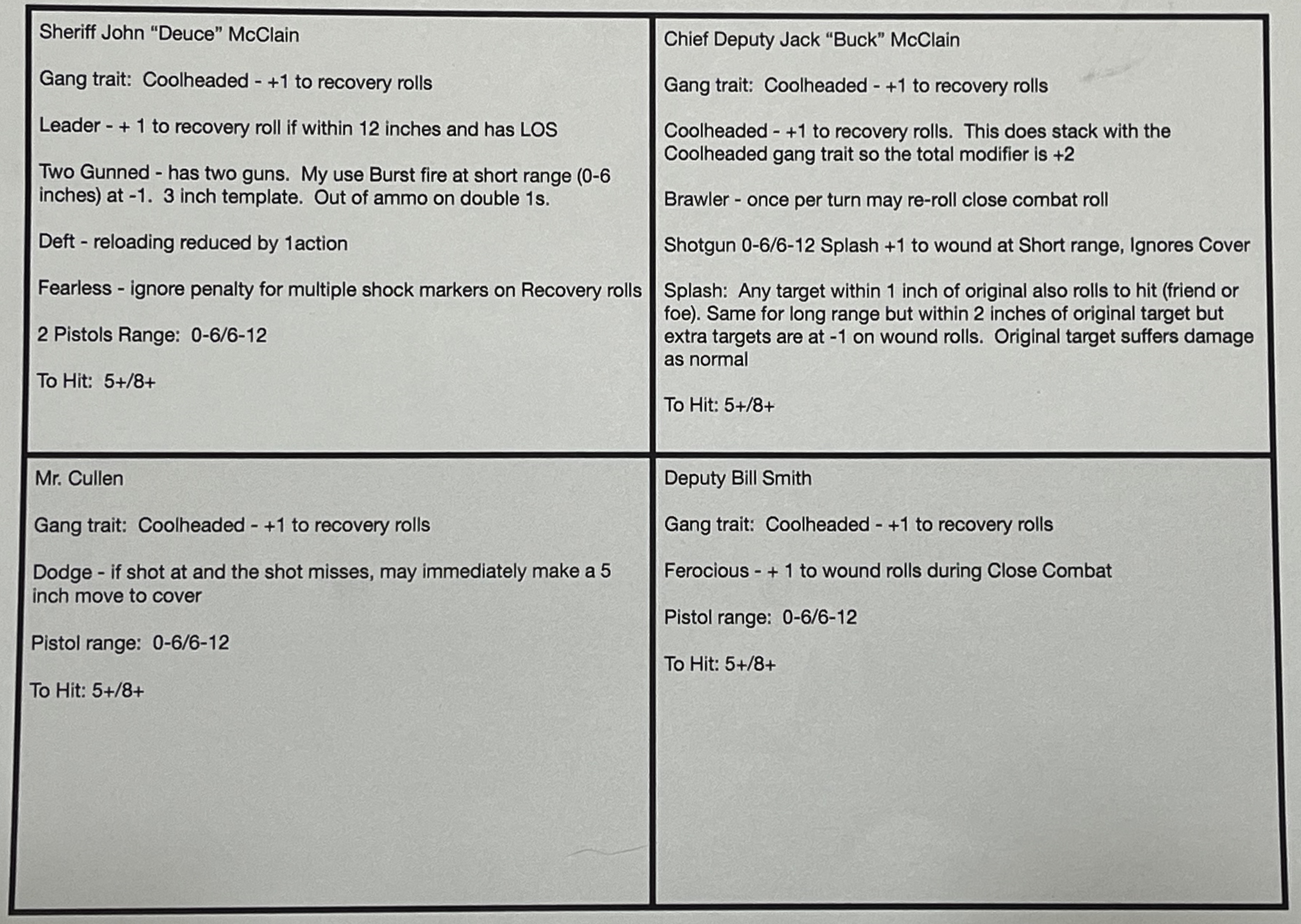 I wanted to add the special rules for easy reference so I made these for the back of the unit cards.
 Pinkertons Done
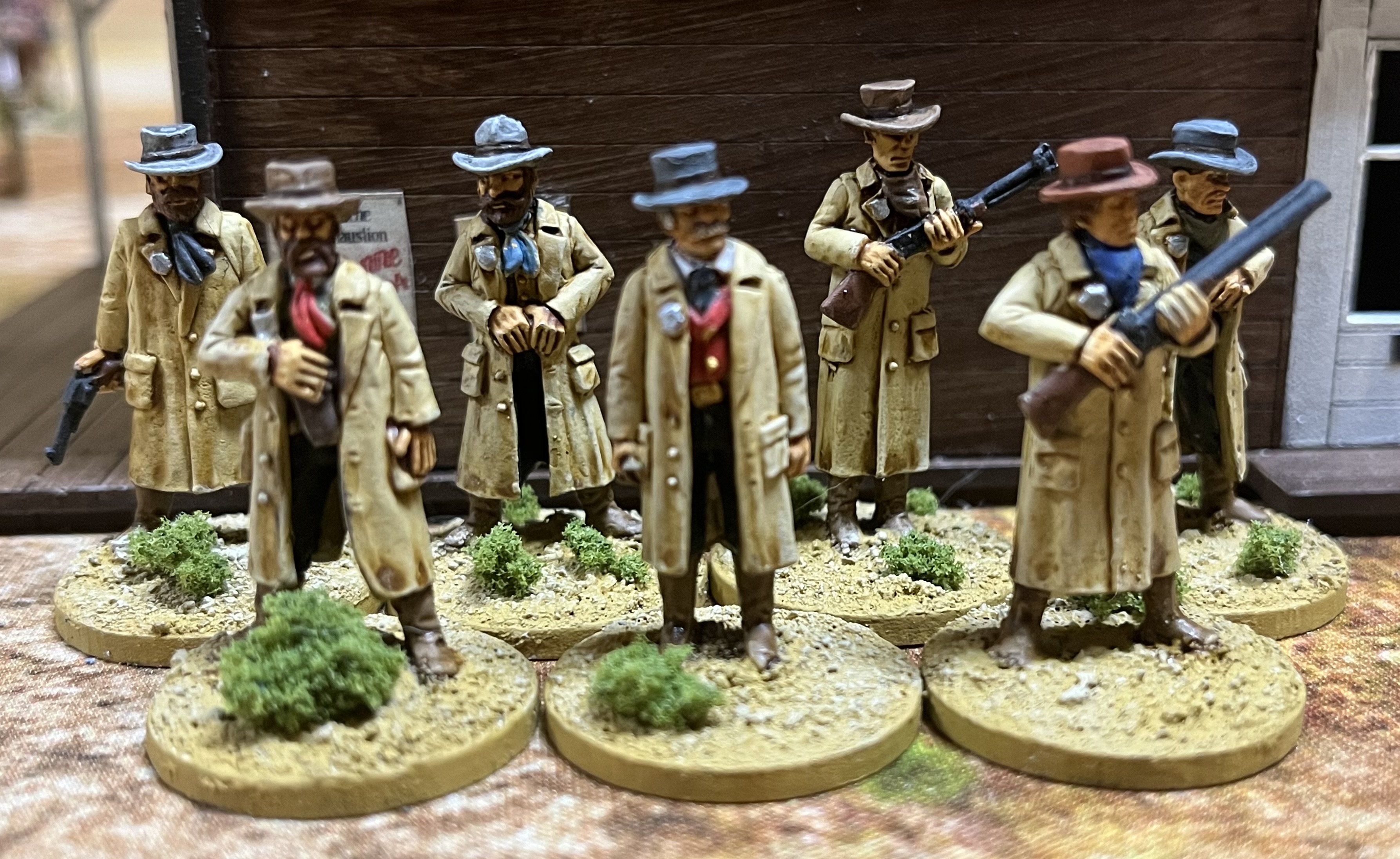 After I washed the dusters in GW Seraphim Sepia I went back and did a light dry brush with Army Painter Skeleton Bone.
 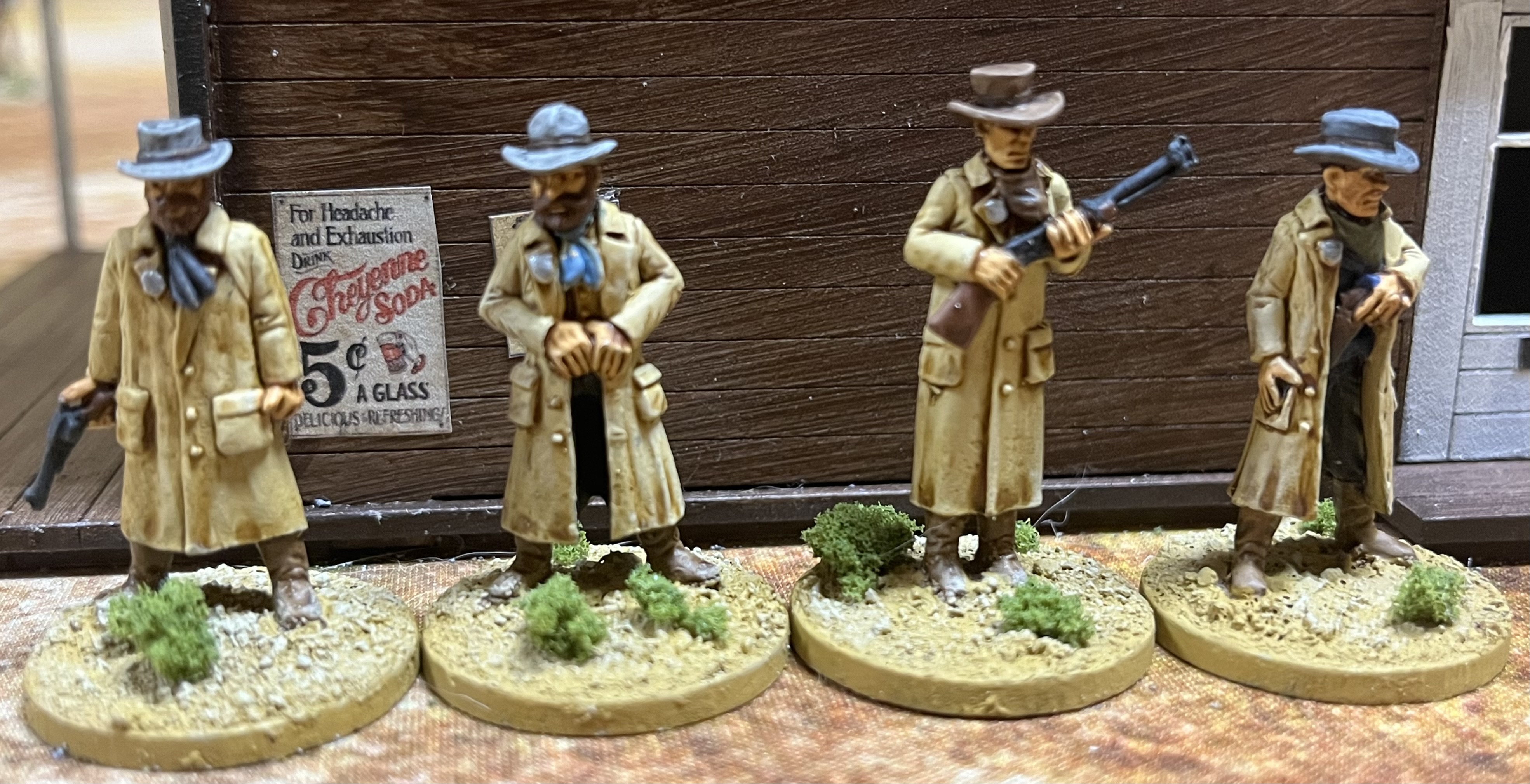 The bases were painted Army Painter Desert Yellow then given a dry brush with Army Painter Skeleton Bone.
 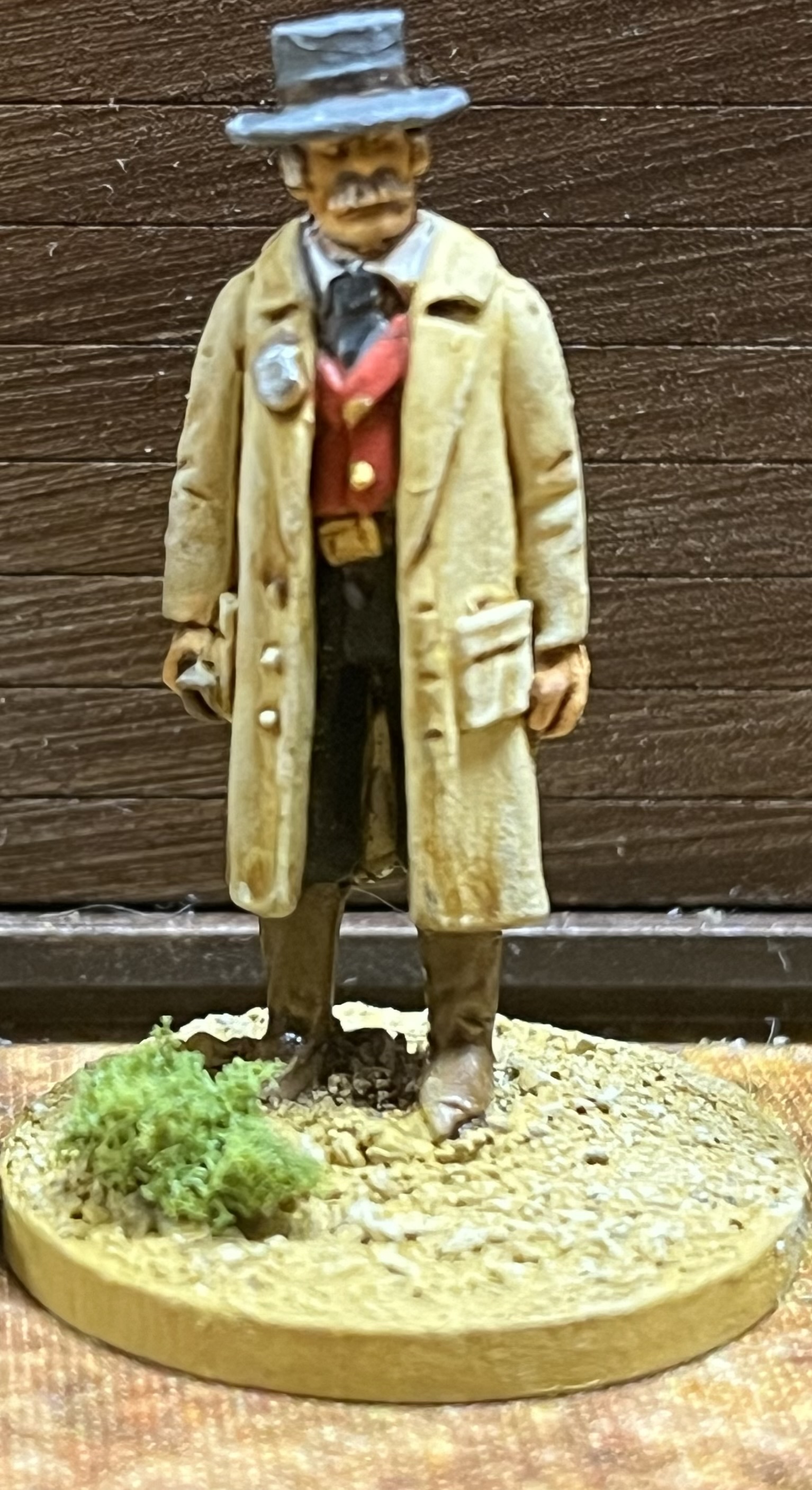 I used Vallejo matte spray varnish then added clump foliage with to the bases with PVA glue.
 Pinkertons Pt 2
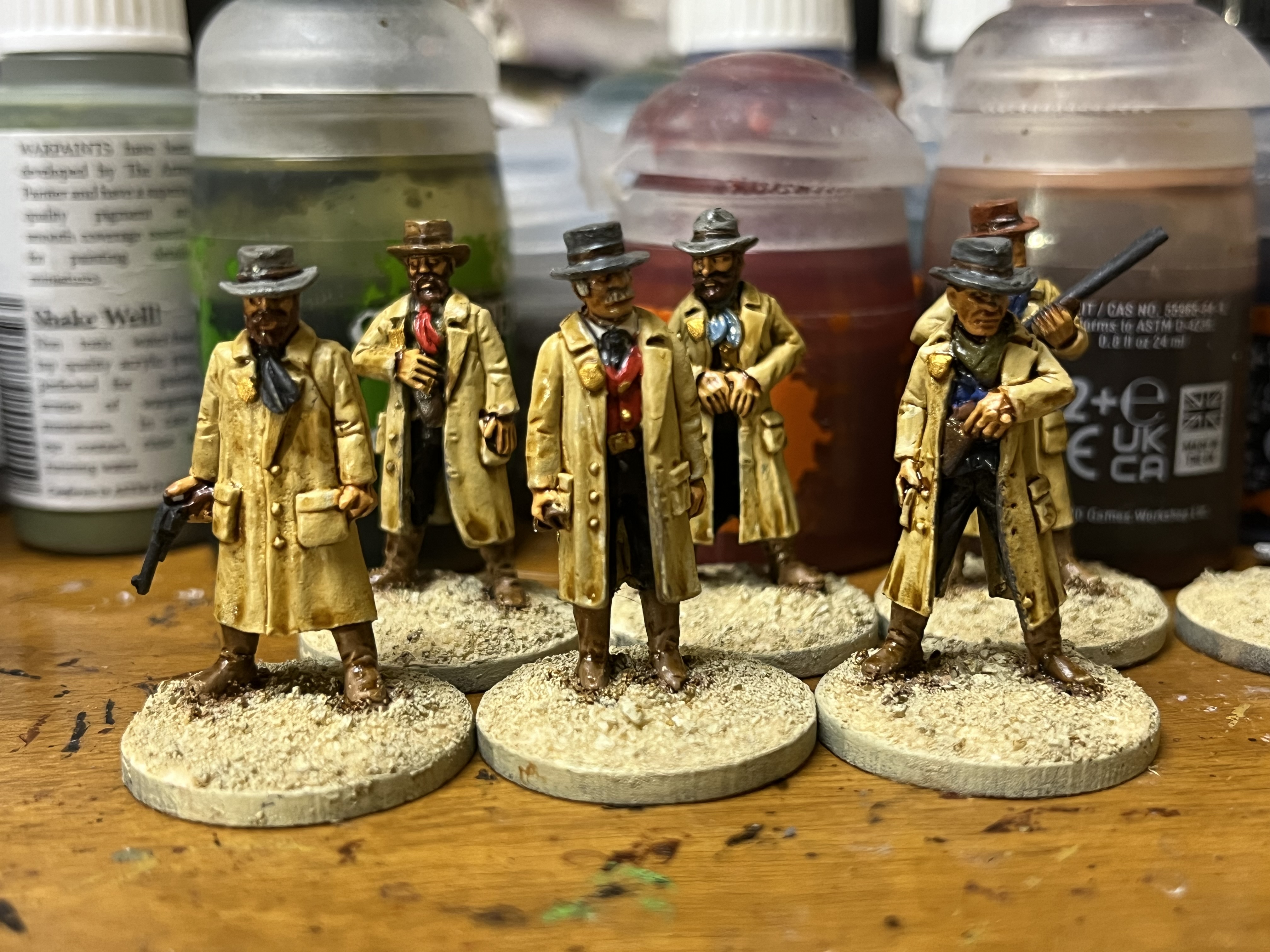 Pretty well pleased with these guys. I need to work on the bases and do a few touch ups.