














Inside DreadBall All Stars: Teams, Championships And The Future Of The Game
March 13, 2026 by crew


With DreadBall All Stars on the horizon, OnTableTop sat down with Ronnie Renton, founder of Mantic Games, and legendary game designer Jervis Johnson to talk about the new direction for the sci-fi sports game.
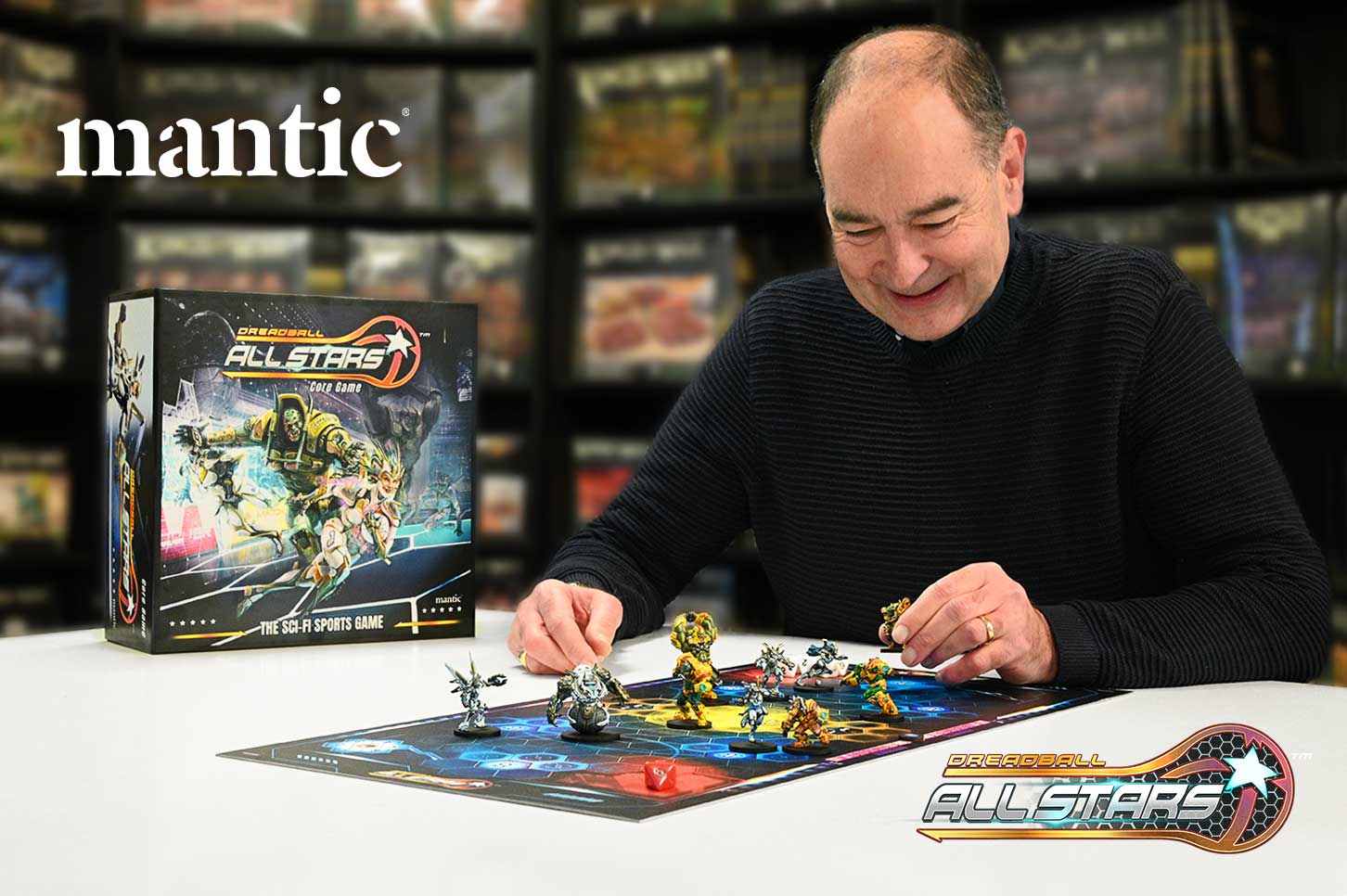
DreadBall All Stars // Jervis Johnson
The discussion ranged from team design and corporate themes to league play, legacy systems, and the upcoming Kickstarter launch.
Building Teams Around Corporate Identity
OnTableTop: Let's kick things off with a quick question about the teams. The Jets and the Juggernauts, who are presumably the two teams in the starter box. These aren’t the old-style teams where you’re buying a Forge Father team or Void Sirens. They’re mixed. I’m seeing Asterian Marionettes in the Jets alongside humans in stylised armour.
Is this one of the ways you’re showing the diversity of races within the Warpath universe while still keeping teams tightly defined?
Jervis Johnson: Exactly that. I couldn’t have said it better myself.
One of the ideas we wanted to explore is that the players in a team are essentially owned—body and soul—by the corporation that runs the team. Once you sign that contract, the corporation owns you. The players represent the brand. Each team reflects the qualities of its corporate sponsor. That means we select players that embody the brand’s identity and strengths.
When I first started designing the teams, I cherry-picked existing players from earlier versions of DreadBall and promoted them to the All Stars league. I chose the ones that felt right for the different corporations. Their race didn’t really matter anymore—at the All Star level, those old affiliations disappear. You're a company player for the rest of your natural life.
OnTableTop: Once the credits are behind you, the corporation can buy whoever they need.
Jervis Johnson: Exactly.
In earlier versions of DreadBall, the theme of a team came from the race. It’s similar in Blood Bowl. But in DreadBall All Stars, the theme comes from the corporation that owns the team. That allows each team to have distinct qualities and brand-specific rules.
For example, there’s a team called the Painkillers, run by a huge pharmaceutical company. Their players can boost themselves with injections—think something a bit like Bane. They bulk up for a period of play, but afterwards they collapse and start the next rush recovering in the locker room.
Each player has their stat line and a unique special rule that reflects the corporation they represent. Even the three cards you add to your deck reinforce the theme of that team.
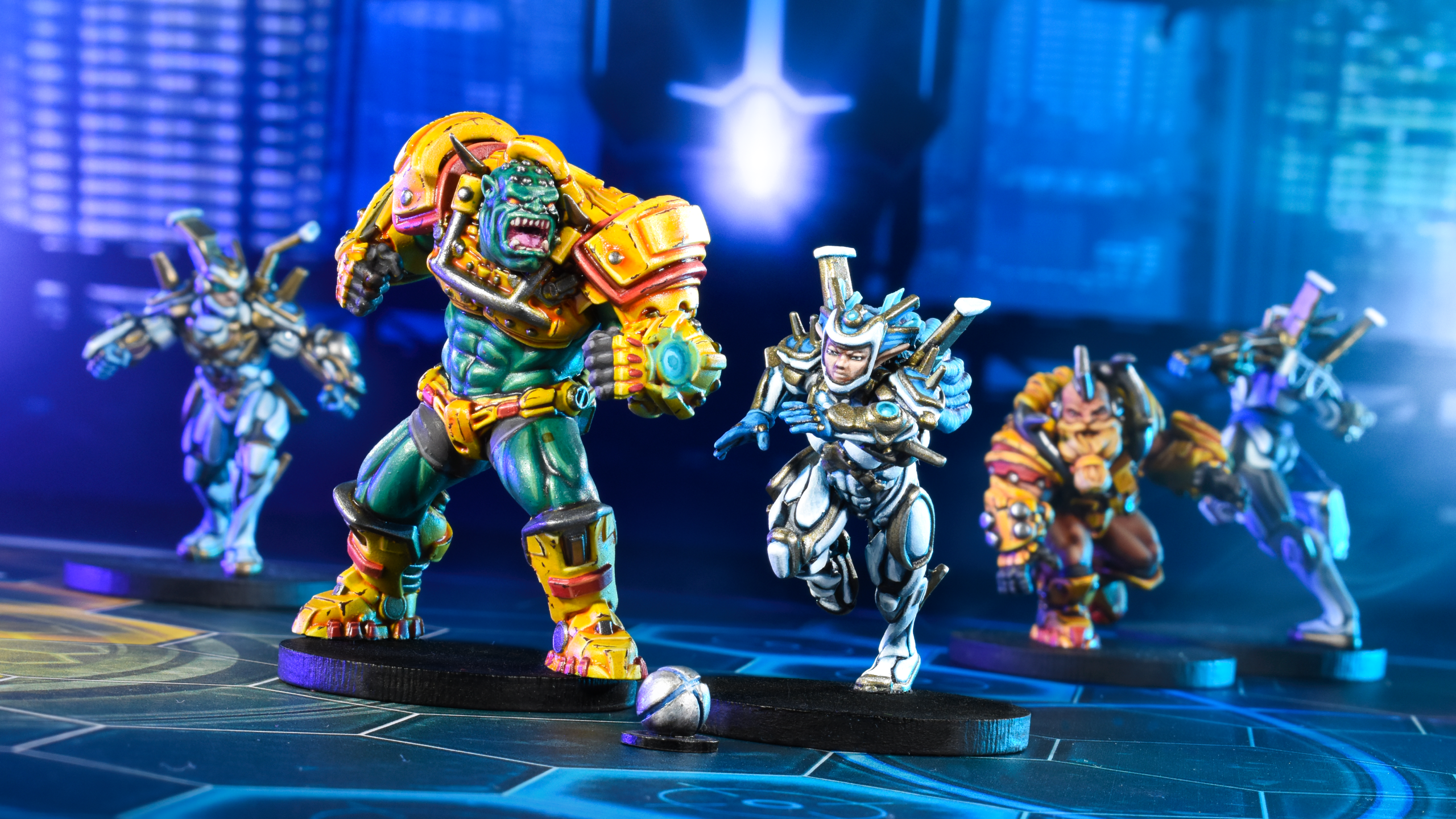
Jets V Juggernauts // DreadBall All Stars
Jervis Johnson: Take the Jets. They’re owned by a corporation that manufactures spaceships. So their players have armoured suits and focus on speed and finesse. Their special rules reflect that speed, like smashing into opponents at high velocity. The result is that every team plays differently. The Jets feel very different to the Juggernauts or the Painkillers.
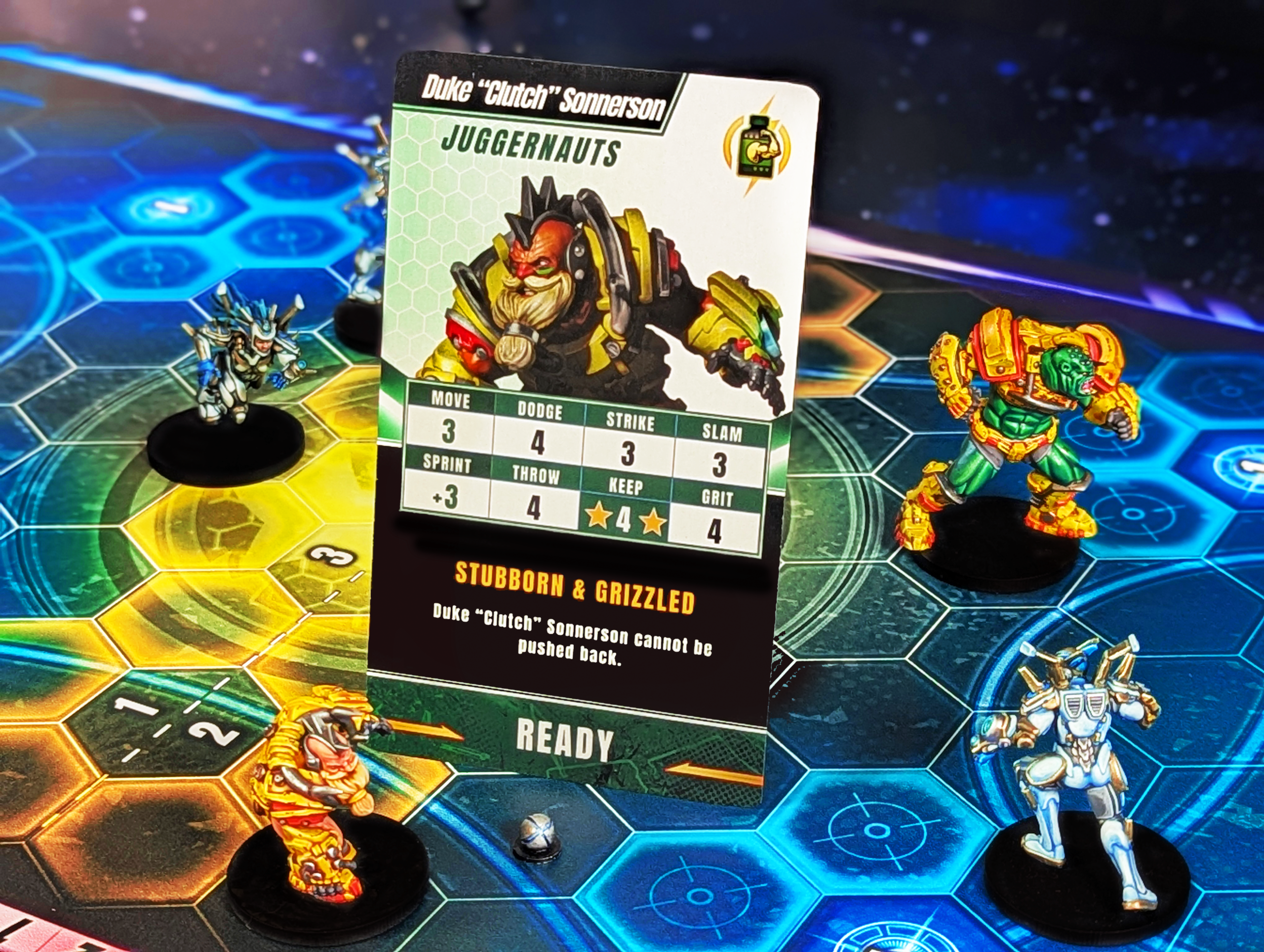
Juggernauts // DreadBall All Stars
But we’ve done this with a light touch. All the information you need is right there on the player cards. You don’t have to flip through rulebooks mid-game. It’s all intuitive.
Learning Your Team
Jervis Johnson: What I’ve noticed when people play for the first time is that they focus on the stat lines. The Flair ability tells you immediately what a player is good at—throwing the ball, scoring strikes, or controlling possession.
Players tend to ignore the special abilities in the first half of the game. Then, during the second half, they suddenly notice them and start thinking, “Hang on, if this player does this and that player does that, those abilities combo really nicely.”
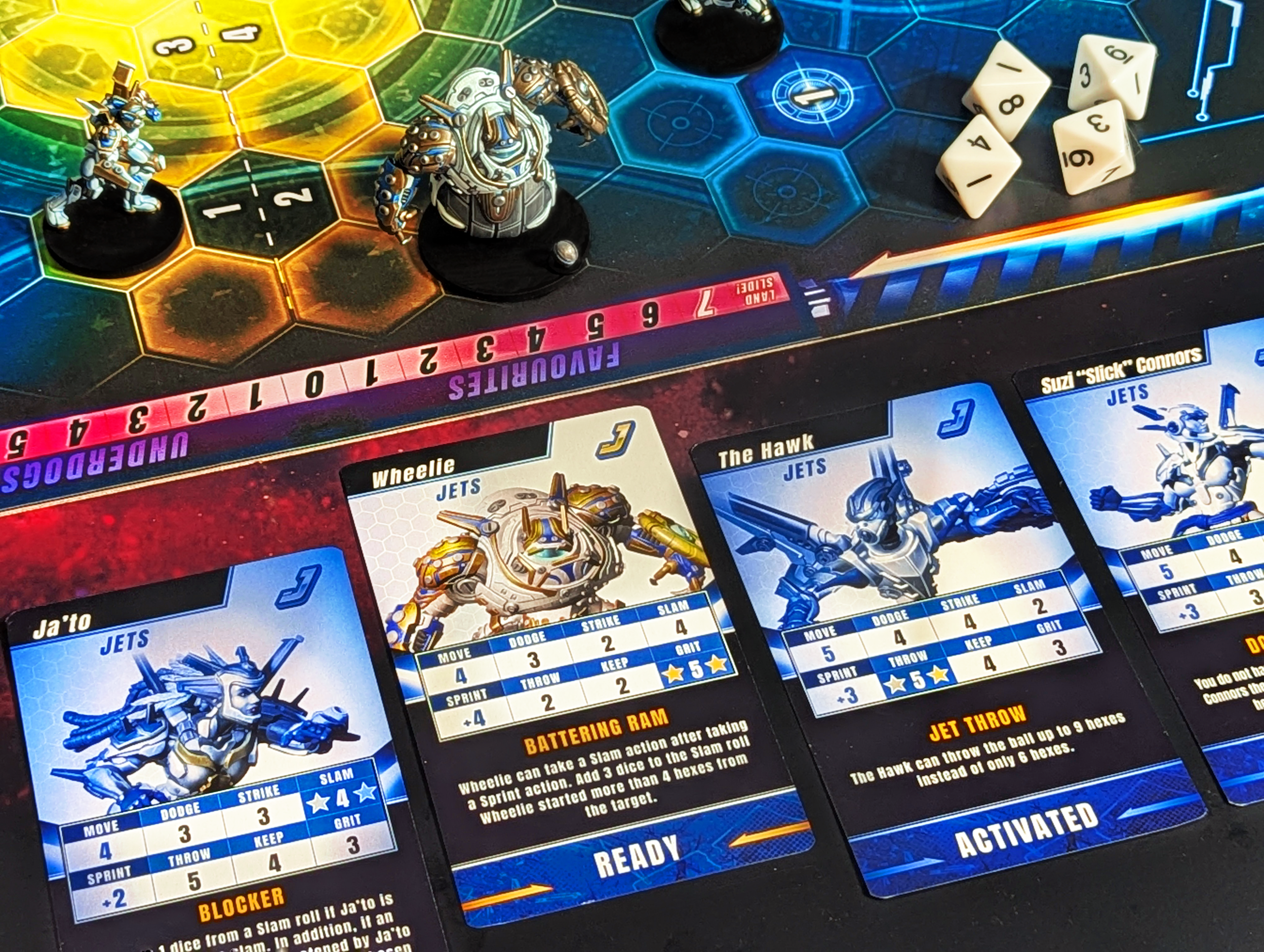
Team Cards // Ready and Activated With A Simple Flip
Over time, you learn how to get the most out of your team. That sense of gradually mastering a team is really satisfying. And adding new teams is simple: five players, five cards, plus three cards added to your deck. That’s it.
Championships and Legacy Play
OnTableTop: Sports games often lead people to think about league play and long-term campaigns. But since everyone here is already an MVP or All Star, how does progression work?
Ronnie Renton: This is where Jervis’ experience really shows. We wanted people to have something they could play with friends that had a sense of legacy and long-term progression. Jervis has done this once or twice before—it’s not his first rodeo.
What he’s come up with is honestly genius. You start with your team and learn to play it over a few games. Then you’ve got six other teams—eventually nine—to play against. That alone gives you huge replayability. But then you start thinking: What do we do when our group meets regularly?
Jervis Johnson: Our solution was Championships.
Think of them like a tournament—similar to the Euros. Everyone plays everyone, then the top four teams move into the semi-finals and a final. Here’s the twist: if you reach the semi-finals or finals, you draw a Legacy Card from a special deck. You keep it permanently and add it to your team’s deck.
Normally, you have three team cards. A Legacy Card gives you an extra ability and slightly changes how your team plays. If you win the championship, you also gain a Trophy ability. The trophy is temporary—when someone else wins the next championship, they take it. But the Legacy Cards stay with your team forever.
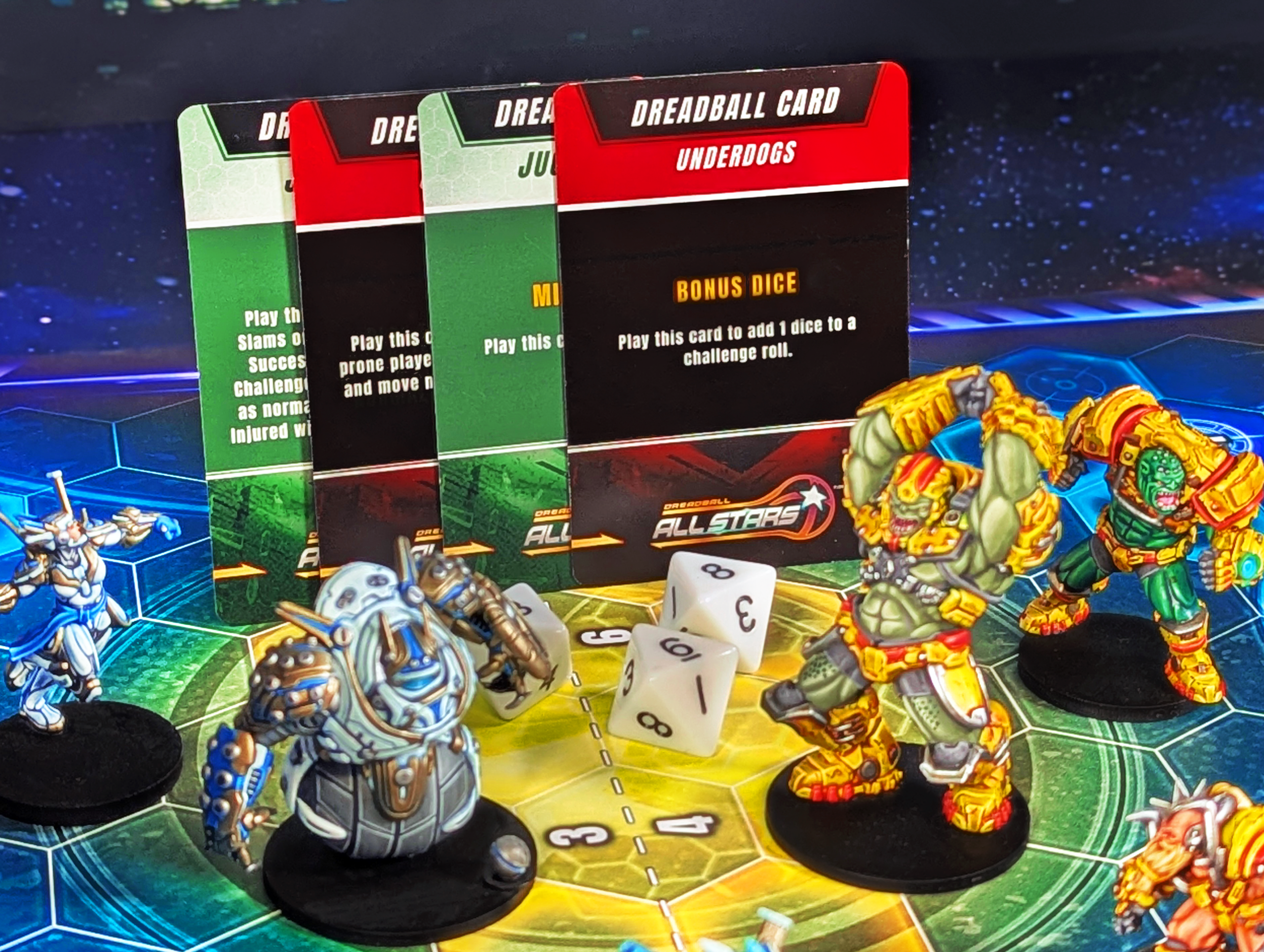
Fan Favourites Or Plucky Underdogs?
Jervis Johnson: Your team evolves over time, but it never becomes overwhelmingly powerful. That was important to me. In some games, like long-running Blood Bowl leagues, you can get runaway leaders and teams spiralling out of control. Here, the improvements are subtle. They give you options rather than raw power.
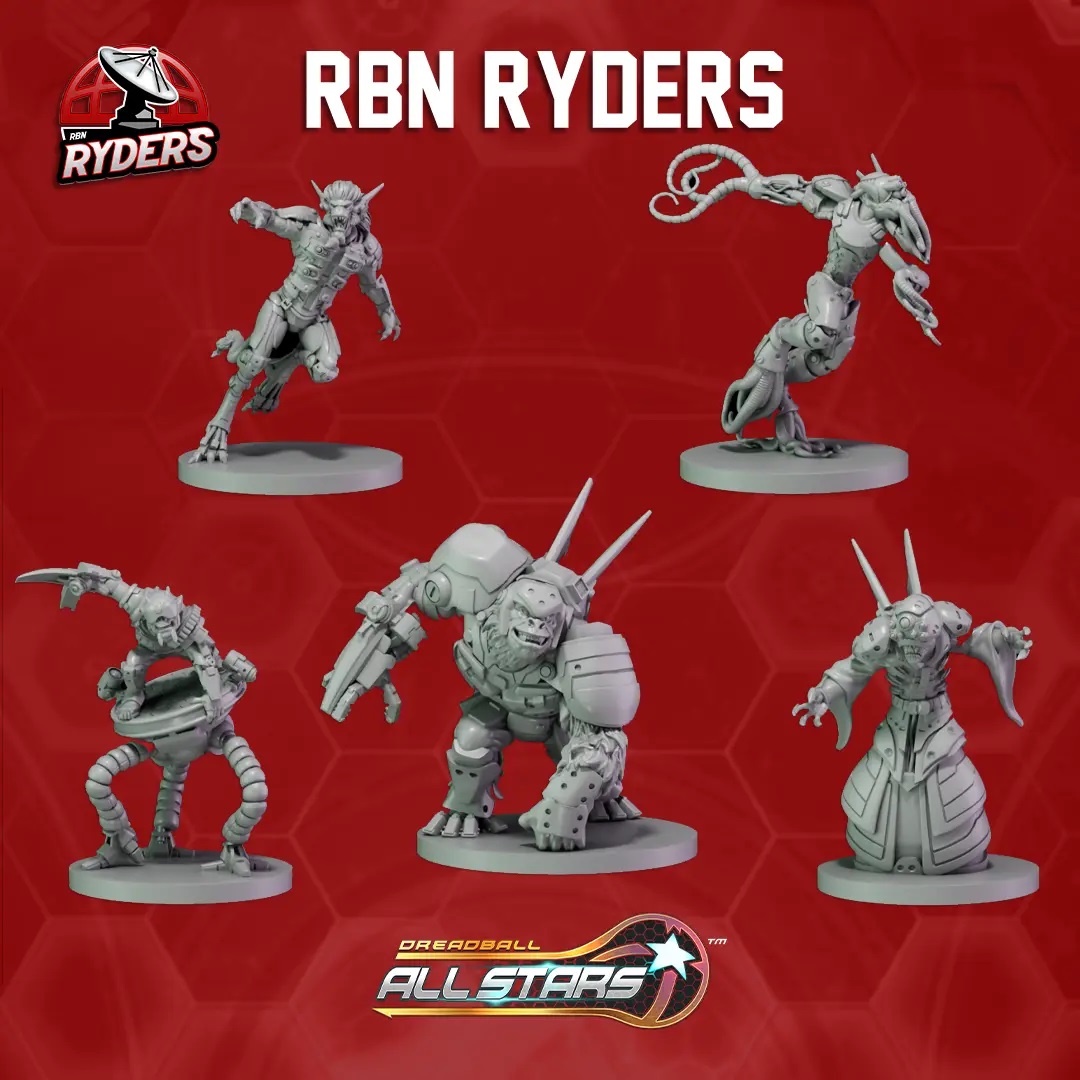
RBN Ryders // DreadBall All Stars
Even if two people are playing the same team—say two Jets teams—they’ll likely feel different because of their legacy cards.
New Arenas and Game Modes
Jervis Johnson: We’re also planning alternative pitches.
For example, Battle Royale allows up to six teams to play at once. Another mode, Anarchy Arena, introduces chaotic event rules—suddenly, the ball becomes a ticking time bomb or something equally unpredictable.
Each pitch has its own Event Deck and its own Legacy Cards for championships played there. That means clubs can run many different championships over time, and each one adds new twists.
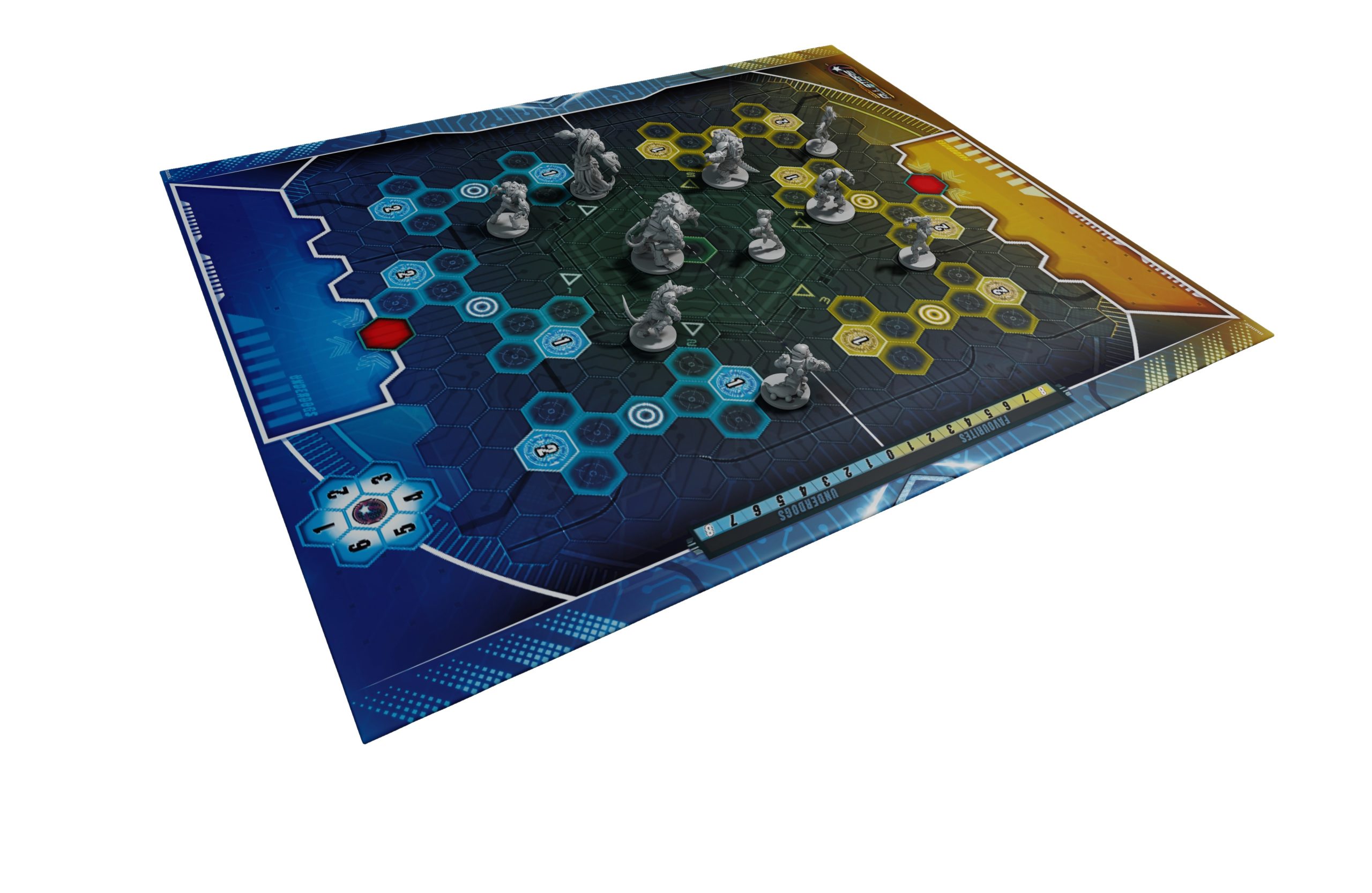 Anarchy Arena // DreadBall All Stars
Ronnie Renton: This also helps keep the game fresh long-term. Instead of releasing endless new teams, we can release a new pitch three years after launch.
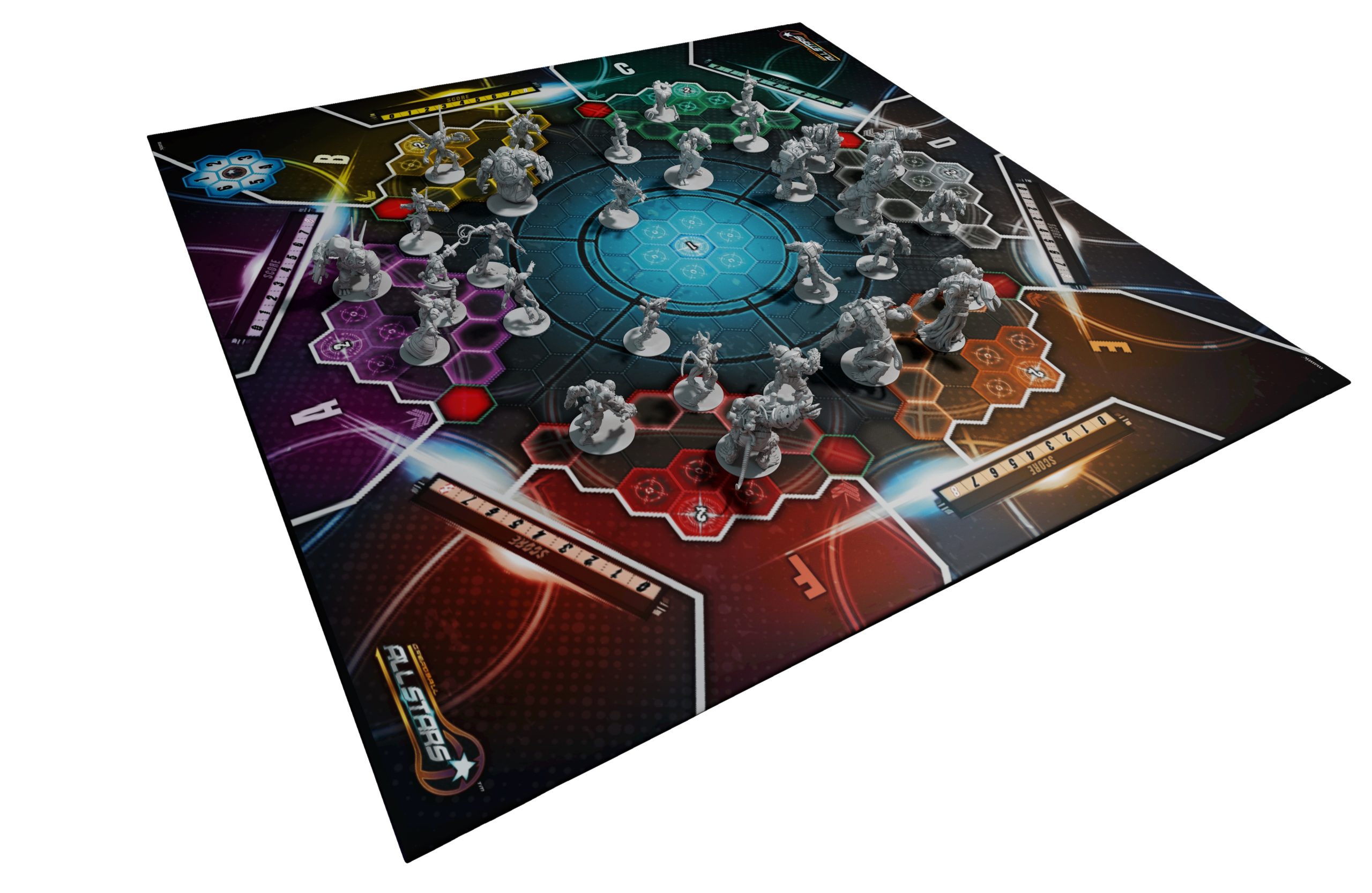
Battle Royale Arena // DreadBall All Stars
Maybe it’s a low-gravity world, where the ball bounces unpredictably. Your group can get together for a weekend championship on that pitch and compete for its trophy. By lunchtime on the second day, everyone knows the rules and is smashing into each other using every trick in the book.
The Dark Side of the All Stars League
Jervis Johnson: There’s also a slightly darker side to the setting. The corporations own the players completely—including their DNA.
All Star players seem incredibly resilient. They get smashed, carried off the pitch, and then return moments later. What fans don’t realise is that clones of every player are kept in cold storage in the locker rooms. If a player is too badly injured… they’re quietly euthanised and replaced by their clone. From the audience’s perspective, it just looks like incredible endurance.

Dreadball All Stars // Mantic Games
OnTableTop: Ah—the magic sponge.
Jervis Johnson: Exactly. The magic sponge. With a darker explanation behind it.
Kickstarter Plans
OnTableTop: What can people expect from the Kickstarter?
Ronnie Renton: We’re launching on March 17th. The campaign will likely have two main pledge tiers. The first includes the starter experience—four teams and two championship packs—perfect for a gaming group to jump straight in. Then there’ll be a larger tier adding more teams and championships, unlocking everything from the first wave.
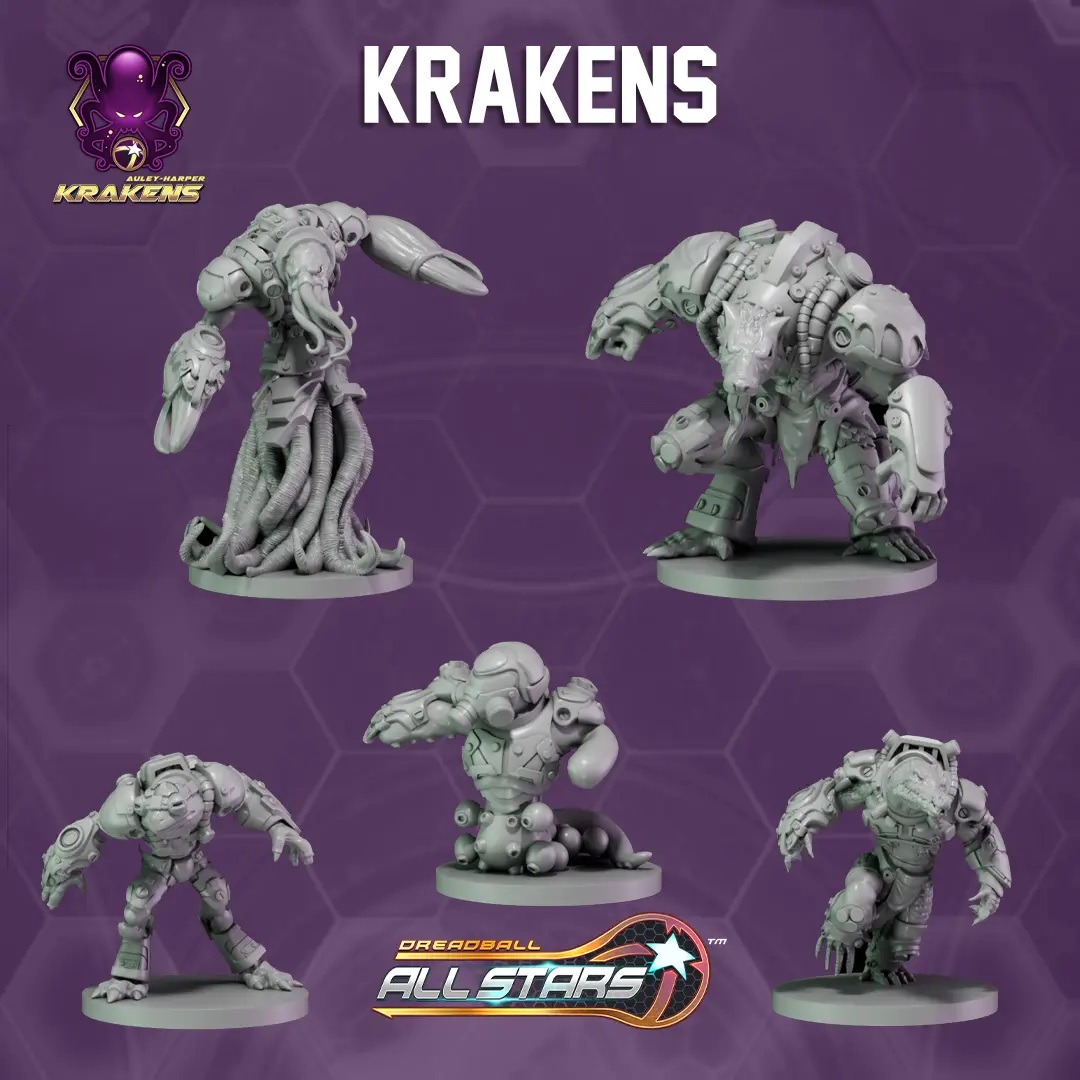
Krakens // DreadBall All Stars
We’re funding a lot of plastic miniatures in this campaign—seven or eight teams—and we want them to be the highest quality we’ve produced. The models are dynamic, characterful, and a joy to paint.
A New Beginning for DreadBall
Ronnie Renton: One thing we’ve been clear about: this isn’t DreadBall Third Edition. It’s DreadBall All Stars. Starting fresh allowed us to fix problems that often kill games and design something approachable for new players while still exciting for veterans.
Between us, we probably have about seventy years of game design experience going into this. Our goal was simple: make something that’s genuinely fun every time you play.
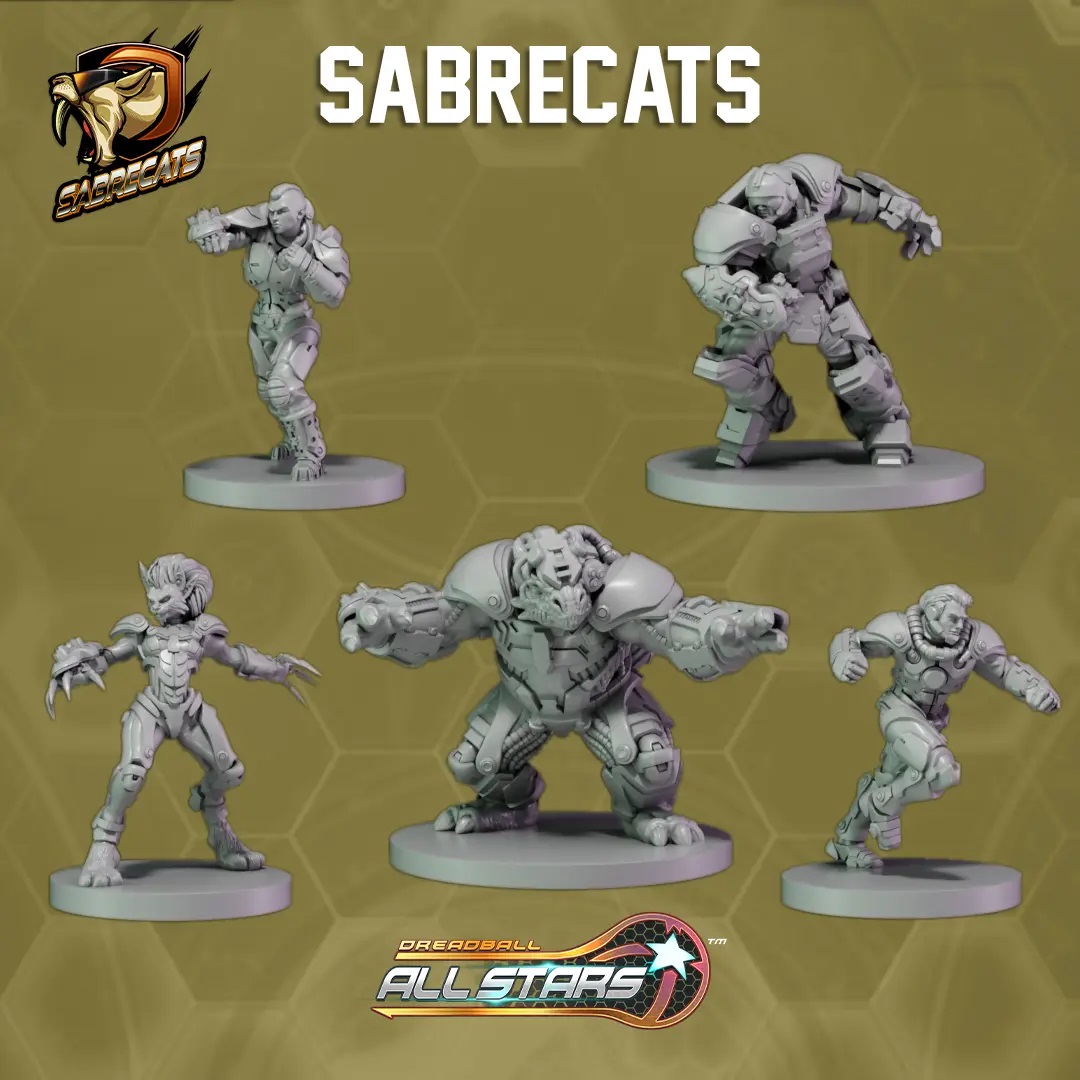
Sabrecats // DreadBall All Stars
If that has left you cheering for more, you can check out John's painting vlog on how he painted up the Jets and Juggernauts right now and look out for them in our Let's Play coming out next Tuesday for the Launch of the Kickstarter campaign. You can sign up right now to be notified when it goes live here.
Are you excited for the future of DreadBall?
Supported by (Turn Off)

Supported by (Turn Off)
Supported by (Turn Off)








Dang, I must be getting older; Jervis looks like my grandpa now. Where have the last … oh, crap – THIRTYISH years gone?!?